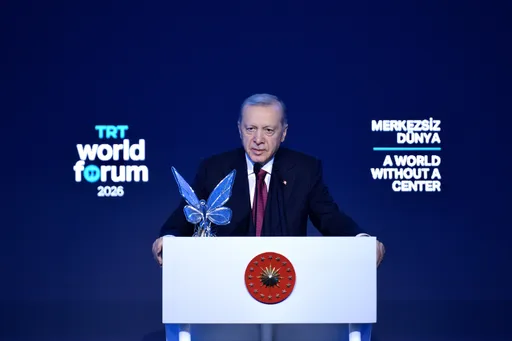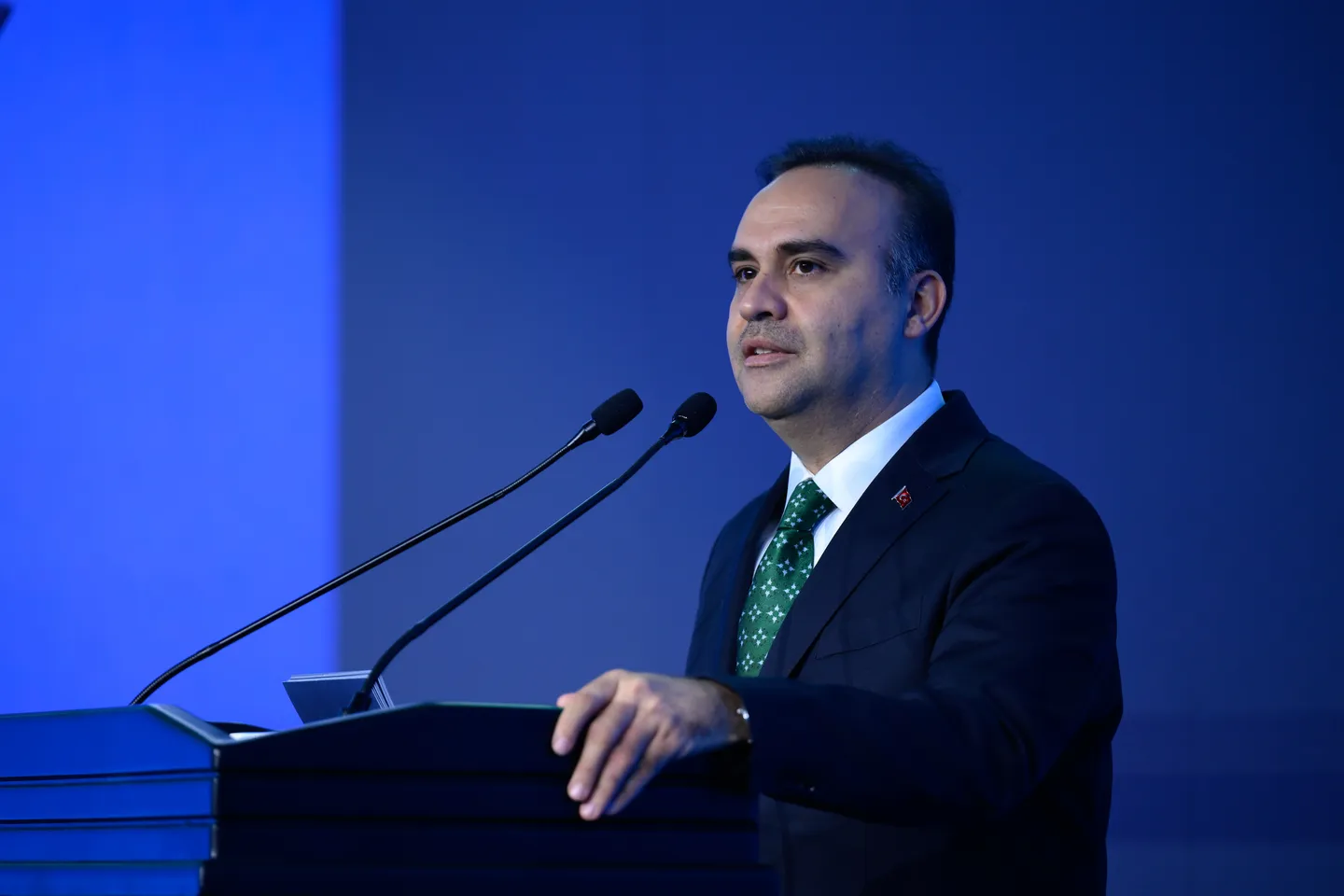
Turkish Industry and Technology Minister Mehmet Fatih Kacir has said that artificial intelligence could not be allowed to operate without clear accountability, emphasising that technological progress must remain centred on human responsibility.
Speaking at the TRT World Forum panel on Saturday titled "Navigating Responsibility in the Age of AI," Kacir warned that increasingly autonomous AI systems raised serious questions about transparency, safety and accountability.
"We can delegate authority to AI, but we cannot delegate responsibility," he said.
He highlighted risks including algorithmic discrimination, cybersecurity threats, deepfakes and the concentration of computing resources in the hands of a small number of technology companies.
Kacir noted that more than 90 percent of the world's notable frontier AI models in 2025 were developed by industry, while just five companies controlled an estimated 70 percent of global AI computing power.
He called for a human-centred, risk-based regulatory approach, arguing that AI applications with significant consequences for individuals should face stronger safeguards and meaningful human oversight.
Türkiye's objectives





Outlining Türkiye’s ambitions, Kacir said the country's 2026-2030 Artificial Intelligence Action Plan aimed to position Türkiye among the leading countries in AI technologies.
The plan targets AI literacy training for 5 million citizens, the development of 10,000 advanced AI experts and 100,000 AI professionals, and the opening of at least 2,000 public datasets to researchers and entrepreneurs.
Türkiye also aims to expand its data centre capacity to at least one gigawatt by 2030 and attract at least $10 billion in private-sector-led investments in data centres, cloud computing and AI infrastructure.
Kacir said the country's Turkish large language model, BILGE, would strengthen technological independence, with its first version soon to be made available to developers.
He also announced plans to establish regulatory sandboxes in priority sectors and an AI Ethics Board to address privacy, discrimination and children's safety.
Emphasising international cooperation, Kacir said Türkiye was committed to contributing to global AI governance through platforms including the G20, OECD, UNESCO, the Organisation of Turkic States (OTS) and the UN.