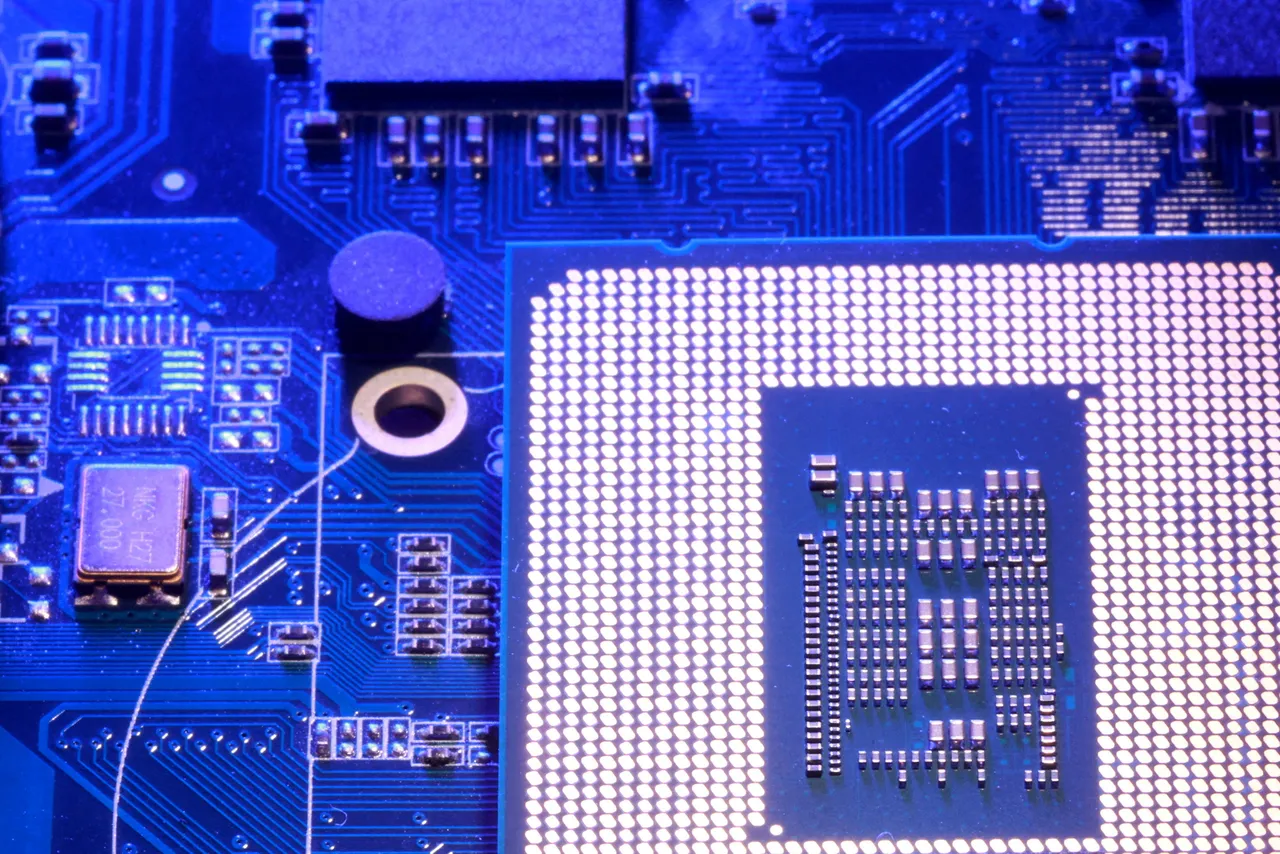
China said on June 22 that a computer named LineShine, designed by a Shenzhen-based institution, ranked ahead of a US system to become the world’s fastest computing machine.
LineShine topped the Top500 list, a project that ranks computing power and which was started by scientists in 1993.
The computer designed by the Shenzhen Cloud Computing Centre and installed at the National Supercomputing Centre (NSCS) recorded a speed of 2.198 Exaflop/s – that’s 2.198 quintillion calculations per second.
America’s El Capitan supercomputer, which is installed at the Lawrence Livermore National Laboratory, came second in the ranking with 1.8 Exaflop/s.
While the ranking showcases China's growing ability to build supercomputing systems with domestic technology, the result does not necessarily mean China leads the race on the important front of artificial intelligence computing.
Experts interviewed by Reuters note that LineShine performs less impressively on benchmarks reflecting AI workloads.
The ranking itself was questioned as some of the world’s largest AI systems built by Microsoft, Google, Amazon and xAI did not participate.
The Chinese victory on the list more likely shows that China wanted international recognition for its chip design efforts, experts say.
The biggest surprise is not that China built the world's fastest supercomputer, but that it chose to reveal it. Intersect360 Research CEO Addison Snell said, "I'm not surprised it's the number one system. I'm surprised they submitted it and want recognition for it.”
China had first claimed the top spot in 2010. Beijing stopped submitting systems after 2023 amid tightening US export controls on advanced chips.
LineShine’s success reflects years of effort that China has put into building a homegrown semiconductor ecosystem as the country tries to move up the technological supply chain.








How did China do it?
In 1986, China launched the 863 Programme, a state-backed initiative that focused on R&D investment in microelectronics as a strategic anchor for future economic growth.
Beijing propped up its nascent semiconductor industry through subsidies, tax breaks, cheap land and state-backed investment funds.
China’s chip behemoth Semiconductor Manufacturing International Corporation (SMIC) was founded in 2000 by Taiwanese-American semiconductor veteran Richard Chang in Shanghai. Backed by substantial state support, SMIC rapidly expanded and became mainland China's largest contract chip manufacturer.
SMIC recruited thousands of engineers from the US, South Korea, Taiwan and Europe as the country imported not just chip-making equipment but also knowledge workers.
At the same time, China gradually became the world's factory for electronics. Since smartphones, computers, appliances and telecom equipment are assembled in China, chip manufacturers naturally cluster around these supply chains. The country's vast domestic market also guaranteed demand. This environment provided the foundation for the spread of know-how.
In 2014, the Chinese government set up the National Integrated Circuit Industry Investment Fund (the Big Fund) to inject billions of dollars in domestic manufacturing capacity to make high-end projects such as DRAM memory chips.
Another factor that accelerated China’s homegrown tech sector was the US-led sanctions. The roadblocks erected in the path of Chinese companies pushed SMIC and Huawei to intensify efforts to develop indigenous alternatives to foreign technology.
China still faces limitations as it can’t access extreme ultraviolet (EUV) lithography machines produced by Dutch company ASML, which are essential for producing advanced chips. ASML has stopped shipments to China under US pressure.
In 2022, SMIC shocked the tech world when analysts discovered that, despite lacking access to the most advanced EUV lithography machine, the company had developed a 7nm processor.