 Zeynep Conkar
A weapons shipment cannot reach its destination without passing through a network of ports, ships and workers who keep maritime trade moving.
Dockworkers are now using their position in this network to challenge the transport of military equipment to Israel amid its genocidal war on Gaza.
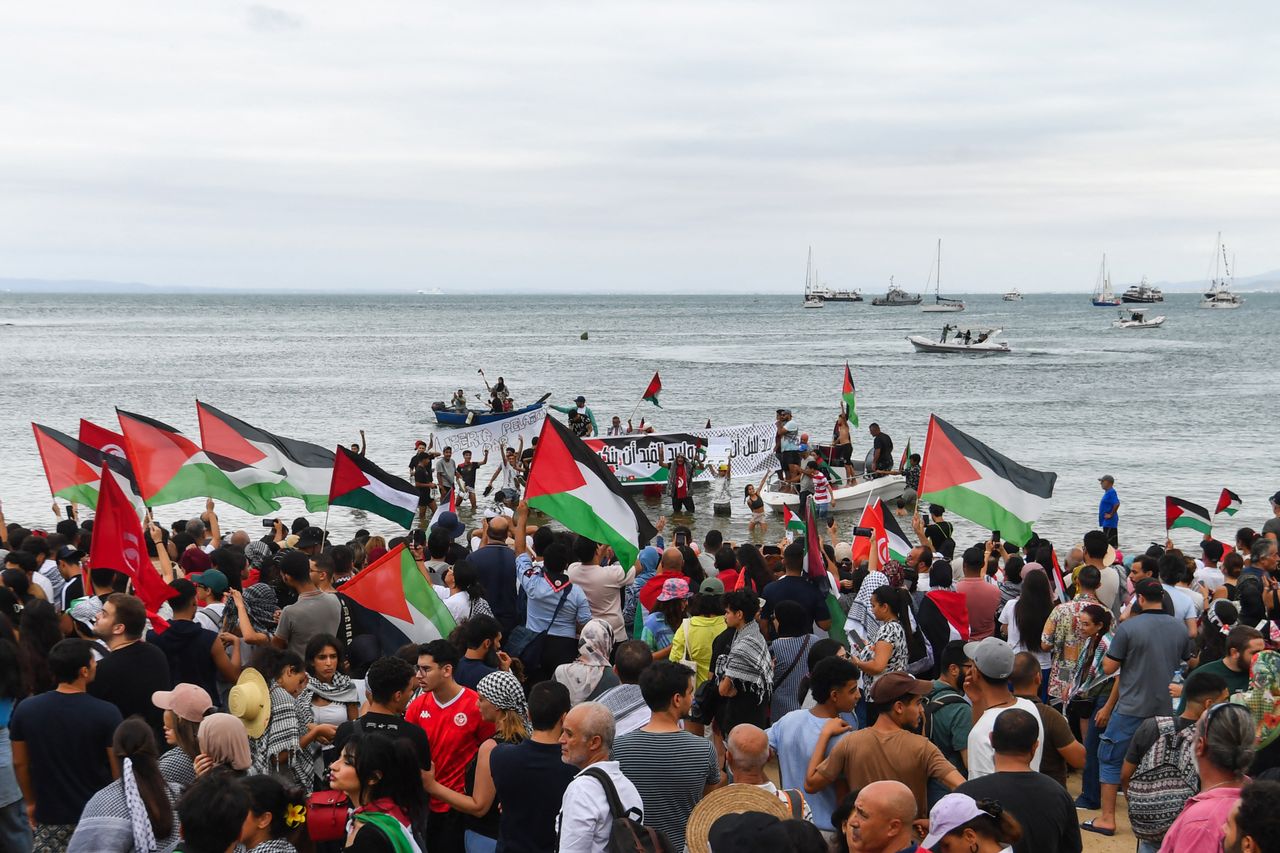
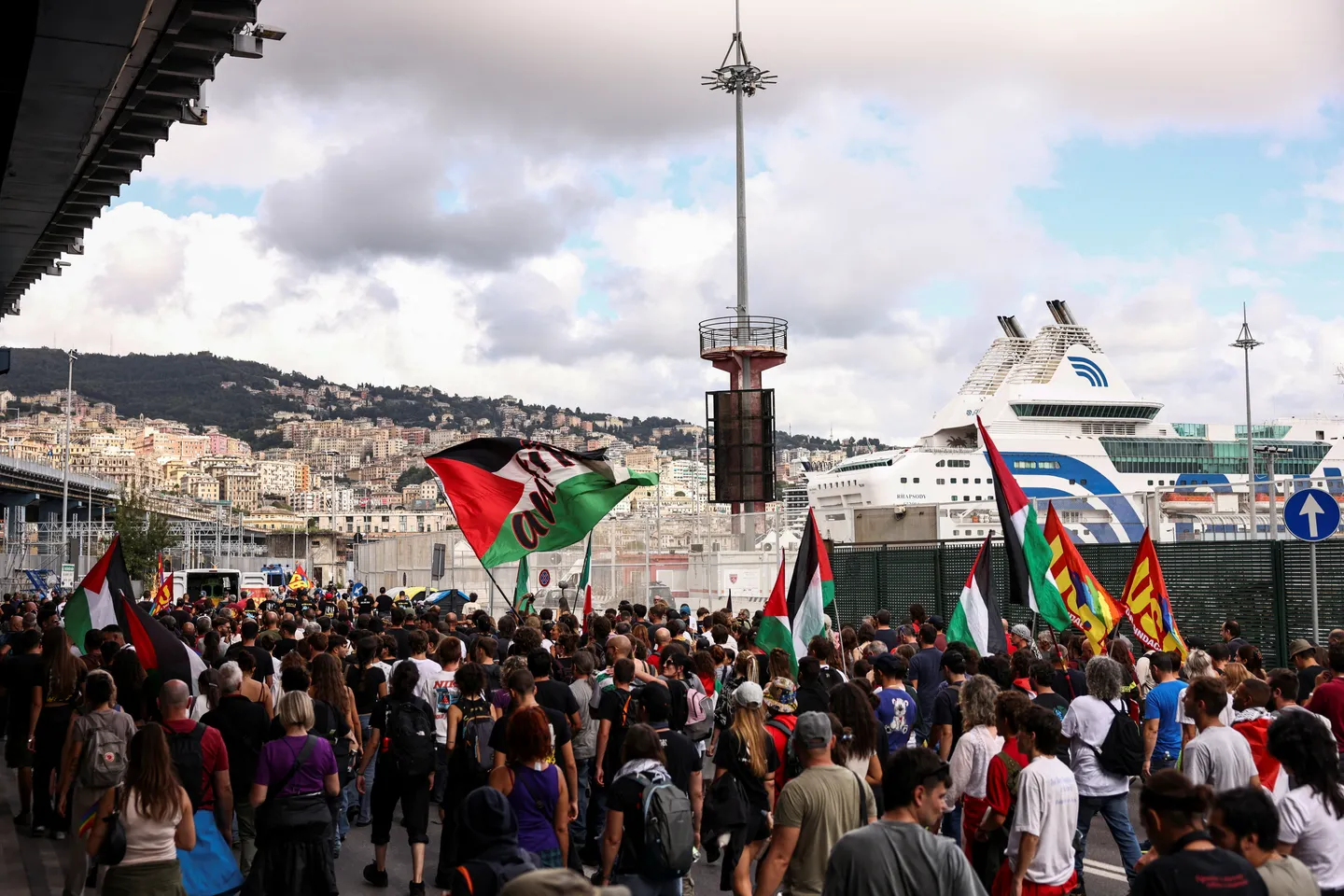
On October 30, dockworkers and other port workers mobilised across 113 ports in 22 countries, calling for commercial ports to stop handling weapons, ammunition and military equipment bound for war zones.
The action, backed by more than 25 trade unions, was launched by dockworkers' unions in Italy, France, Greece, and Morocco.
Seventeen Palestinian trade unions and confederations, along with the Boycott, Divestment and Sanctions (BDS) movement, also supported the mobilisation.
The October 30 mobilisation marked the largest coordinated port action in history, according to Sara Elettra, who coordinates maritime and energy embargo campaigns for the BDS movement.
“This unprecedented and historic coordination is the product of years of accumulated worker-to-worker organising. In 2024, Palestinian trade unions urged workers worldwide to refuse any role in Israel's arms supply chain. Dockworkers in Piraeus responded in October that year, stopping the loading of 21 tonnes of ammunition bound for Israel,” Elettra tells TRT World.
“Since then, union after union have taken action. Italy's USB and France's CGT dockworkers coordinated actions and refused to handle military cargo,” she adds.
For the first time, unions across Europe, the Middle East, Asia and the Americas coordinated action on the same day, demanding that ports refuse to facilitate wars and genocide, according to Elettra.
The power behind the ports
Much of the campaign's strategy rests on a simple reality that military equipment relies on the same commercial infrastructure as other goods.
Weapons and components pass through shipping routes, container terminals and transhipment hubs before reaching their destinations. Workers who load, unload and move cargo can therefore delay or refuse to handle shipments.
The ports involved in the mobilisation were not chosen at random. According to No Harbour for Genocide, a campaign group tracking military supply chains, Genoa, Livorno and Gioia Tauro in Italy, Marseille in France, Piraeus in Greece and Tangier in Morocco are major Mediterranean ports with documented links to weapons shipments to Israel.
The group says it tracked 315 shipments of components for Elbit Systems, Israel's largest arms manufacturer, passing through 56 commercial ports in 29 countries between August 2025 and September 2026.
No Harbour for Genocide estimated that the mobilisation could delay more than $2 billion worth of cargo.
This mobilisation sits on top of a record of confirmed, physical refusals of specific military cargoes destined for genocidal Israel, not merely demonstrations, according to Elettra.
“Genoa's dockworkers blocked the loading of weapons aboard the Zim Virginia in September 2025 already, France's CGT dockworkers refused to load arms components at Fos-Marseille in June 2025, forcing the ship to sail without its deadly cargo,” she says.
“In April 2025, Tangier Med port workers in Morocco refused to load a Maersk feeder vessel, which was carrying military equipment bound to genocidal Israel.”





“18 of the 20 remote crane operators on the first shift refused to operate machinery to service the vessel, with 27 of 30 workers reportedly joining the refusal on the second shift. The workers action was supported by mass popular mobilisation outside the ports,” Elettra adds.

An international movement
The mobilisation grew out of discussions among Mediterranean dockworkers' unions in early 2025.
Five unions initially organised workers across 20 ports in five countries. They later met in Athens and Genoa.
The October action took different forms by country. In Greece, around 3,000 dockworkers and seafarers joined the walkout in Piraeus, disrupting cargo operations and suspending ferry services to the islands.
French dockworkers held strikes, while Italy saw port demonstrations alongside a nationwide general strike. Other ports organised shorter stoppages and pickets.
“The collective action of dock workers, activists, politicians, researchers, and lawyers, have not only delayed and disrupted shipments, it has stopped military and dual-use material from being loaded or transshipped, and in some cases, like in Italy and Malaysia, led to the confiscation of such military materiel,” Elettra says.
“24-hour strikes were called across the Mediterranean. For that day, the cranes did not move and the containers did not, whatever their contents.”
“At the same time, dockworkers’ unions organised shorter work stoppages, held demonstrations, rallies and participated in solidarity actions in cities and ports,” Elettra adds.

How far can workers go?
The Piraeus case shows what dockworkers can achieve when they refuse to handle a specific shipment. But a one-day international mobilisation is a different challenge. It can delay cargo, interrupt port operations and put pressure on shipping companies.
It cannot, by itself, end arms transfers or force governments to change their policies.
The level of disruption also varied considerably. Some workers stopped cargo operations, while others joined demonstrations or shorter work stoppages.
Elettra says the action showed that workers can collectively refuse to be complicit in militarism and genocide.
“With over 90 percent of Israel's imports arriving by sea, no government embargo, no parliamentary vote, no diplomatic protest has the immediacy of workers who can simply refuse to load illegal cargo,” she tells TRT World.
“Since the beginning of Israel’s ongoing genocide against Palestinians in Gaza, dockworkers, activists and the wider movement have tackled this traffic one ship at a time, and October 30 turned scattered refusals into the largest coordinated port action in history.”