 M.Yasin Bozkus
A security umbrella is trustworthy only as long as those beneath it believe that protection will genuinely arrive when danger strikes.
Currently, Gulf countries are being drawn into a war they neither chose nor endorsed, while the belief that US protection will be available when needed no longer appears convincing for the region.
However, the problem is much larger than just the Gulf.
What is collapsing is not just confidence in a single American decision, but trust in the overall US security framework.
Consequently, the impact of the US-Israel war on Iran will inevitably extend beyond the Middle East.
This escalation, coupled with a decade of shifting US policy, signals a turning point: long-standing allies are now likely to hedge their bets, prioritise regional cooperation, and cultivate more balanced relations with global powers like Russia and China.
In its traditional form, the US “security umbrella”, or extended deterrence, is Washington’s pledge to defend its allies and partners, including through nuclear and conventional means, to deter adversaries from attacking them initially.
This logic is most clearly institutionalised in NATO and in US security commitments in Asia.
However, in practice, it has also extended to the Gulf, where decades of American military basing, arms sales, and strategic partnerships fostered the belief that proximity to US power would shield regional states from threats, especially from Iran.
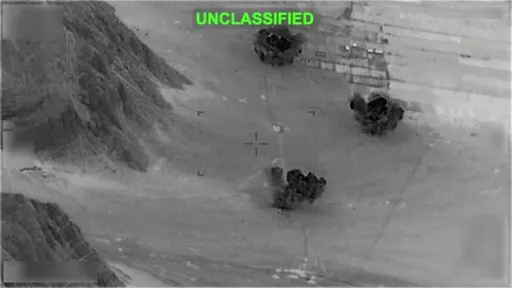
After years of conflict with Iran’s proxies, the confrontation turned direct in June 2025, when the US collaborated with Israel in attacking Iran’s nuclear facilities at Fordow, Natanz, and Isfahan during the twelve-day war.
Diplomatic talks between Iran and the US had focused on ending Iran’s uranium enrichment and restricting its long-range missile programme, but the two sides were unable to reach a settlement.
Even before those diplomatic talks officially concluded, the conflict escalated further with the broader US-Israel war that began on 28 February 2026, during which targeted assassinations of Iranian Supreme Leader Ali Khamenei and many senior Iranian military officials occurred.
Unlike the short-lived twelve-day war last year, when Israel was the main target, Iran’s retaliation this time was quite different. The response spread throughout the Gulf region.
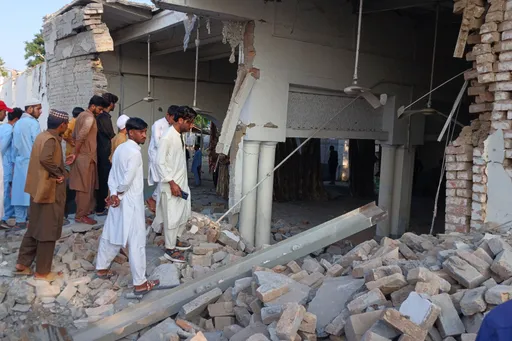
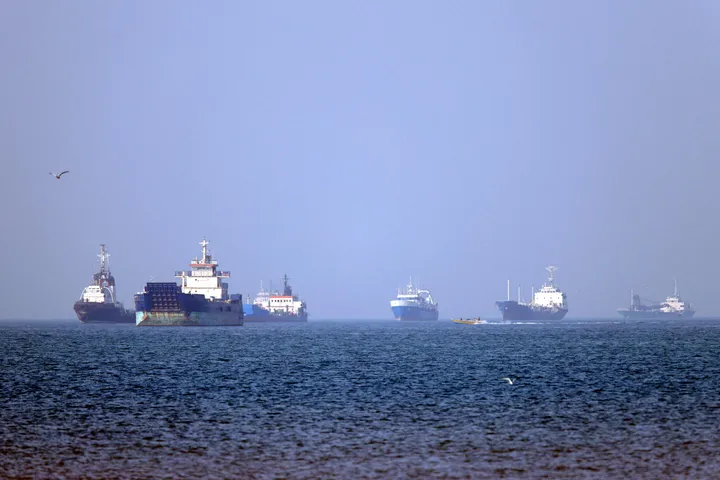
Along with US bases and diplomatic missions, airports, hotels, ports, oil facilities, and some civilian areas were also targeted. Gulf states are now bearing the economic and security costs of a war they did not initiate, while insisting it is not their conflict.
However, global debates regarding the US security umbrella did not start with the most recent war.
Hard-line US posture
Donald Trump’s first election in 2016 already represented a sharp break from the traditional US approach to long-standing alliances, trade, and diplomatic norms.
Under “America First”, alliances were seen less as reliable strategic commitments and more as transactional arrangements that could be pressured, humiliated, or suddenly altered.
He insisted on increased NATO expenditure, warned that the United States might “go it alone”, imposed tariffs on close allies, and openly broke diplomatic conventions, reportedly telling French President Emmanuel Macron that, without the United States, France would be “speaking German.”
The shock was so profound that it transformed the wider debate about democracy itself.
Trump’s rise raised a new question: whether the biggest threats to liberal democracy could stem from within, through the erosion of democratic norms and institutions in established democracies themselves.
This was the concern highlighted by Steven Levitsky and Daniel Ziblatt.
Yet, when Democrats won the next election, many believed that the Trump years had been an anomaly, a temporary setback unlikely to recur.
Trump’s return to office for a second term, however, and the even more daring policies that followed, made those earlier doubts much harder to dismiss and deepened the sense that American commitments, even towards allies, were becoming increasingly unstable.
To be sure, a hard-line US posture towards ideological adversaries is not surprising in itself.
Washington has a long history of confronting hostile or anti-American governments through coercion, pressure, and even direct intervention, particularly in Latin America.
In that sense, the Trump administration’s intensified narcotics operations in the Caribbean, the operation that resulted in Nicolas Maduro’s abduction in Venezuela, the serious confrontation with Colombia, and even discussions of possible regime change or a “friendly takeover” in Cuba may all seem hawkish, but they can still be viewed as broadly aligning with older patterns in US foreign policy towards governments seen as ideological opponents or “strategic problems”.
What is more significant and more disturbing for allies is that during Trump’s second term, this coercive and unpredictable manner has not been confined to adversaries.
Under a more radical “America First” policy, it has also extended to allies, dependents, and friendly governments.
His administration halted visa processing for Afghans who assisted the United States during its twenty-year occupation, repeatedly suggested that Canada should become the 51st state, and advocated for acquiring Greenland from NATO ally Denmark.

His Oval Office confrontation with Volodymyr Zelenskyy, followed by pressure for a peace framework in which Crimea and other invaded Ukrainian territories were effectively regarded as lost, deepened fears that even frontline allies could be publicly humiliated and strategically downgraded.
The issue, then, is not just that Washington stays tough on its enemies; it is that under Trump, it has also become much less predictable, reassuring, and dependable for its allies.
The same pattern has spread to economic policy and to the institutions that uphold the current international order.
Trump’s “reciprocal tariffs” affected allies as well as rivals, and in introducing them, he even argued that in trade, “the friend is worse than the foe”.
In January 2025, he formally began the US withdrawal from the World Health Organization.
A year later, he announced plans to withdraw the United States from 66 international and UN-related bodies. Simultaneously, he promoted a US-led “Board of Peace” as a new international framework, signalling to allies that these institutions, commitments, and even the rules of the game are entirely reversible.
Diplomatic retaliation
The Iran war has brought the consequences of this worldview into immediate focus. When Spanish Prime Minister Pedro Sanchez condemned the war as reckless and dangerous, Spain refused to permit the United States to use jointly operated bases for attacks on Iran.
Trump, however, made clear that the United States could still use those bases if it chose, implying that Spanish resistance could be ignored while also threatening trade retaliation.
Britain, too, initially resisted allowing the offensive use of its bases, later permitting limited “defensive” action, and was then publicly belittled for its hesitation.
In the Gulf, the shock has been far greater.
Longstanding US allies, whose prosperity depends on oil, tourism, and regional stability, have found themselves burdened by the economic and security costs of a war they did not initiate and were not properly consulted about beforehand.
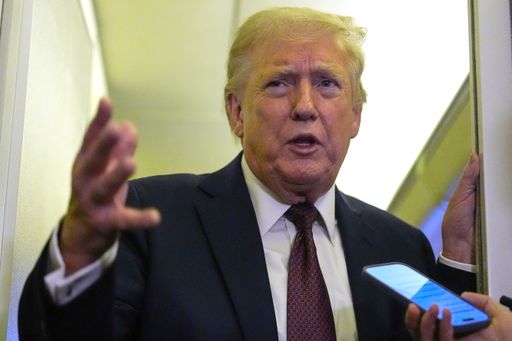
Unlike the invasion of Iraq, which involved dozens of allied states, the Iran conflict has left the United States effectively isolated, apart from Israel.
Saudi Arabia and others had already told Iran that its airspace and territory would not be used for attacks on Tehran, but it still came under threat and warned that continued strikes could force retaliation.
In the UAE, Anwar Gargash, Diplomatic Adviser to the UAE President, told Iran bluntly: “Your war is not with your neighbors”.
Even prominent Emirati businessman Khalaf Al Habtoor briefly rebuked Trump for “dragging” the region into war, then backed off.
What follows from this is not necessarily a sudden, complete break with Washington. Gulf monarchies remain too deeply embedded in US security networks for that. But hedging is already underway.
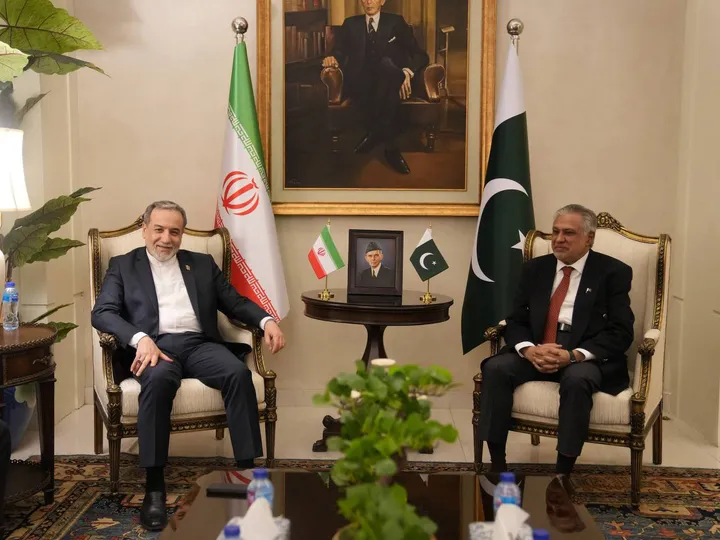
Saudi Arabia signed a mutual defence pact with Pakistan in September 2025, and Pakistan, Saudi Arabia, and Türkiye have since been discussing a draft trilateral defence agreement.
Following Iranian missile and drone strikes across the region, and the partial failure of US antimissile and broader security systems, the demand for such regional alliances is likely to increase.
The moment also recalls an argument made nearly a decade ago by the current Turkish intelligence chief, Ibrahim Kalin, who called on the region’s key stakeholders to usher in a new era of intra-regional solidarity and take greater ownership of their region.
Even Israel, despite enjoying one of the most favourable relationships it has ever had with the White House under Trump, appears to be thinking in broader regional terms.
Prime Minister Benjamin Netanyahu has spoken of a planned “hexagon” that would include Israel, India, Greece, the Greek-administered Cyprus, and other states against what he called “radical” adversaries.
Europe, too, is debating greater strategic autonomy as confidence in American guarantees diminishes; France and Germany have moved towards new joint deterrence arrangements, and European leaders now openly discuss reducing reliance on the United States as the sole guarantor of their security.
The lesson extends well beyond the Gulf: allies do not need to completely abandon Washington to start preparing for a future in which Washington might one day leave them.
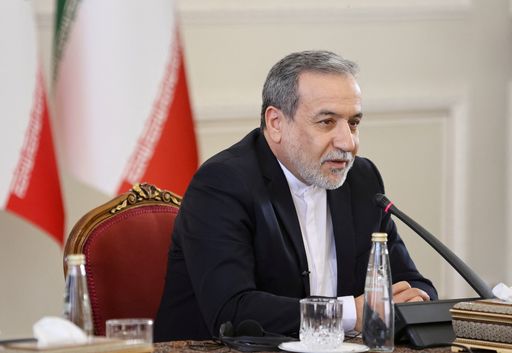
Trust, once broken, is far harder to rebuild than bases are to expand, or bombers are to deploy.
The United States may still have the world's strongest military. However, power alone does not equate to reassurance.
Once allies begin to believe that Washington can expose them to retaliation without consultation, “punish” them when they dissent, and revise long-standing commitments on a transactional whim, the security umbrella ceases to resemble shelter.
It starts to look like a risk. And when that happens, states do what states always do: they hedge and diversify their partnerships, including with powers such as China and Russia.
The real cost of the Iran war, then, may not be measured only in missiles, oil prices, or destroyed infrastructure. It may be measured in the steady decline of American credibility.