 Yusuf Kamadan
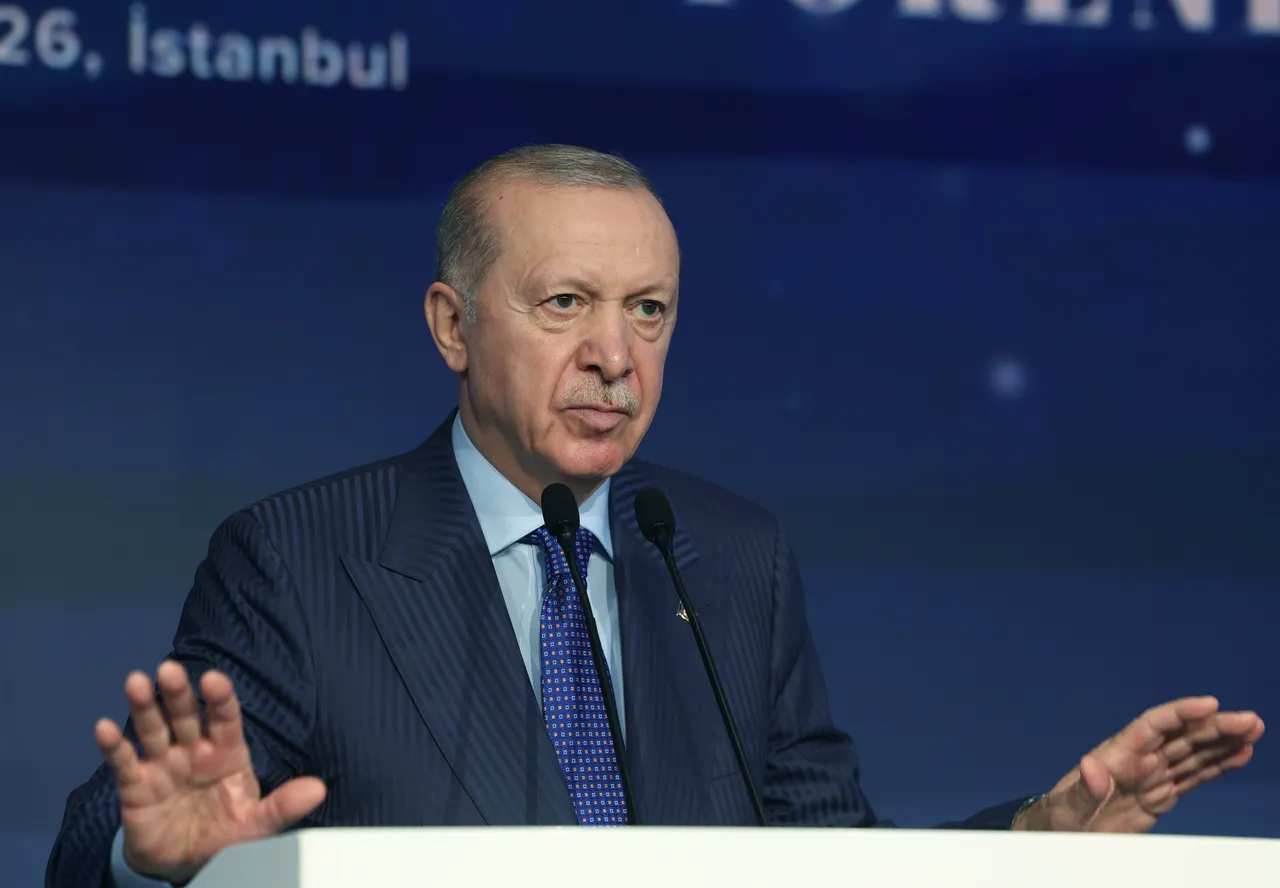
President Recep Tayyip Erdogan is set to unveil Türkiye’s new artificial intelligence road map on June 13, outlining a comprehensive strategy aimed at strengthening the country’s position in the rapidly evolving global AI landscape while accelerating its digital transformation.
The roadmap, prepared under the auspices of the presidency, will be launched at a high-profile event in Istanbul, bringing together government institutions, technology firms, defence industry representatives, academics and entrepreneurs.
The initiative is expected to build upon Türkiye’s National Artificial Intelligence Strategy for 2021–2025 and mark a transition from planning to implementation.
The new strategy represents far more than a technological agenda, says Professor Erman Akilli, a faculty member at Ankara Haci Bayram Veli University and a researcher at the Foundation for Political, Economic and Social Research (SETA).
“What we are likely to see is not simply a technical strategy, but a new stage in Türkiye’s digital statecraft,” Akilli said.
He argued that the country is moving towards integrating AI into core areas of governance and economic management, including budget administration, agricultural planning, healthcare, customs risk analysis, disaster response and public service delivery.
“For Türkiye, this is not only about efficiency,” he says. “It is about building what I would call a capacity insurance for the state.”
As global supply chains become increasingly vulnerable to geopolitical tensions, sanctions and technological dependencies, AI is emerging as a strategic tool that can enhance national resilience.
Akilli believes the central theme of Erdogan’s AI vision will be “digital autonomy”, which translates into Türkiye’s ability to design, govern and deploy artificial intelligence according to its national priorities rather than relying exclusively on imported technologies.
Defence and local AI models take centre stage
One of the key areas likely to receive significant attention is the defence sector, where Türkiye has already developed internationally recognised capabilities in unmanned systems and military technologies.
Akilli says the next stage will involve integrating AI into swarm drone technologies, autonomous platforms, decision-support systems and secure communications networks.
“Türkiye already has strong capabilities in drones, defence technologies and command systems. The next logical step is to multiply these capabilities through AI,” he noted.
Another major priority is expected to be the development of Turkish large language models (LLMs).
As AI-generated content increasingly shapes information flows and online narratives, Akilli argues that language models have become strategic assets.
“Language is not only a communication tool. It is also a carrier of culture, meaning, memory and national perspective,” he says.
Projects such as T3 AI, developed through cooperation between the T3 Foundation and Baykar, as well as HAVELSAN’s MAIN enterprise AI platform, are examples of efforts aimed at creating domestic AI capabilities that can operate in Turkish and address local needs.
Beyond defence and language technologies, the roadmap is expected to focus heavily on modernising public administration.
AI systems could help reduce bureaucracy, improve decision-making processes and enable public institutions to extract greater value from large-scale data sets.
Small and medium-sized enterprises are also likely to be a key target of the strategy, as policymakers seek to improve productivity and competitiveness through wider AI adoption.






Building infrastructure for the AI age
The unveiling of the AI policy comes amid growing global competition to establish the infrastructure necessary to support AI development, including advanced data centres and cloud computing facilities.
Akilli says that discussions about AI often focus on software and algorithms while overlooking the importance of physical infrastructure.
“AI is also about compute power, energy, chips, cooling, fibre networks, cloud regions and data centres,” he says. “Without data centres and computing infrastructure, digital autonomy remains only a slogan.”
Türkiye has already taken steps in this direction. Akilli highlights the partnership between Turkcell and Google Cloud to establish the country’s first hyperscale regional data centre as a significant milestone.
The project signals a broader shift in thinking, with policymakers increasingly focusing on the physical foundations of the AI economy rather than solely on software adoption.
However, Akilli cautions that data centres should not be viewed as prestige projects. Their success depends on factors such as energy security, renewable energy integration, cybersecurity measures and regulatory clarity.
“The real objective should be to become a regional data hub while ensuring that Turkish data, Turkish institutions and Turkish AI ecosystems benefit from this infrastructure,” he says.
Data sovereignty and regulation
The rapid expansion of AI has also raised concerns about data privacy, governance and technological dependence, particularly as much of the world’s AI infrastructure remains concentrated in the hands of a small number of major Western technology companies.
Akilli believes Türkiye can establish safeguards to protect citizens and national institutions while continuing to benefit from advances in artificial intelligence.
“The real question is whether Türkiye can prevent technological dependency from becoming algorithmic dependency, and whether algorithmic dependency then turns into epistemic dependency.”
He points to Türkiye’s existing personal data protection framework under the Law on the Protection of Personal Data (KVKK) as an important starting point, while stressing the need for continued updates in line with global developments such as the European Union’s AI Act.
For critical sectors, he says that sensitive public data should not be processed through foreign “black-box” systems without robust safeguards. Instead, Türkiye should continue investing in domestic AI solutions that can be deployed within trusted institutional environments.
“In the AI age, the data of citizens, the institutional memory of the state and the language of public life are strategic assets,” Akilli says.
“If these are constantly processed through external infrastructures, then the state’s decision-making capacity becomes vulnerable to external dependencies.”
Türkiye is also expected to continue refining its regulatory framework for artificial intelligence. Policymakers face the challenge of balancing innovation with oversight, avoiding excessive regulation that could stifle technological development while addressing ethical, legal and security concerns.
Akilli expects Ankara to adopt a risk-based and innovation-friendly approach rather than simply replicating European models. “In my view, Türkiye will not simply copy the EU AI Act, although alignment with Europe is important.”
Instead, he believes the country will seek to develop its own governance model that protects citizens, ensures transparency, regulates high-risk AI systems and safeguards critical infrastructure while supporting innovation.
“Türkiye will not be a country that merely imports AI regulation from others,” Akilli says. “It will become a norm for entrepreneurs in responsible AI governance.”