 Elshad Musaoglu
Almost sixty years ago, a strange incident occurred, the circumstances of which remain unresolved.
It's especially poignant because Israel is the culprit and the United States, which considers Israel an ally, is the victim. Whenever anyone recalls this incident, especially in an accusatory tone, they are instantly labelled "anti-Semitic" by most media outlets.
However, the war against Iran, the bloodshed in Gaza and the strikes on Lebanon have meant that the influence of pro-Israeli media on public opinion no longer appears as unquestionable as it once was.
Against this backdrop, on June 8, 2026, Congressman Thomas Massie, a consistent opponent of the Republicans' unofficial "Israel First" motto, used the House floor to bring back into the public eye a story that American officials had preferred to ignore since 1967: Israel's attack on the USS Liberty, which killed 34 sailors and, according to critics of the official account, was deliberate.
Six decades is a long time to consign any event to oblivion. Or, more accurately, to silence it.
Massie's speech offered an opportunity to revisit what happened that summer day in 1967, and why the truth about those events remains inconvenient for Washington and, especially today, extremely disadvantageous for Tel Aviv.
‘Don't embarrass your ally’
The American spy ship USS Liberty was part of a classified US Navy and NSA electronic intelligence programme.
In May 1967, the ship was urgently deployed to the Eastern Mediterranean to monitor the unfolding Six-Day War. Its presence in the conflict zone made it a vital US intelligence asset.
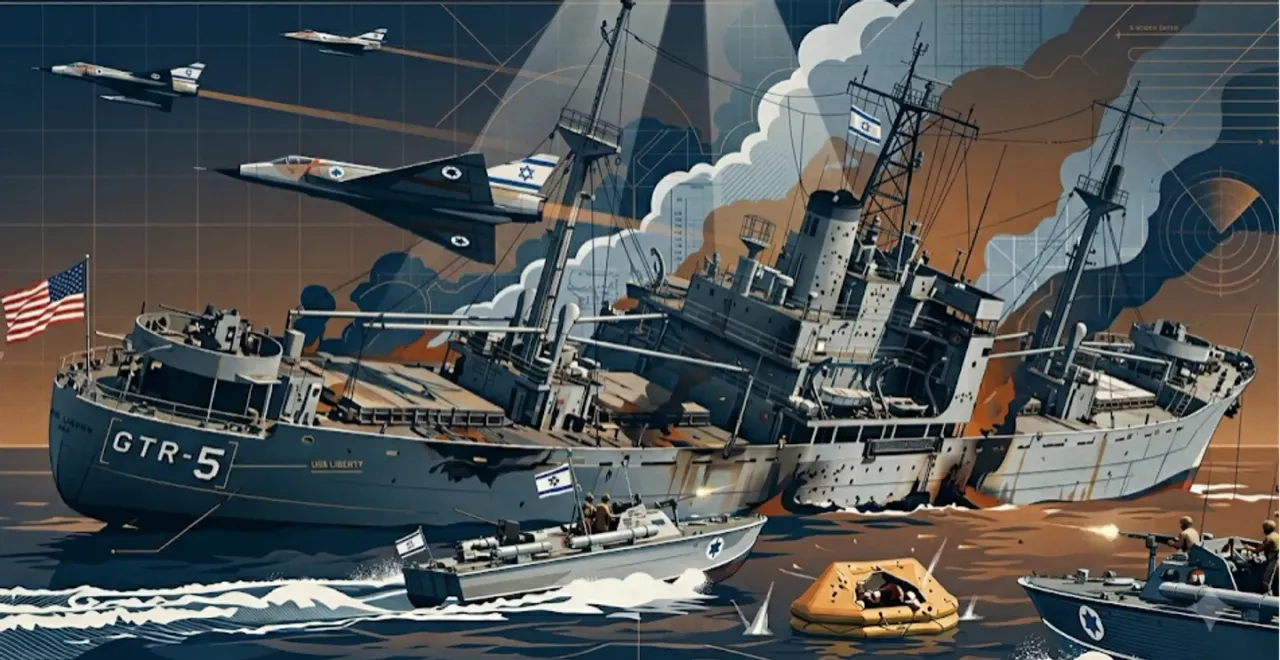
On June 8, 1967, at the height of the war, Israeli aircraft and torpedo boats attacked an American ship in international waters off the Sinai Peninsula. In just over two hours, 34 sailors were killed, and another 170 (according to other estimates, 171) were injured to varying degrees.
In terms of the ratio of killed and wounded to the crew, it was one of the heaviest attacks on an American warship since World War II—and one of the most systematically hushed-up episodes in the history of American-Israeli relations.
The chronology of that day's events also leaves no room for coincidence. Beginning early in the morning, Israeli aircraft made several low-altitude passes over the ship.
The weather in the attack area was clear, the Liberty's tail number (GTR-5) was clearly visible, and the American flag was flying on board.
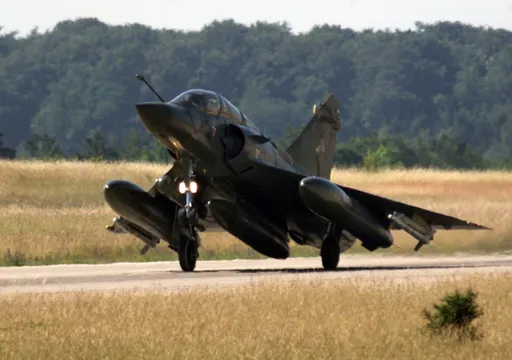
The first air strike occurred at 1:58 PM local time—almost eight hours after the surveillance began. Mirage III jet fighter-bombers began their attack with a bow-to-stern sweep, firing 30mm cannons at the superstructure.
A few minutes later, Super Mystere aircraft joined the attack, dropping napalm tanks and firing cannons at the ship again. The strikes destroyed most of the guns and disabled the antennas.
The torpedo boats struck later, penetrating the starboard side near the research compartments. When the survivors began to lower lifeboats, they were fired upon as well.
Washington's reaction was bizarre. Aircraft from the aircraft carrier Saratoga, which had scrambled to assist, were recalled on the direct orders of Defence Secretary McNamara—and, according to reports, with the personal approval of President Johnson, who reportedly said he had no intention of "embarrassing an ally."
A diplomatic and media campaign to minimise the consequences then unfolded. Israel sought to prevent an international scandal, while the Americans sought to limit domestic political fallout.
As a result, the public account of events was softened and quickly presented as a "mistake." Israel claimed the pilots mistook the Liberty for an Egyptian transport.
Washington accepted these explanations without apparent resistance. A naval commission of inquiry was hastily convened in the dry dock in Malta, where the damaged ship was moored, and concluded its work just as quickly—apparently without asking the most obvious questions.
Congress conducted no independent investigation, and the surviving crew members were forbidden from discussing the incident under threat of court-martial.
Israel, however, never backed down from its position, and the payment of compensation dragged on for years.
Intent and conspiracy
The Liberty patrolled waters off El Arish, Egypt, an area where Israeli forces reportedly carried out mass executions of Egyptian and Palestinian prisoners of war.
At the same time, the ship was capable of intercepting Israeli command communications, including preparations for the invasion of the Golan Heights—an operation the Israeli government is believed to have concealed from Washington.
Researcher James Bamford wrote in his book: the Israeli leadership initially concealed the Six-Day War behind a carefully constructed veil of total deception - from manipulating the Egyptian threat to outright lies to the UN and the American president.
In 2017, the US Navy journal Proceedings published evidence that, in a 1970s interview, Secretary of State Dean Rusk admitted that the attack on the Liberty was "not an accident, but a deliberate act."
In 1977, the CIA released three intelligence reports, dating back to 1967, to the public under the Freedom of Information Act.
Citing intelligence sources in Tel Aviv, the documents claimed that Israeli forces knew the USS Liberty's flag and that Defence Minister Moshe Dayan personally ordered the attack.
According to one of these intelligence reports, an Israeli pilot reported to the command post that he was looking at an American warship and was arrested after refusing to carry out the order to destroy the vessel.
The publication of these documents in the press caused a major scandal. However, that same year, on ABC, CIA Director Stansfield Turner dismissed these reports as "raw intelligence"—that is, unverified accounts from informants.
Turner emphasised that the agency's final analytical report, compiled after assessing all available data, reached the opposite conclusion: Israeli leadership had no intention of attacking the American ship specifically.
In 2003, the NSA, as part of a Freedom of Information Act lawsuit, declassified and handed over to researchers audio recordings and transcripts of conversations about the Liberty bombing.
But even here, as it turned out, not all is well—the declassified materials lack important details, and relevant portions of the transcripts have been redacted or deleted.
On the 40th anniversary of the tragedy, the NSA announced that it had completed its review of all remaining materials and would publish them in full. However, in 2017, The Intercept reported, based on documents from Snowden's archive, that some information about the attack remains classified.


Among the documents the White House spent decades trying to hide under the "top secret" classification, cable number 0854 holds a key place. It was sent from the US Defence Attaché's office in Tel Aviv just two days after the massacre.
According to this document, Washington possessed direct evidence from the very beginning: Israeli pilots, under orders from ground command, made at least two reconnaissance runs, clearly identified the American flag on the USS Liberty, and reported this to base twice.
Only after headquarters confirmed that the vessel before them was a US vessel did the pilots receive a second order to open fire.
This conspiracy of silence includes the House Appropriations Committee's (HAC) report, which the NSA refuses to release to the public on legal grounds.
According to testimony from former CIA analysts and members of Congress, the document conceals the most inconvenient fact: as early as June 7, 1967, the day before the attack, the Israelis threatened to destroy the USS Liberty unless the spy ship was immediately removed from international waters off the Sinai coast.
‘A shameful act’
The secrecy surrounding the incident endured for decades. Surviving sailors repeatedly claimed that after their return, they were effectively forbidden from discussing the attack publicly, under threat of disciplinary action.
One officer later recalled that the admiral summoned him to a closed office, removed his rank insignia, demanded a detailed account of what he had seen, and warned that if he told anyone else, he would face prison.
In 2003, Captain Ward Boston, senior counsel to the Naval commission that investigated the 1967 attack, testified in a Freedom of Information Act lawsuit about the pressure.
In a sworn affidavit, he claimed that President Lyndon Johnson and Defence Secretary Robert McNamara ordered a finding of "mistaken identity," despite what he said was evidence to the contrary.
Boston attributed his years of silence to military discipline: "When orders come, I carry them out." He decided to speak out after the publication of a book that defended the official version and, in his view, distorted the facts.
Former Chairman of the Joint Chiefs of Staff, Admiral Thomas Moorer, who participated in the investigation into the incident, called it a "classic American cover-up."
He said he had no doubt it was a deliberate attack. He described the recall of the rescue planes as "the most shameful act" he had witnessed in his military career. Moorer also questioned why American authorities could put Israel's interests above their own national interests.
In January 2024, during a hearing on HB 1041 in the New Hampshire House of Representatives, USS Liberty veterans were given the opportunity to present their account of events to a government body for the first time in decades.
The bill would have established a special commission to investigate the 1967 attack and its aftermath.
Speaking before the House Committee on State-Federal Relations and Veterans' Affairs, Purple Heart recipient Larry Bowen said the US government failed to come to the crew's aid and later prohibited survivors from discussing the incident publicly. According to the veteran, the crew members' testimony and the investigation's findings were tailored to fit the Israeli narrative.
Bowen noted: "I never had the opportunity to tell the American people what happened. Our government did not come to our aid. It silenced us, prohibiting us from speaking about it and threatening us with imprisonment and fines if we violated that prohibition.
“Our government failed to conduct a thorough investigation of the attack. The Navy convened a formal commission of inquiry and received testimony from several of my fellow service members, but they were then ordered to adjust that testimony to fit the story of mistaken identity that Israel advanced in its apology for the attack."
The battle for the narrative
Although this topic is rarely raised in the media and is considered undesirable, individual politicians and public figures periodically return to it. For example, on the anniversary of the incident—June 8, 2026—Republican Congressman Thomas Massie delivered a speech in the House of Representatives, calling the attack "unprovoked" and demanding a new investigation.
Twelve surviving members of the Liberty crew, most of them over eighty, sat in the visiting gallery.
The Kentucky congressman, who recently lost a primary in which pro-Israel groups actively campaigned against him and invested heavily in his cause, declared: "Let's conduct an investigation. Let's pass a resolution that honours them. This is long overdue."
In his speech, he recalled that visibility that day was perfect, the American flag was clearly visible, and Israeli planes had been circling over the ship the day before.
"The Israelis intended to leave no survivors," he stated, describing the 25-minute sustained barrage of the air strike. To support his position, Massey cited the aforementioned politicians and military officials, including Rusk and Moorer:
"None of these distinguished people believes this was an accident," the congressman said. "They are convinced this was a deliberate assassination—either a false flag operation or an attempt to cover up what Israel was doing that day."
Supporters of the official Israeli narrative, of course, reject accusations that the attack was deliberate.
The pro-Israel publication JNS and other similar platforms characterised Massie's speech as "promoting conspiracy theories", while fellow Israeli politician Dan Crenshaw suggested he was simply seeking an audience in the anti-Israel media for personal gain.
Many continue to attribute the incident to a "tragic chain of errors" in combat. Within this framework, the attack is portrayed not as the shooting of American sailors but as a classic "friendly fire" incident, caused by communications chaos, pilot fatigue, and catastrophic failures in communications systems on both the Israeli and American sides.
Similarly, proponents of an alternative interpretation of the incident are reduced to the category of people for whom the slogan “Remember Liberty” is a veiled expression of the view that “Israel is evil.”
Last year, Candace Owens, a former pro-Israel activist who has worked for Zionist American media, interviewed one of the attack's survivors and said, "There is hardly a story that better reveals the deceptive and vile nature of modern Israel and its influence on the American government."
Any testimony from surviving ship veterans, statements from senior Pentagon officials, or independent investigations indicating the deliberate nature of the attack are systematically dismissed within this discourse.
The full picture of the incident that occurred sixty years ago has still not been established, simply because no concerted effort has been made to reconstruct it.
The years-long siege of government databases continues. Intelligence agencies are reluctant to declassify the documents, as their public disclosure would dispel the convenient myth of an "inadvertent error."
Yet, against the backdrop of the war in the Middle East, accusations against Israel and demands for an investigation that Washington has long tried to bury, along with the dead sailors, are growing louder.