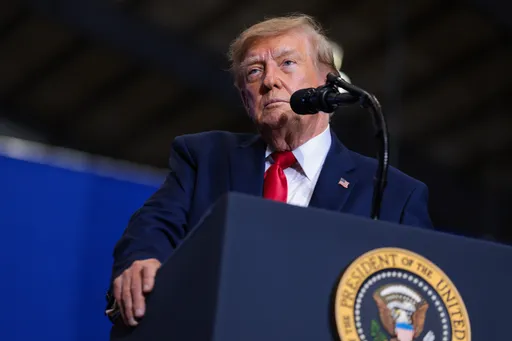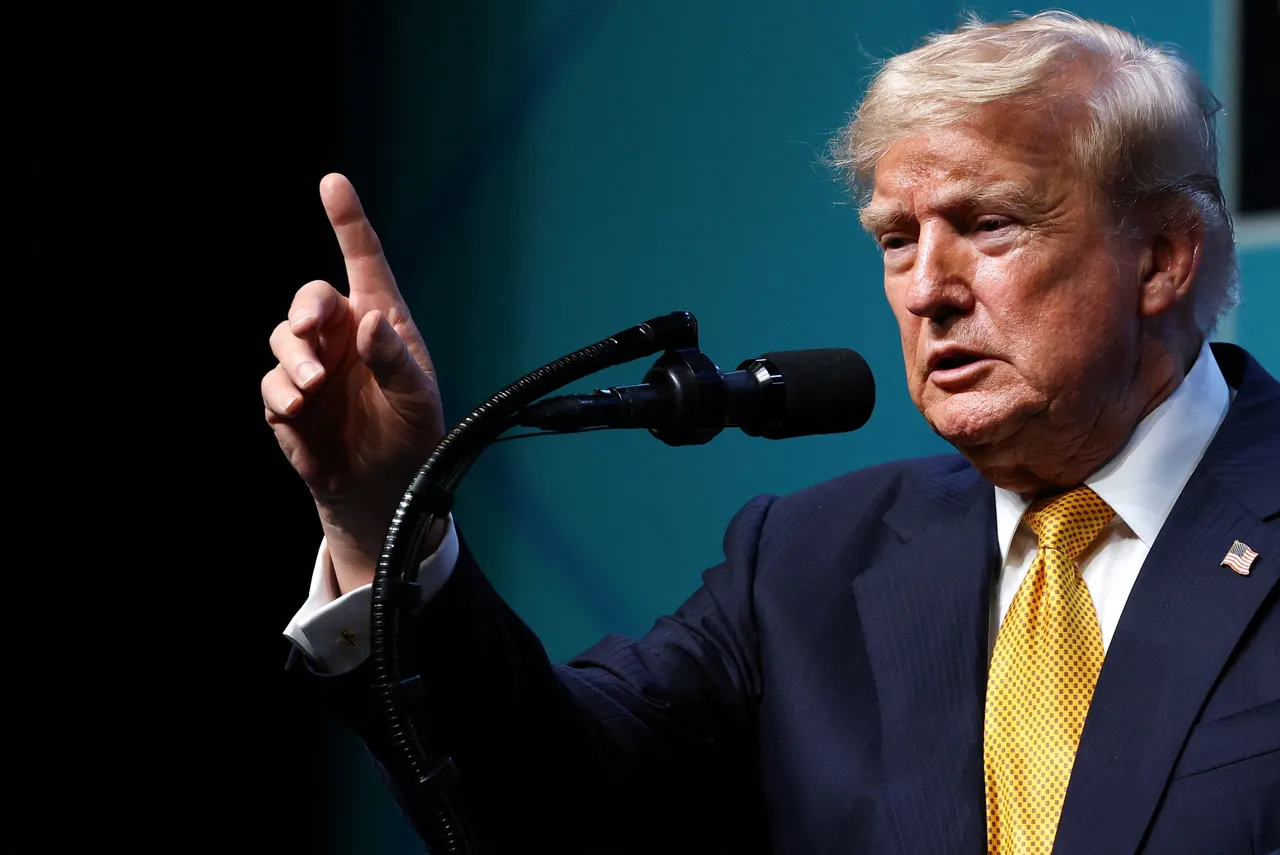
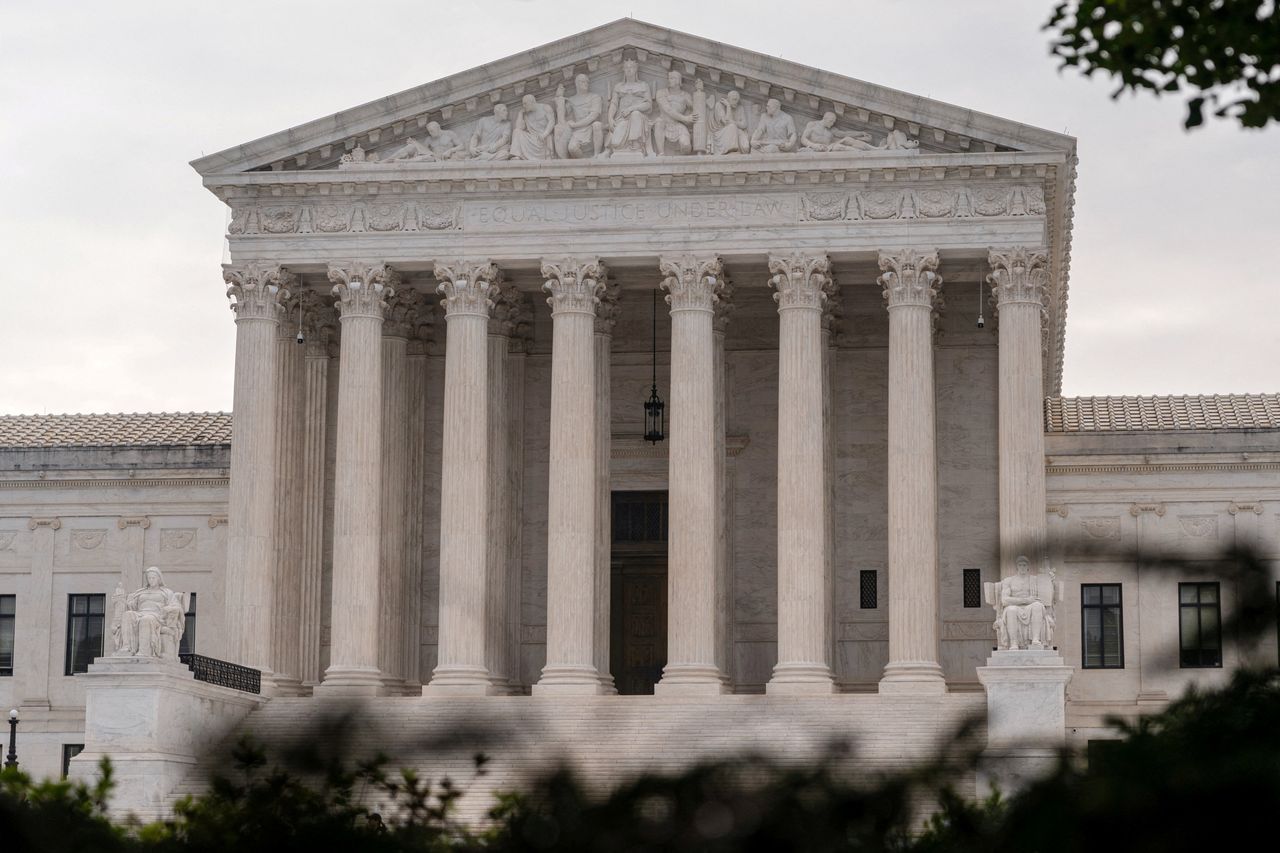
US President Donald Trump has said that he will ask the US Supreme Court to rehear a case challenging birthright citizenship, signalling anger over the court's rejection of one of his signature policies.
The court, which has a 6-3 conservative majority including three Trump appointees, last month rejected his attempt to restrict birthright citizenship in the US.
The Republican president called the 6-3 ruling, which was authored by conservative Chief Justice John Roberts, a "miscarriage of justice."
"AMERICAN CITIZENSHIP IS NOT FOR SALE! In fact, that is a crime, and therefore, the Supreme Court's ruling is wrong," Trump wrote on Truth Social on Wednesday.
"I will be asking for a Rehearing by the United States Supreme Court, IMMEDIATELY."
Trump, who has repeatedly tested the limits of presidential power in domestic and foreign policy, issued an executive order ending birthright citizenship last year on his first day back in office as part of a suite of policies to crack down on legal and illegal immigration.

'Primary allegiance'
The 14th Amendment has long been interpreted as guaranteeing citizenship for babies born in the United States, with only narrow exceptions such as the children of foreign diplomats or members of an enemy occupying force.
The provision at issue, known as the Citizenship Clause, states: "All persons born or naturalised in the United States, and subject to the jurisdiction thereof, are citizens of the United States and of the state wherein they reside."
The administration has long asserted that the phrase "subject to the jurisdiction thereof" means that being born in the United States is not enough for citizenship, and excludes the babies of immigrants who are in the country illegally or whose presence is lawful but temporary, such as university students or those on work visas.
Citizenship is granted only to the children of those whose "primary allegiance" is to the United States, including citizens and permanent residents, the administration has argued.