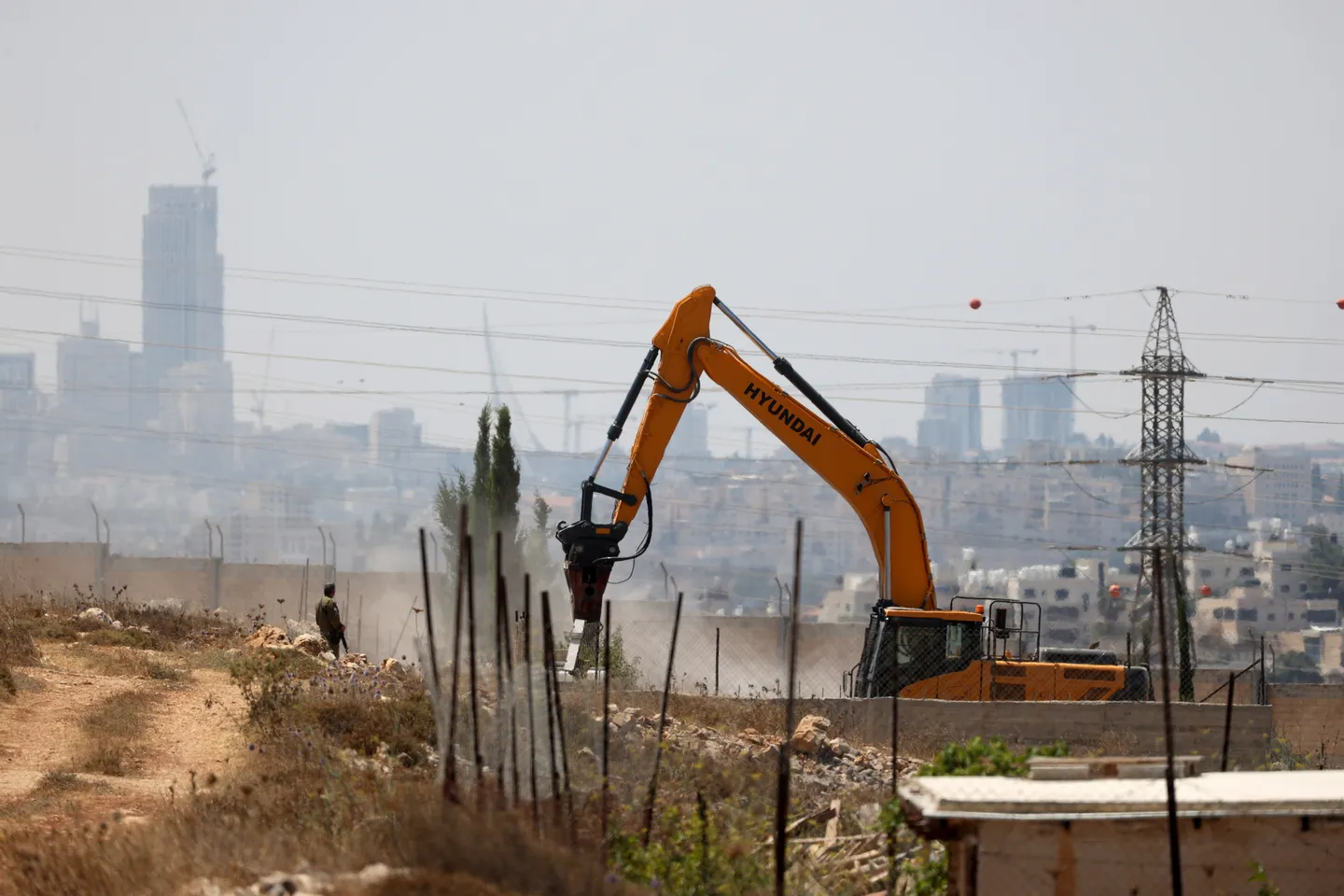
More than 500 volunteers have helped dismantle structures at a Palestinian farm in the occupied West Bank after Israeli authorities ordered their demolition, threatening to charge the owners if the army carried out the work.
The volunteers worked over three days at Hakoortna farm in western Tulkarem before the Al-Tanib family obtained a temporary court order suspending the demolition pending a hearing.
Established more than 40 years ago, the farm lies near Israel’s separation wall in the northern occupied West Bank and is surrounded by Israeli industrial facilities.
For decades, it has supported the family’s livelihood while serving as a site for agricultural training and student visits.
Short deadline before demolition
Farm owner Fayez Awad al-Tanib said that Israeli authorities issued a demolition order on September 16, giving the family a deadline to dismantle the structures themselves.
“The family was told that if it failed to comply, the Israeli army would carry out the demolition using its machinery and charge the family for the cost,” he said.
The order followed an August 2025 notice directing the family to halt work on several agricultural structures ahead of their removal. With assistance from the Jerusalem Legal Aid and Human Rights Center, the family began legal proceedings to challenge the measures.
Al-Tanib said Israeli authorities cited “security grounds” related to the farm’s proximity to the separation wall, arguing that some structures obstructed visibility and others had been built without permits.
The family disputed any suggestion that the structures were new, saying many dated from between 1984 and 1995.
Three days of dismantling before freeze
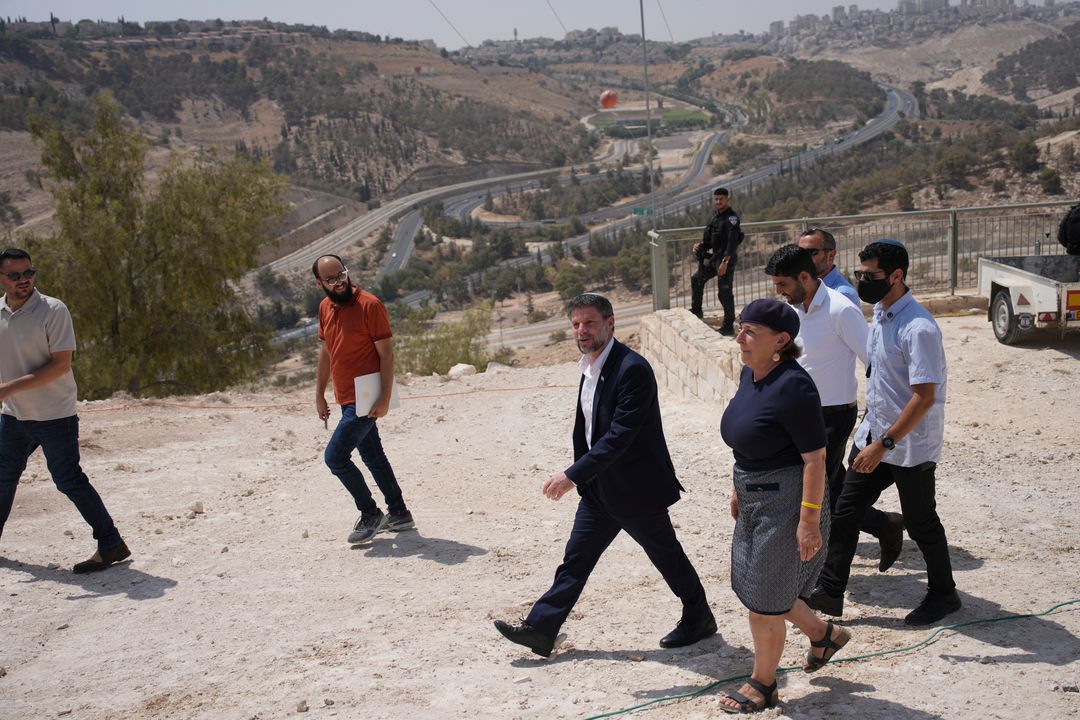
As the deadline approached, more than 500 volunteers spent three days dismantling greenhouses and other agricultural structures, emptying fish ponds and moving beehives and tree-cultivation equipment to save what they could before demolition machinery arrived.
“The work continued into the evening, while the family emptied fish ponds and moved whatever equipment and structures could be dismantled,” al-Tanib said.
Most of the structures covered by the demolition order had already been taken apart when the Jerusalem Legal Aid and Human Rights Center informed the family that it had obtained a temporary court order suspending the demolition.
“We dismantled everything out of fear of the demolition, and then we received a decision freezing it,” he said.
The centre said the Jerusalem District Court issued the temporary order following an urgent petition by its lawyers and scheduled a hearing for December 17.
The order does not cancel the demolition decision but temporarily suspends the implementation until the court considers the petition.
Four decades of farming and education

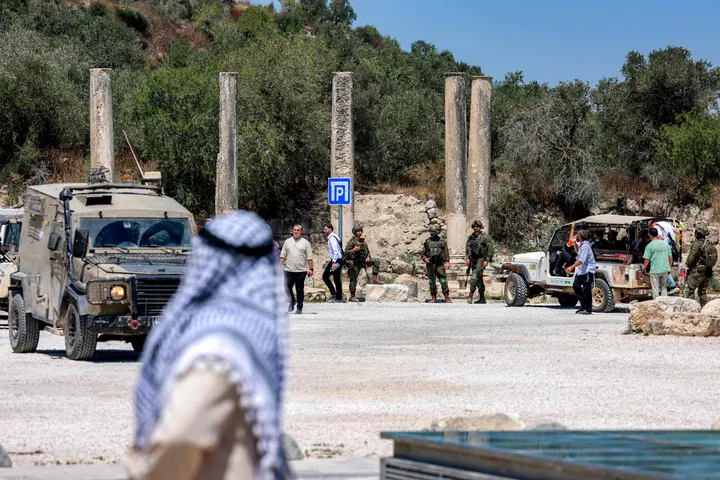
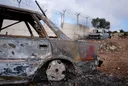
Al-Tanib began working and managing the land in 1984 after his father’s death. Together with his family, he later developed it into a farm using organic agricultural methods and reducing its reliance on fertilisers and chemicals.
According to al-Tanib, Hakoortna covers around 32 dunams, equivalent to 32,000 square metres or 7.9 acres. Around 10 dunams are planted with citrus trees and another 10 with other fruit trees.
The farm also includes greenhouses, fish ponds, beehives and a two-storey agricultural house, with each floor covering around 120 square metres.
Over the decades, Hakoortna grew into a centre for agricultural training and education as well as food production.
“Tens of thousands of children had visited the farm, along with university students specialising in agriculture who sometimes spent up to four months a year training there,” said al-Tanib.

Separation wall, industrial facilities
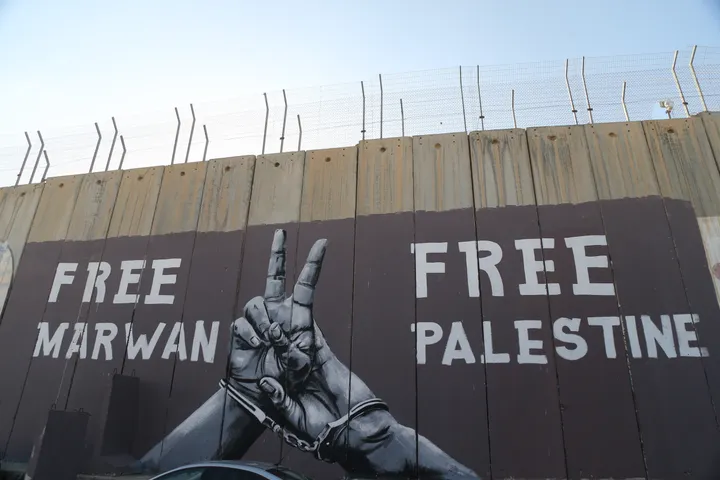
The family said conditions at the farm changed significantly after Israel began constructing the separation wall in 2002, leading to the loss of part of its land and restrictions on access and agricultural work.
Hakoortna now lies between the wall and Israeli industrial facilities. Al-Tanib said repeated measures against the farm threaten his family’s ability to remain on the land.
“They want to uproot us from the farm and remove us from it to clear the way for the chemical factories,” he said.
Israeli authorities, according to what the family was told, said the measures concerning the farm are based on security and planning considerations as well as permit-related issues.
The family also blames nearby factories for environmental damage to its land and crops over the years.
Most of the wall’s route runs inside the occupied West Bank rather than along the Green Line separating it from Israel. An Israeli system of permits and gates regulates farmers’ access to agricultural land isolated by the barrier.
The UN Office for the Coordination of Humanitarian Affairs (OCHA) has documented how these restrictions disrupt essential agricultural work, including plowing, pruning, fertilising and harvesting, particularly in the northern West Bank’s Tulkarem governorate.
In a 2004 advisory opinion, the International Court of Justice found that Israel’s construction of the wall within the occupied Palestinian territory and its associated regime violated international law. Israel contends that the wall was built for security reasons to prevent attacks.
Demolitions accelerate across occupied West Bank
Since the beginning of 2026,, Israeli authorities have demolished or forced Palestinians to demolish 1,164 structures for lacking Israeli-issued permits, displacing more than 1,500 people, according to OCHA. The agency says such permits are nearly impossible for Palestinians to obtain.
In August alone, Israeli authorities carried out 71 demolition operations affecting 155 Palestinian structures, including 61 agricultural structures and 33 used as sources of livelihood, according to the Palestinian Colonization and Wall Resistance Commission.
According to OCHA, the average number of structures demolished each month in Area C and East Jerusalem since 2024 has been at least double the monthly average recorded during the previous 15 years, indicating an acceleration in demolitions.