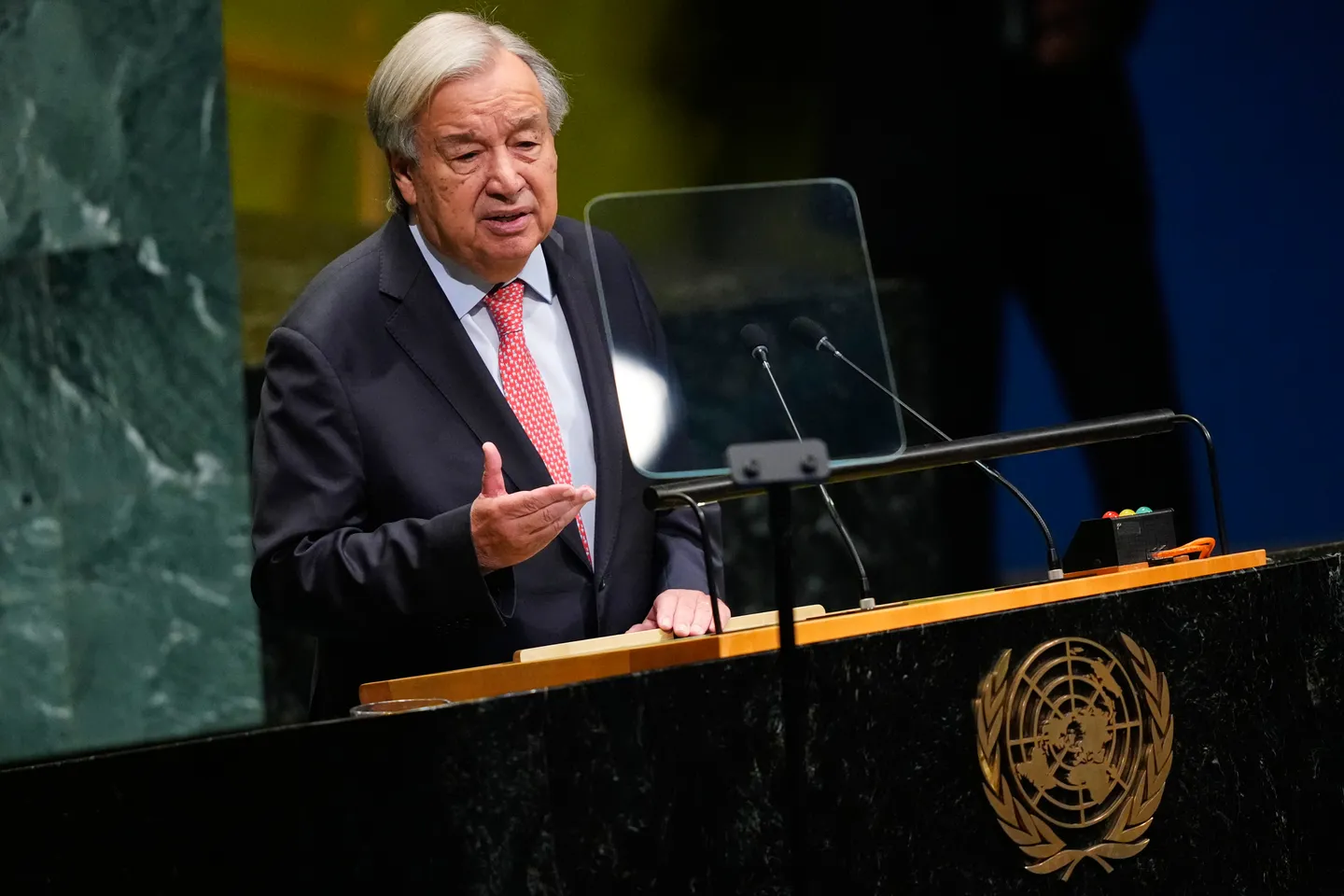
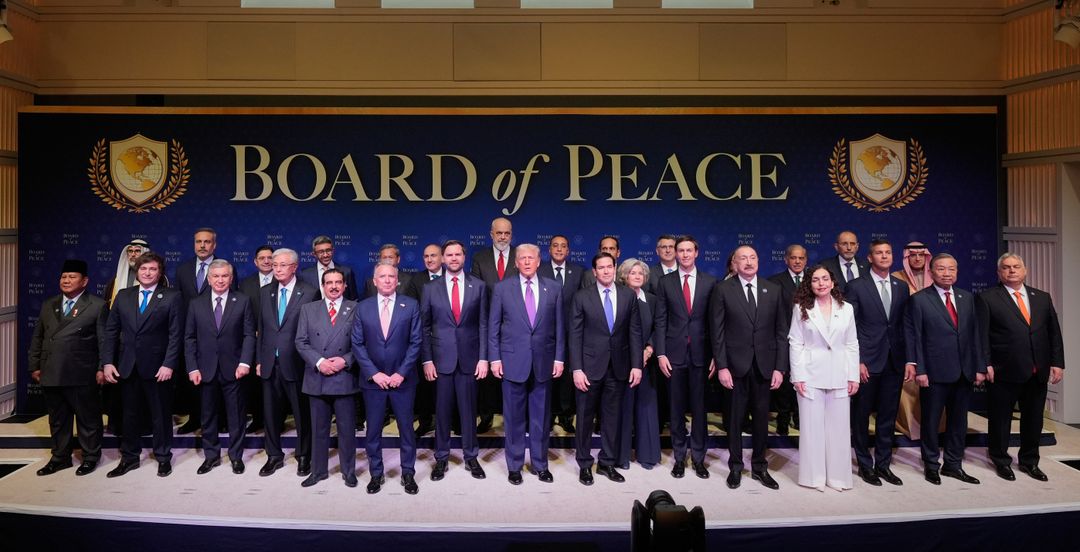
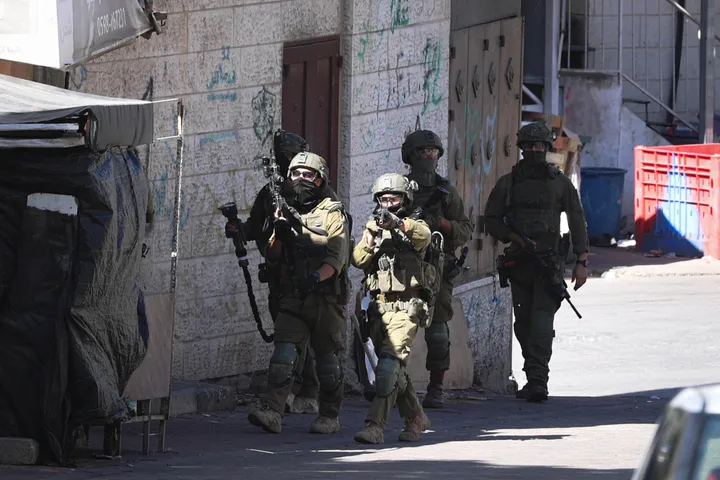
UN Secretary-General Antonio Guterres has warned that Israeli violence, displacement and illegal settlement expansion in the occupied West Bank are undermining prospects for peace and raising the risk of “ethnic cleansing”.
“Violence, displacement, and settlement expansion by Israel in the occupied West Bank are bulldozing the path to peace and raising the spectre of ethnic cleansing,” Guterres said on Tuesday in an address to the 81st UN General Assembly in New York.
“We cannot allow the two-state solution to disappear before our eyes,” he added.
Guterres said the devastating situation in the occupied Palestinian territories must not be overlooked amid wider turmoil across the Middle East.
He described the October 7, 2023 attacks by Hamas as “abhorrent”, but said they were followed by “an onslaught on Palestinians in Gaza, with a scale of killing and destruction unlike anything I’ve witnessed in my years as secretary-general”.
‘Comply with international law’
Guterres recalled that the International Court of Justice had issued legally binding provisional measures in the case concerning the application of the Genocide Convention in Gaza.
He also referred to an advisory opinion by the court, saying the UN must be allowed to carry out its mandates in Gaza and that its staff and humanitarian personnel must be protected.
“All parties must comply with international law and the court’s orders,” he said.
Turning to the wider region, Guterres said conflicts were “cascading” across the Middle East, while so-called ceasefires had amounted to “little more than lesser fires”, with civilians continuing to bear the cost.
“I appeal to the leaders in this chamber to maximise this high-level week for de-escalation and dialogue,” he said.
Guterres urged the international community to send a clear message that the fighting must end, humanitarian assistance must be allowed to flow, and navigational rights and freedoms must be fully restored in line with international law.



Ukraine, Sudan and UN reform
On Ukraine, Guterres said Russia’s war had subjected a sovereign country to “a brutal war in blatant violation” of the UN Charter.
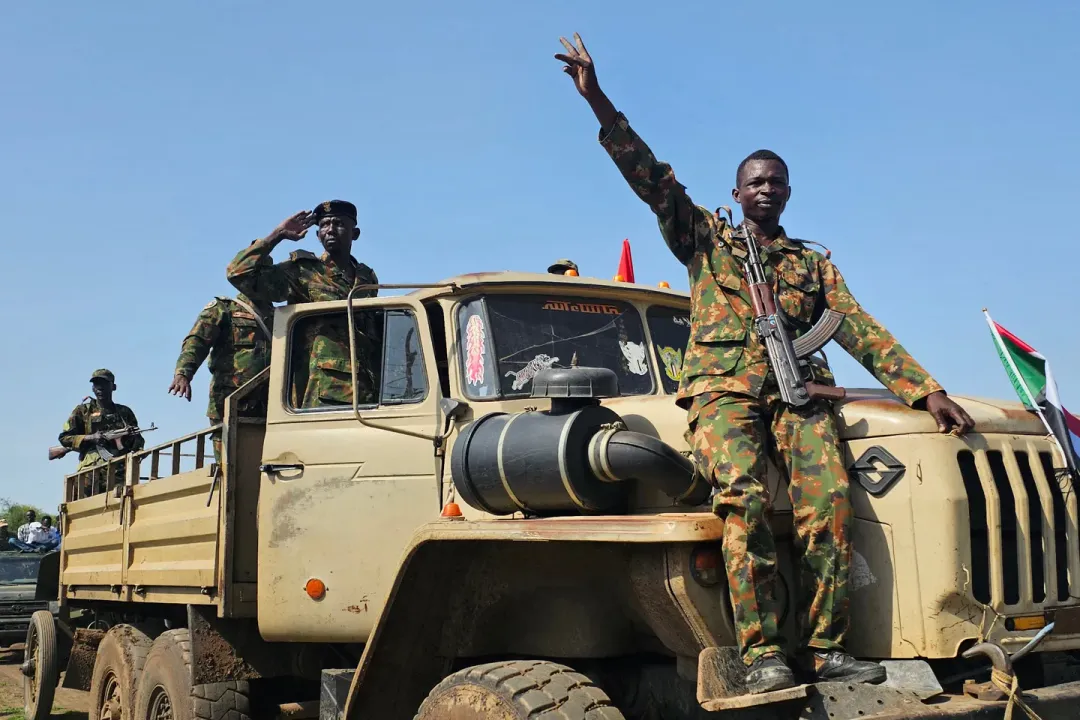
He described the conflict in Sudan as “a war on civilians”, citing mass displacement, hunger, attacks on hospitals and homes, sexual violence and ethnically driven attacks.
The UN chief also warned that Myanmar’s crisis risked slipping from global attention.
Guterres called for reform of the UN Security Council, saying the absence of permanent African seats was “unjust and indefensible”.
AI requires global oversight
Guterres said power was increasingly derived from data, computing capacity and algorithms, while control of those resources remained highly concentrated.
“The danger is not technology. The danger is technology without accountability, capability without oversight, decision-making without transparency,” he said.
Countries with the greatest AI capabilities also carry the greatest responsibilities, he said, urging them to share information on emerging safety risks, cooperate on testing and work towards common safeguards.
Guterres called for a multilateral AI risk-management framework backed by credible and independent oversight, while ensuring that no country is left behind.
“Artificial intelligence must be shaped by humanity, with humanity, and for all humanity,” he said, adding that “children must never become the test subjects for unregulated systems.”