 Nasir Qadri
Somewhere in America this week, a young woman is calculating whether she can make her student loan payment, her car payment, and her credit card minimum before the month ends.
A strategist is calculating whether her debt is the right price for her body in a ground war against Iran.
The average American carries $63,500 in total debt as of 2026, a burden concentrated most heavily among the 25-to-44 age cohort the Pentagon needs most, accumulated not through recklessness but through the ordinary arithmetic of surviving in a political economy that privatised education, defunded public institutions, and handed the next generation the bill.
That bill is now being proposed back to her as an exchange: twenty-four or thirty-six months in uniform on Iranian soil, and her debt would be discharged.
Jaff calls this voluntary enlistment. His proposal describes a state that created the conditions of economic coercion and would now harvest that coercion as military labour, with no fingerprints on the compulsion because the mechanism is financial rather than legal.
Voluntary only in the sense that a person drowning is free to choose which hand pulls them out.
The strategist who devised the diabolical plan is purportedly a retired Canadian Armed Forces officer who also claims to be “an expert in international security, crisis management, and geopolitical risk”.
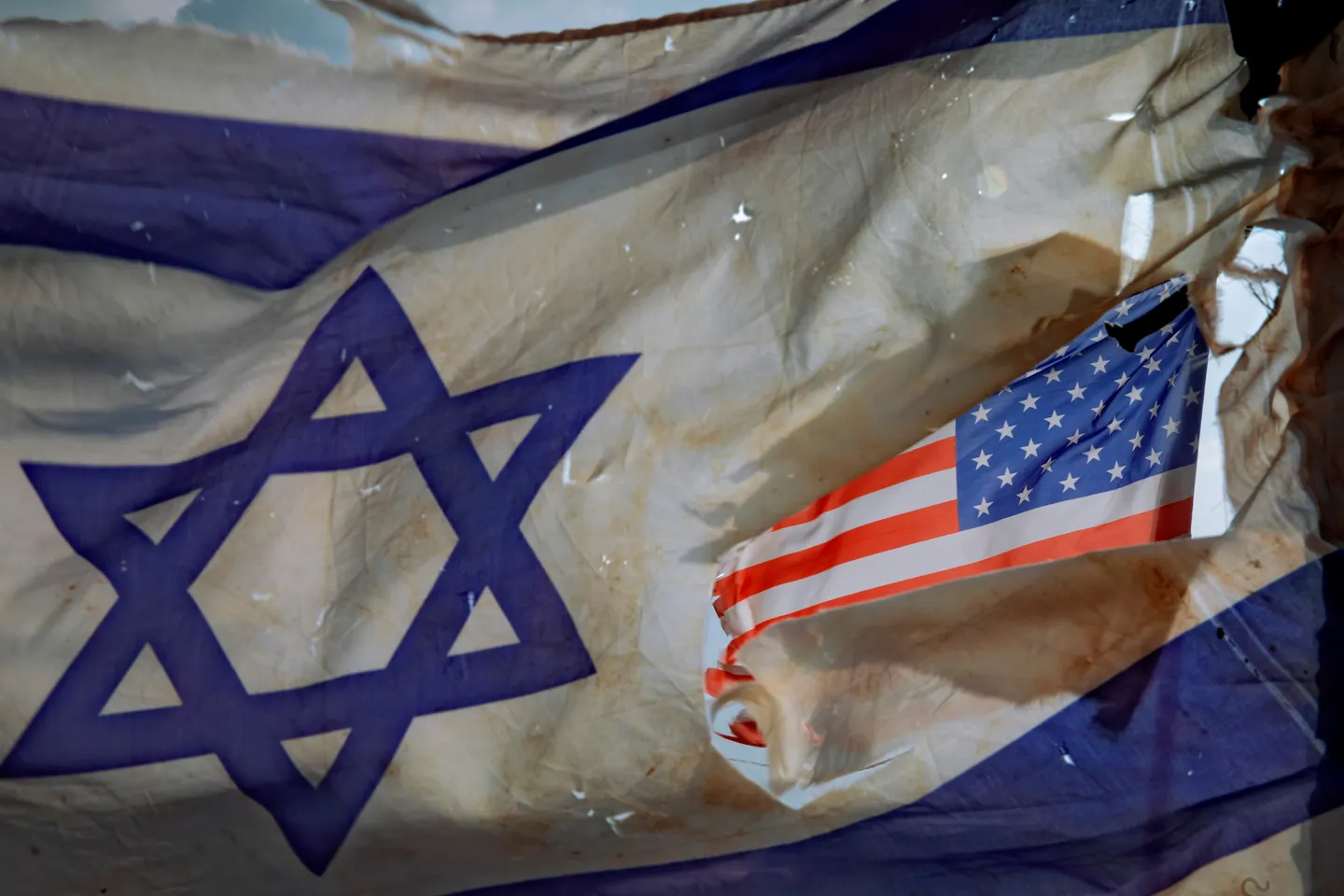
The fact that an Israeli news portal published the so-called ‘opinion’ is itself a reflection on Israeli society and its intelligentsia, and the moral depths to which they have fallen over the years, waging unnecessary wars across multiple fronts and constantly keeping the region on the boil.
Sovereign debt as imperial labour
Every American war has found the economic mechanism that converts the most financially exposed generation into military labour.
The GI Bill for the Depression-era poor. College deferments that sent working-class Americans to Vietnam while the affluent studied. Citizenship pathways that enlisted non-citizen recruits after 9/11.
The Iran war has found its proposed mechanism in the $1.86 trillion student debt burden, which Jaff proposes selectively discharging in exchange for military service.
What distinguishes this proposal from its predecessors is not the desperation it reflects but the candour.
Previous mechanisms concealed the coercive logic inside the language of patriotism, opportunity, and civic duty.
Jaff's proposal openly calls for the state to discharge the debt it permitted to accumulate, through the institutions it defunded, against the generation it failed, in exchange for bodies it needs for a war it cannot staff through any other means.
The legal question of whether this constitutes compelled service is less important than the political one.
Consent obtained against conditions of severe economic dependency, where the alternative to enlistment is decades of debt servitude in a labour market that cannot absorb the generation it produced, is not consent in any sense that the word has historically carried moral weight.
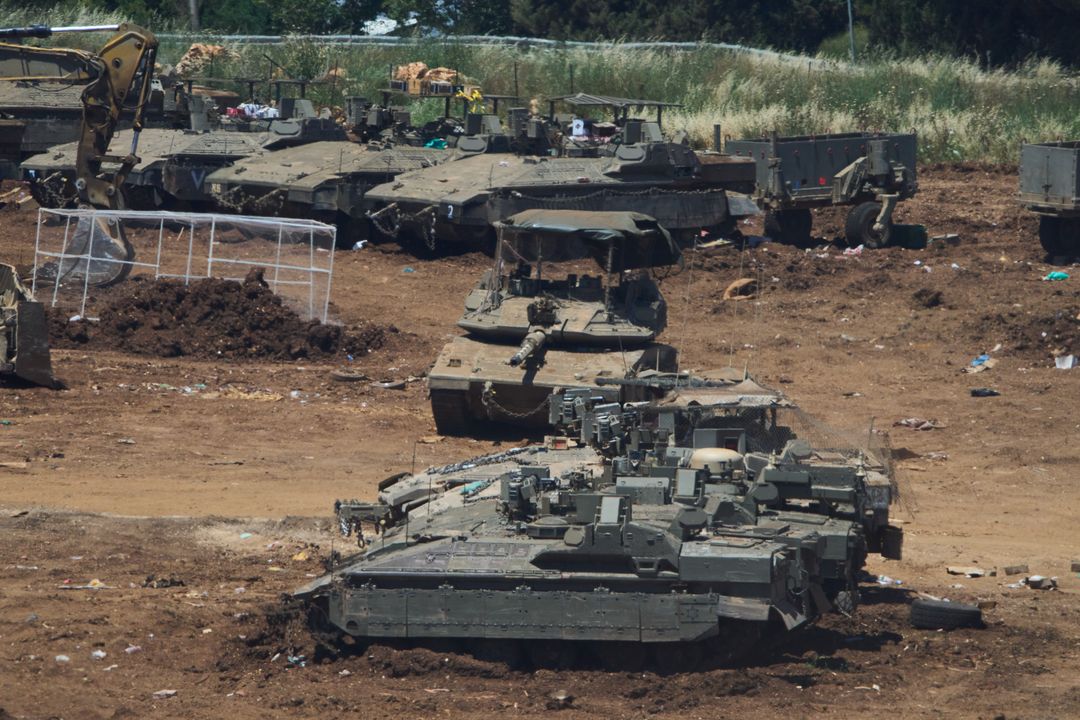
What Jaff's proposal presents as voluntary enlistment is more precisely a population whose options have been so systematically narrowed that the state's offer of relief functions as compulsion without requiring compulsion's legal form.
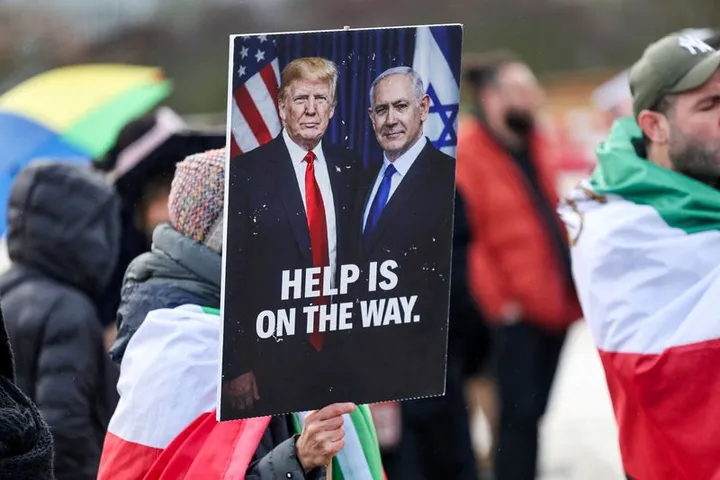

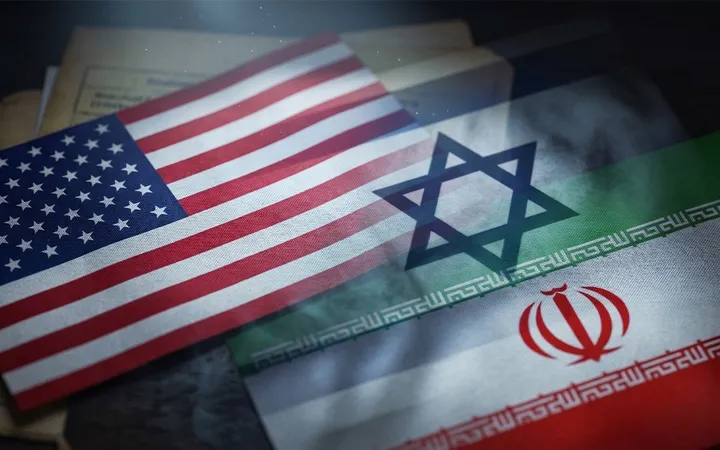




Under Jaff's proposal, the Pentagon would not need a draft when economic conditions could make enlistment the rational choice for millions of people who had no hand in engineering those conditions.
The debt proposal is not the only instrument this strategic vision has produced.
Self-determination as imperial weapon
The ICJ affirmed in its 2004 Advisory Opinion that the right of peoples to self-determination has an erga omnes character. In its 2024 Advisory Opinion on Israel's policies and practices in the Occupied Palestinian Territory, the Court further held that, in cases of foreign occupation, the right to self-determination constitutes a peremptory norm of international law, or jus cogens.
Yet the architects of this proposal have spent seven decades watching Security Council resolutions on Palestine and Kashmir gather dust, dismissing liberation struggles as terrorism when their success threatened strategic interests, and treating the principle as a procedural inconvenience rather than a binding obligation.
Now they propose to deploy that same principle as an instrument of partition against a sovereign state they need to dismember.
The record is specific and verifiable. Fourteen Security Council resolutions on Kashmir remain unimplemented since 1948.
The US has used its Security Council position to obstruct resolutions on Palestinian statehood and ceasefire with a consistency that spans administrations, parties, and decades.
The US designated the Popular Front for the Liberation of Palestine a terrorist organisation in 1997. Jaff now proposes that Congress recognise the independence of minorities within Iranian territory as a coercive instrument of partition, not because Washington's position on liberation movements has changed, but because the geography has.
Jaff's proposal deploys the language of minority recognition and liberation as an instrument of imperial partition when it serves the dismemberment of a resistant state, while contrasting with the denial of the same language to Palestinians and Kashmiris whose liberation threatens the territorial integrity of allied states.
It is the international order functioning as designed.
That a proposal invoking the language of minority liberation to serve the logic of imperial partition appears without caveat or editorial distance in an establishment publication of a state whose founding required the displacement of another people's self-determination, and whose government has spent the last three years arguing before international courts that Palestinian statehood cannot be recognised while simultaneously prosecuting a war that has killed more than 73,000 Palestinians, is not a new low in strategic thinking.
It is strategic thinking finally dispensing with the pretence that the principle was ever meant to apply universally.
Taken together, Jaff's two proposals answer a question that strategic discourse has never stated so plainly: that the bodies of economically precarious young Americans and the identities of minority peoples in resistant states are resources to be allocated, discharged, or recognised according to the needs of imperial power.

What has changed is not the logic but the candour, a candour that signals the project no longer requires the consent, the silence, or even the ignorance of the people it is built upon.
That it required a state whose accumulated conduct across Palestine, Lebanon, Syria, and now Iran has progressively dismantled every threshold of restraint for strategic discourse to reach this level of candour about who counts as raw material and who counts as sovereign is itself the measure of how far that threshold has moved.
The question is not whether the proposal is morally wrong. That was settled before it was published.
The real question is whether the international institutions, the allied governments, and the publics whose taxes fund these wars will continue to extend to this project the diplomatic cover, the legal abstention, and the studied silence that have made each successive escalation possible, or whether the candour that produced this proposal will finally produce the reckoning it has made unavoidable.