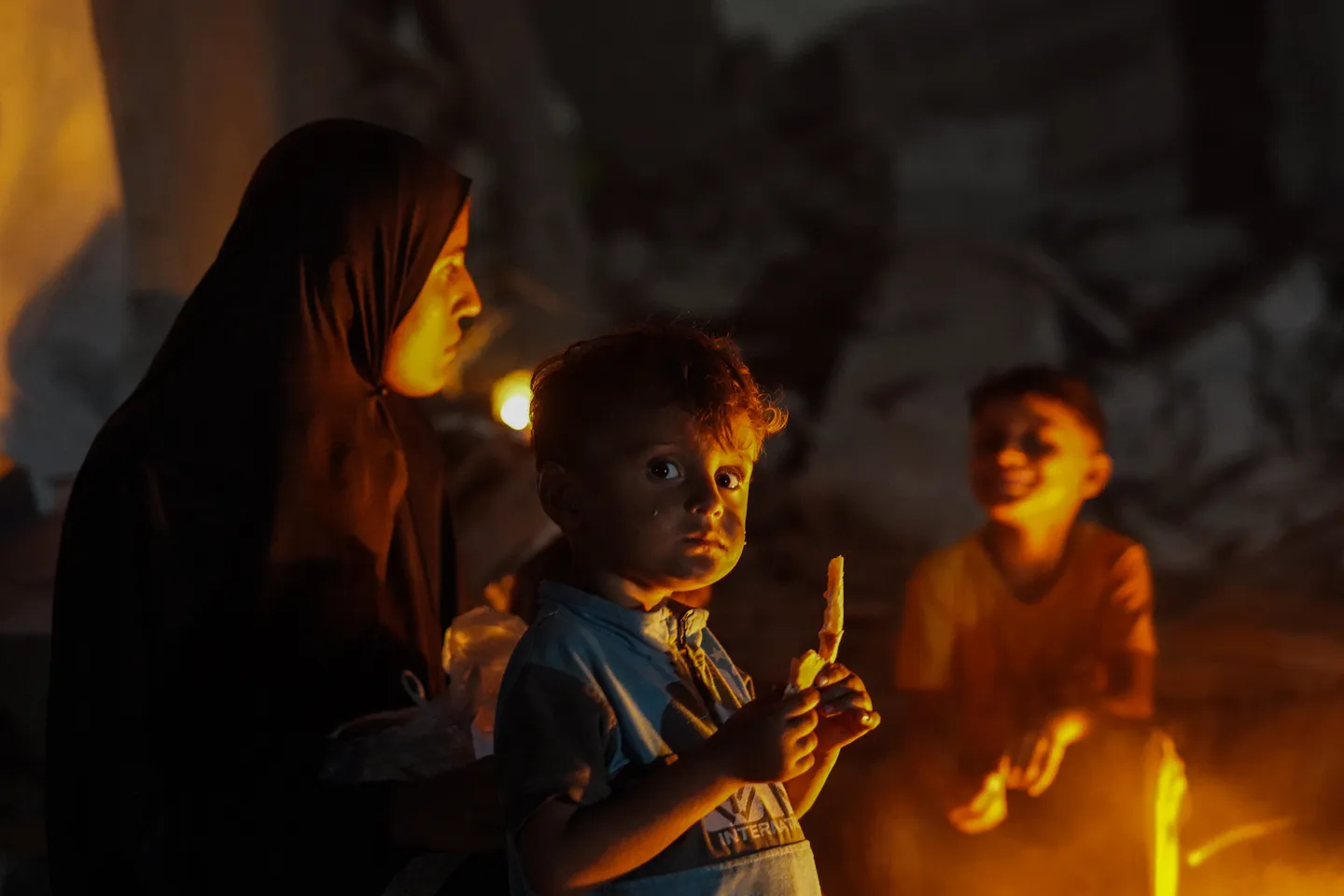
For Palestinian mother Hanan al-Joujou, 31, nights in Gaza are spent feeding her three children in the dark, guided only by the weak glow of a flashlight — if she can afford to charge it.
“We stay in darkness once the sun sets,” she said from a displacement camp in Nuseirat. “If the flashlight works, we light it. If not, we go to sleep without dinner or light.”
Her family, displaced from Rafah, has lived without electricity since Israel’s war on Gaza began more than two years ago. They first relied on candles, but later abandoned them after fires spread through nearby tents.
Even basic LED lights have become unaffordable or impossible to repair.
Before the war, Gaza depended on 180 megawatts of power — 120 imported from Israel and 60 generated locally. That ended when Israel started a genocide against Palestinians in Gaza after October 7, 2023.
Gaza’s power station shut down within days, and since then, “no electricity has reached Gaza,” said Mohammed Thabet, a spokesperson for Gaza’s electricity company.




Infrastructure shattered, rebuilding uncertain
The war has destroyed more than 80 percent of Gaza’s power grid, causing estimated damages of $728 million, according to local officials.
Israel’s Energy Minister Eli Cohen previously ordered a halt to electricity sales to Gaza “as a punitive measure against Hamas.”
Even after last month’s ceasefire, power remains out across the enclave.
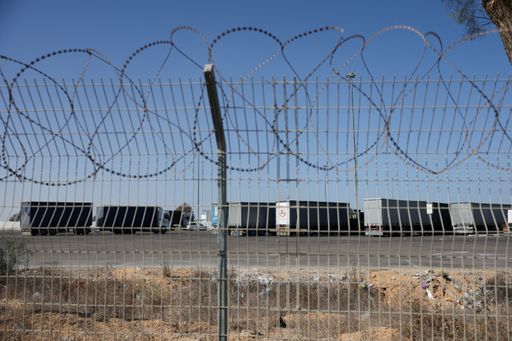
COGAT, the Israeli military body overseeing Gaza crossings, said limited fuel deliveries for humanitarian purposes continue, including electricity to two desalination plants and a UN-run facility in Khan Younis.
But for families like the al-Joujous, those measures mean little.
“We barely have enough money to survive,” said her husband, Ahmed, 35. “Every night, our children ask when the lights will come back — and we have no answer.”