Ukraine's President Volodymyr Zelenskyy has made a one-day visit to Spain and taken the opportunity to view Pablo Picasso's “Guernica.”
The move he made on Tuesday was laden with symbolism.
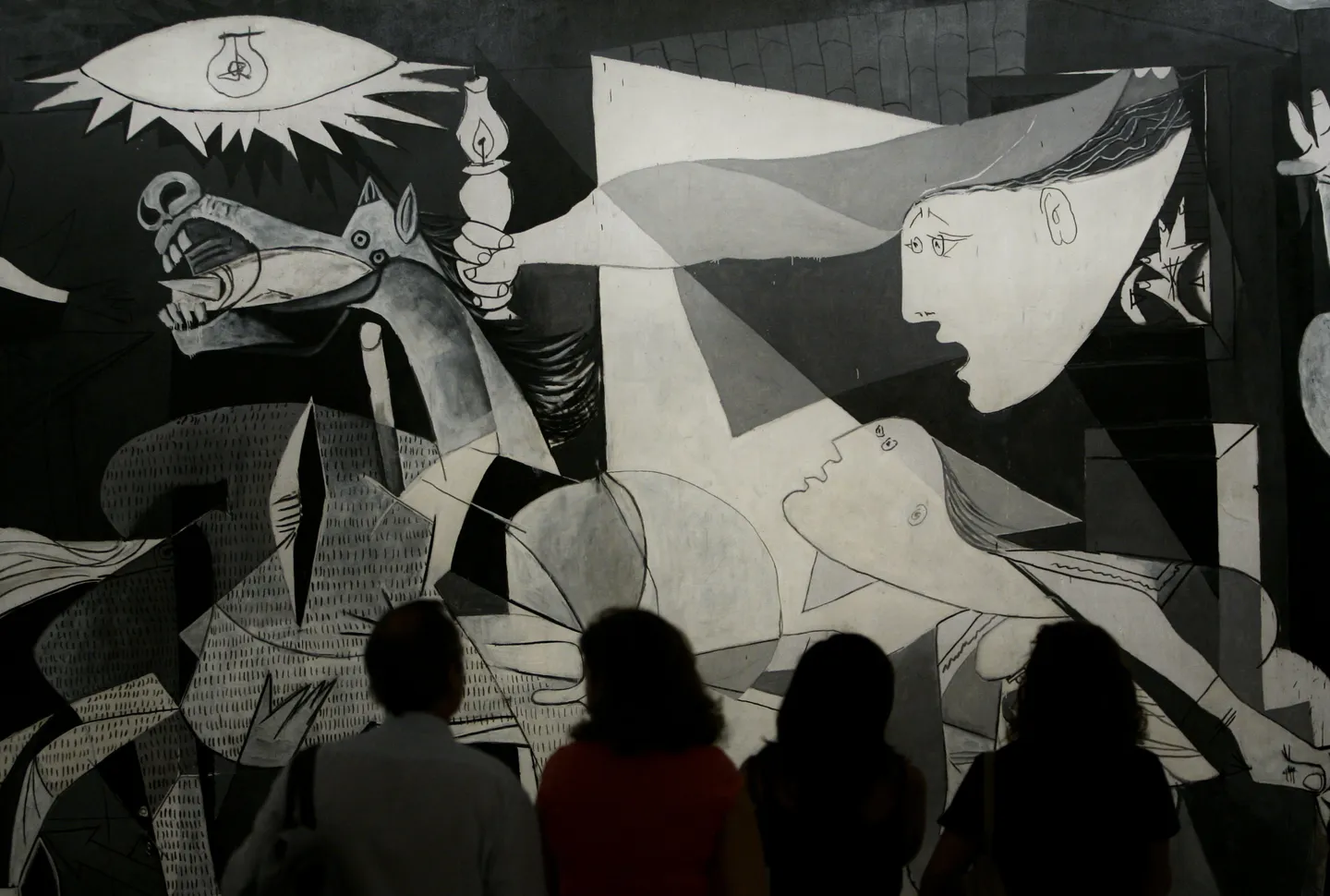
Among the last century's most famous paintings, “Guernica” depicts the horrors of war — specifically the bombardment of civilian targets. The enormous, black-grey-and-white painting features screaming women, flailing horses, and a gored bull.
Picasso used them to represent the bombing by Nazi and fascist Italian war planes of the town named Guernica in 1937, during Spain's Civil War.
The painting's distorted, cubist figures have since become a symbol of suffering, violence, and resistance. At the United Nations, a tapestry of it hangs at the entry to the Security Council's chamber.
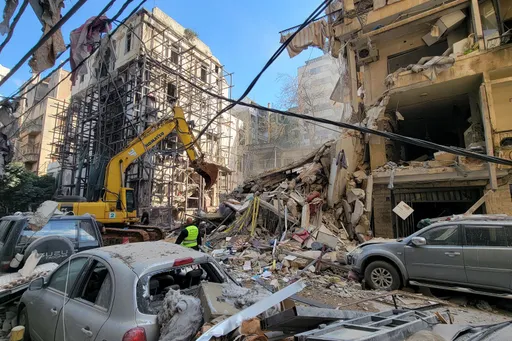
Zelenskyy has referenced the painting before. In April 2022, while remotely addressing Spain’s parliament just months into Russia’s military campaign against Ukraine, he said:
“Imagine that people now — in Europe — live for weeks in basements to save lives. From shelling, from air bombs. Daily! April 2022 — and the reality in Ukraine is as if it’s April 1937. When the whole world learned the name of one of your cities — Guernica.”

“Possibly the world’s first anti-war painting”


The painting has had other famous visitors. Former US President Barack Obama viewed it in 2018 on a visit with Spain's King Felipe VI.
“‘Guernica’ is possibly the world’s first anti-war painting,” said Giles Tremlett, a historian who has written extensively about Spain under former dictator Gen. Francisco Franco. “It represents something that has had continuity since then ... and today is highly visible in Ukraine, so it seems highly apt.”
Spain's Civil War ended in 1939, after which Franco ruled as dictator until his death on November 20, 1975 — almost exactly fifty years ago.
Picasso had forbidden the painting from being shown in Spain while Franco remained in power, so it was lent to New York's Museum of Modern Art in 1939 and displayed there for decades.
The painting returned to Spain in 1981, months after Spain's young democracy survived an attempted military coup that was considered the last serious attempt to revert its transition to democracy.
“When ‘Guernica’ came to Spain in 1981, for us, it was a symbol of hope that there was no way Spain was going back," said Antonio Cazorla-Sanchez, a professor of Spanish history at Trent University in Canada.
Zelenskyy’s tour of European capitals, including Spain, underscores Kiev’s urgent need to reassure allies and continue to shore up support for Ukraine. Engaging partners through speeches to parliaments and appearances at major forums has become a hallmark of his leadership.
Those efforts come amid growing pressures at home and abroad as a damaging corruption scandal and other domestic strains threaten to divert attention from the war effort.