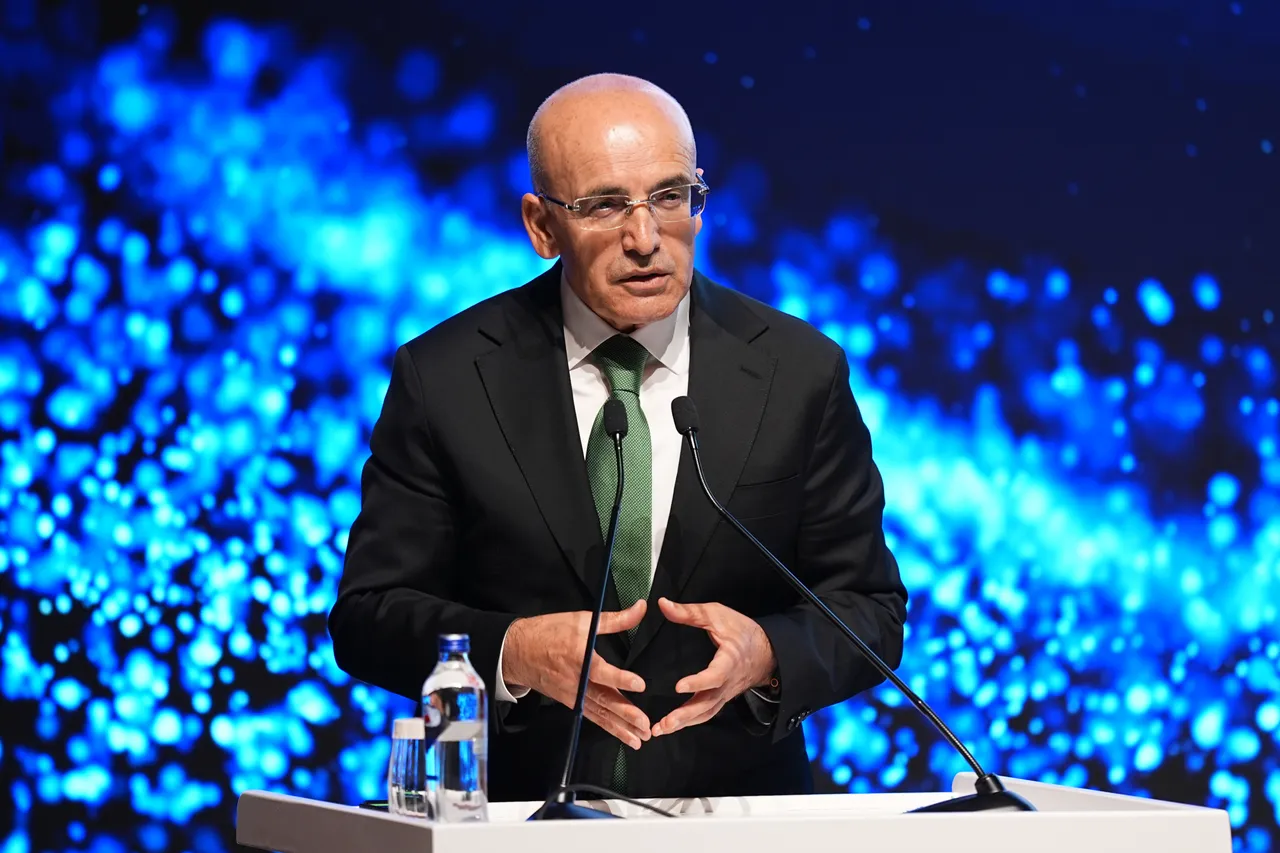
Turkish Finance and Treasury Minister Mehmet Simsek has unveiled the “Climate Implementation Bridge” as one of Türkiye’s top climate initiatives at London Climate Action Week to help countries make their climate plans into investable projects and their financial needs into bankable project pools.
Speaking at his opening remarks at the London event’s Climate Resilience Finance Summit on Thursday, Simsek stated that the global climate agenda has evolved from what it was a decade ago, moving away from discussing targets and commitments to implementing them.
“We do not need another conversation about what should be done,” he said.
“We need to accelerate delivery, and delivery mostly depends on finance.”
“The question is whether we can mobilise sufficient capital, quickly enough, and channel it effectively towards real projects and real outcomes for people. This challenge becomes even more pressing when we look at climate resilience,” he noted.
Simsek emphasised that only about a quarter of climate-related losses are insured, and the rest are borne by households, businesses, and governments, underlining the need to ensure climate resilience to protect people against climate-related disasters instead of merely meeting environmental objectives.
The minister noted that while climate shocks grow increasingly severe, investments to enhance resilience have become key, as establishing climate resilience reduces future risks and creates new opportunities.
“For example, last year, Türkiye experienced a severe agricultural frost and severe drought, affecting the livelihoods of millions of people,” he said.
“Economies that are better prepared for shocks are more productive, more competitive, and more attractive to investment.”
‘Turning climate priorities into investable opportunities’
Simsek stated that a climate-resilient economy requires investments into better water management, climate-friendly agriculture, sustainable land use, resilient infrastructure, and healthy ecosystems.






“These investments generate returns that go far beyond climate policy, and that is why investing in resilience is a no-brainer. It is not just climate policy; it is sound economic policy,” he asserted. “Yet, resilience remains one of the most underfunded areas of the climate agenda. The scale of the financing challenge is immense.”
“By 2030, achieving global climate goals will require an annual investment of around $6.3 to $6.7 trillion. Today, total climate finance stands at only about $1.9 trillion,” he noted.
“Excluding China, they will require around $2.4 trillion in climate finance every year, yet currently receive barely one-tenth of that amount. The real challenge is not a shortage of capital.”
Simsek emphasised that the real challenge is “turning climate priorities into investable opportunities", noting that too many ill-prepared projects remain unable to find financing despite large pools of money seeking decent returns. “The missing link is connecting the two,” he said.

‘Help finance flow more effectively to where it is needed most’
“This is precisely the gap that one of Türkiye's flagship COP31 initiatives, the Climate Implementation Bridge, seeks to address,” he stated. “Our objective is simple: to help countries move from climate plans to investment-ready projects and from financing needs to bankable pipelines.”
Simsek noted that the goal is not to create a new platform or institution but to strengthen the cooperation within the existing ecosystem and “help finance flow more effectively to where it is needed most.”
To achieve this goal, policies that focus on being ready for climate challenges need to be a key part of economic policy, and climate resilience should be recognised as an “economic, financial, and development priority,” which will help attract institutions and encourage long-term private-sector investments, the minister said.
He mentioned that multilateral development banks cannot close the financing gap alone, despite their crucial role in climate resilience financing.
The minister urged export credit agencies, credit rating agencies, regulatory bodies, and local financial institutions to take on more active roles and facilitate broad cooperation.