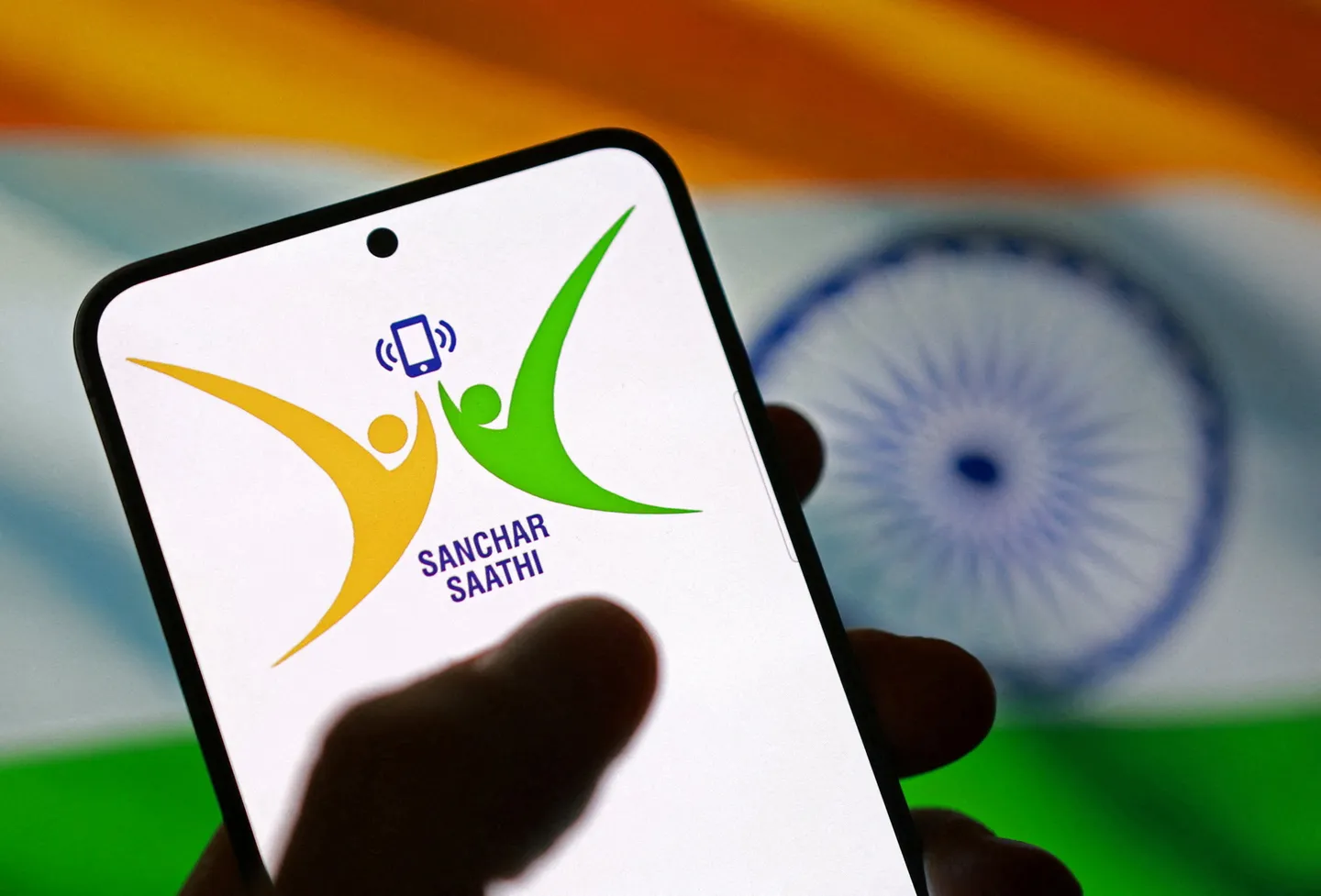
India's main opposition party said on Wednesday that a government plan to preload a state-run app on smartphones violates the privacy of users and the government needed to explain itself, escalating tensions on a matter that has sparked surveillance fears.
The Indian government has confidentially ordered companies including Apple, Samsung and Xiaomi to preload their phones with an app called Sanchar Saathi, or Communication Partner, within 90 days.
The app is intended to track stolen phones, block them and prevent them from being misused, but privacy advocates and many of Prime Minister Narendra Modi's opponents have protested this week, calling it a surveillance tool.
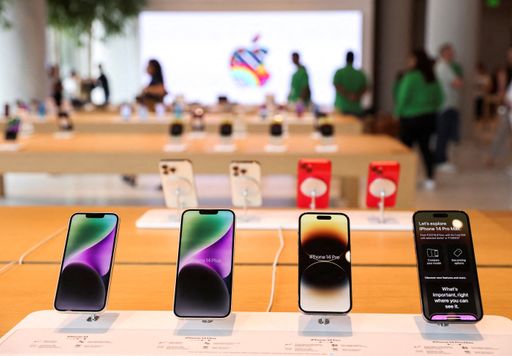
According to the government, Sanchar Saathi also allows users to verify whether a device’s 15-digit IMEI number is genuine, check mobile connections issued in their name, and report suspected fraud.
Officials said the measure is aimed at strengthening cyber security, especially given the prevalence of duplicate or tampered IMEIs in the second-hand phone market.
But there are concerns about government surveillance on the country's 730 million smartphones. The furore forced the telecoms minister to clarify the app can be deleted at any time.
Critics warn that a state-mandated app on personal devices could compromise privacy, especially since the directive was privately issued to manufacturers and details about the app’s operations or permissions are not publicly disclosed.







On Wednesday, India's Congress party urged parliament's upper house to hold a discussion on "privacy and security risks" due to the government directive.
"The Government must clarify the legal authority for mandating a non-removable app," senior Congress leader Randeep Singh Surjewala said in a notice to the parliament.
"The grave, serious and real apprehension is also that such compulsorily installed app can have a backdoor, thereby absolutely compromising the data and privacy of the user," he added.

Digital‑rights groups and experts like the Internet Freedom Foundation warn this could turn every smartphone into a “vessel” for state‑mandated software, erasing user control.
India's telecom ministry has defended the move, describing it as a measure to combat "serious endangerment" of cyber security.
Apple does not plan to comply with a mandate to preload its smartphones with a state-owned cyber safety app and will convey its concerns to New Delhi.