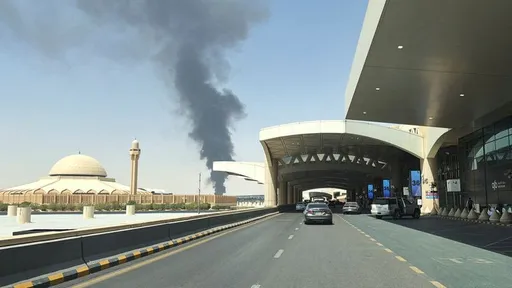
The World Bank has lowered its economic growth forecasts for multiple regions, warning that the war in the Middle East is taking an immediate toll on surrounding economies, with Gulf countries expected to suffer the sharpest slowdown.
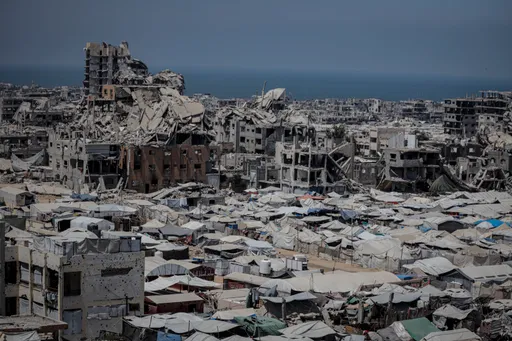
In its latest regional economic updates, the World Bank said on Wednesday the closure of the Strait of Hormuz and the destruction of energy and public infrastructure have disrupted markets, heightened financial volatility and weakened the 2026 outlook across several regions.
It said the Middle East, North Africa, Afghanistan and Pakistan regions were hit particularly hard, describing the war as an additional shock to economies already struggling with low productivity growth, weak private sector dynamism and persistent labor market challenges.
Excluding Iran, overall growth in the region is projected to slow from 4% in 2025 to 1.8% in 2026, a downgrade of 2.4 percentage points from the World Bank’s January forecast.
The sharpest deterioration is expected in Gulf Cooperation Council economies and Iraq, which are heavily exposed to the war. Growth in GCC countries was downgraded 3.1 percentage points from January projections and is forecast to slow from 4.4 percent in 2025 to 1.3 percent in 2026.
The World Bank warned that risks remain tilted to the downside, saying a prolonged conflict could further lift energy and food prices, reduce trade, tourism and remittance flows, increase fiscal pressures and trigger more displacement.







The bank also cut its outlook for developing economies in Europe and Central Asia, where growth is expected to weaken to 2.1 percent in 2026 due to the effects of the Middle East war, broader geopolitical tensions and trade fragmentation.
Growth in Russia is forecast to slow to 0.8 percent, while expansion in the rest of the region is expected to ease to 2.9 percent, as higher energy costs weigh on household consumption and uncertainty hurts investment.
In East Asia and the Pacific, the World Bank said growth is projected to slow to 4.2 percent in 2026 from 5 percent in 2025, as the energy shock caused by the Middle East war adds to existing pressures from elevated trade barriers, global policy uncertainty and domestic economic weaknesses.
China’s economy is expected to slow from 5 percent in 2025 to 4.2 percent in 2026, while growth in the rest of the region is seen easing to 4.1 percent before rebounding to 5 percent in 2027 as geopolitical tensions diminish.