 Abhishek G Bhaya
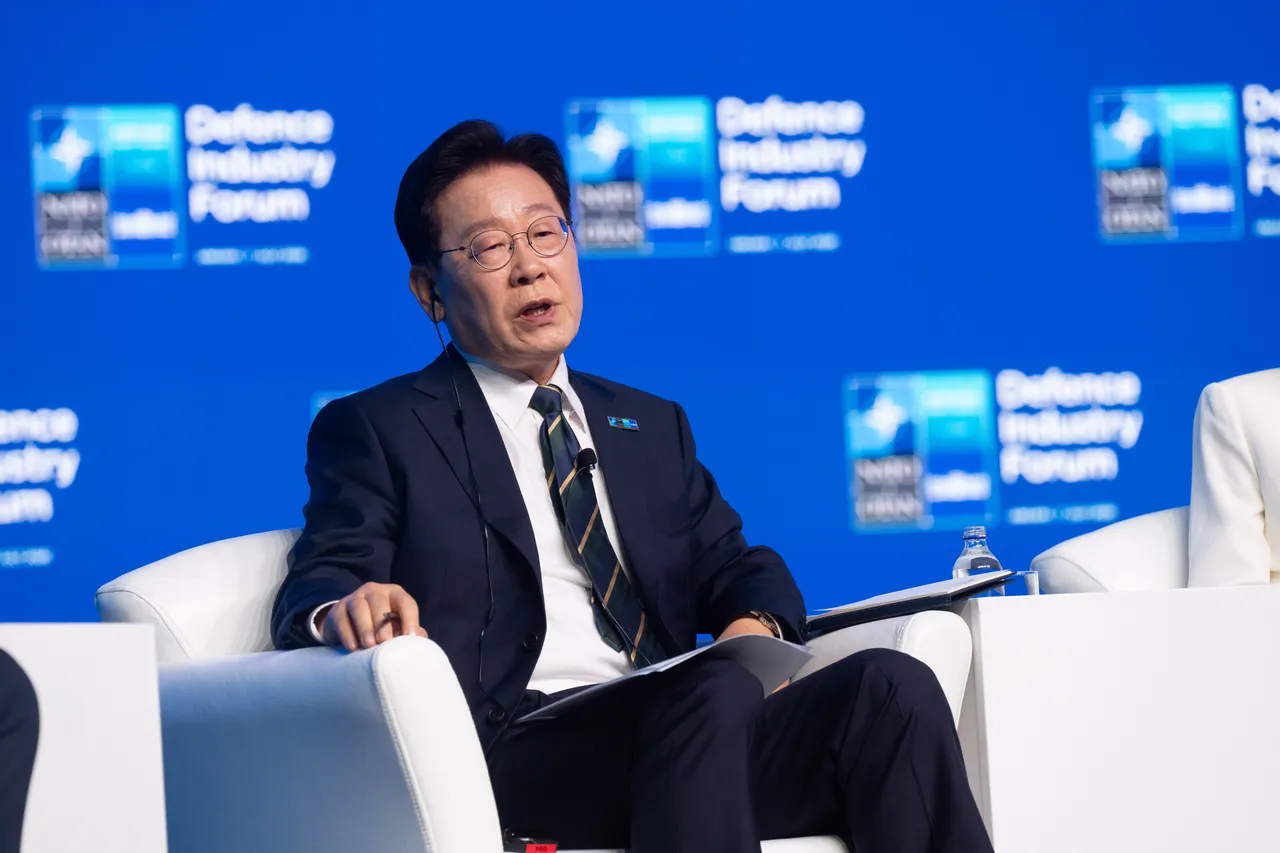
South Korean President Lee Jae-myung has called for a new phase in NATO's partnership with Seoul, proposing a "Defence Industrial Partnership 2.0" centred on joint research, production and operation of advanced military technologies as allies seek to bolster collective security amid growing geopolitical tensions.
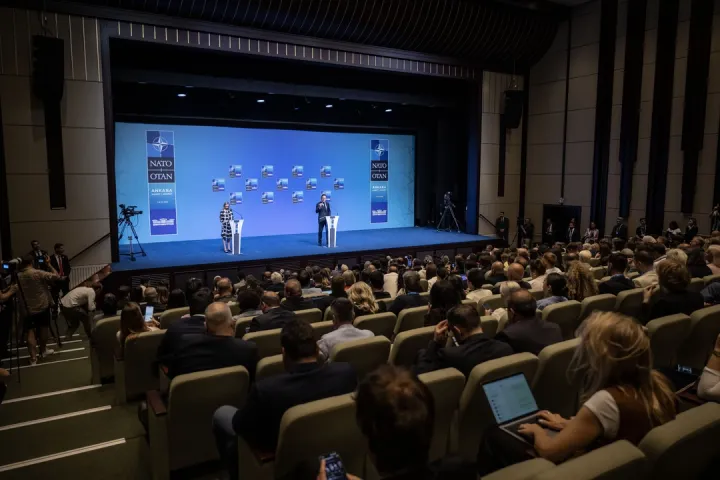
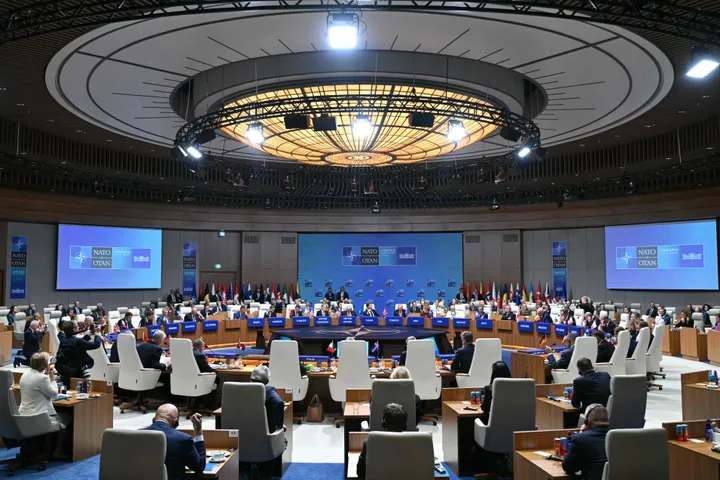
Speaking at NATO's Defence Industry Forum as part of the 36th NATO Summit on Tuesday, Lee said the changing nature of warfare required countries to move beyond traditional arms sales and build trusted industrial partnerships capable of sustaining innovation and resilient supply chains.
"Wars are no longer decided only on the battlefield," Lee said. "Research laboratories developing advanced technologies and industrial facilities producing weapons have become the new frontlines of national security."
The South Korean leader argued that advanced technologies such as artificial intelligence, alongside resilient defence supply chains, had become as critical to deterrence as conventional military capabilities.
"Without trust, genuine solidarity and cooperation cannot exist," he said, describing South Korea as a reliable partner that shares NATO's democratic values and security interests.
Lee proposed expanding joint research in emerging technologies, harmonising technological standards and launching more collaborative research programmes between NATO and South Korea.
He also urged allies to move beyond what he described as the current model of defence cooperation based largely on weapons trade.
"I propose that we establish a NATO Defence Industrial Partnership 2.0 under which we jointly research, jointly produce and jointly operate defence systems," he said.
Drawing a parallel with the International Energy Agency's coordinated management of strategic petroleum reserves, Lee suggested developing similar mechanisms for cooperation in the defence sector to improve resilience during crises.
Defence demand and standardisation
Responding to questions from the moderator, Lee said sustained government demand would remain essential for expanding defence industries.
South Korea plans to increase defence spending from around 2.3 percent of GDP to approximately 3.5 percent, he said, adding that long-term procurement commitments provide industry with the confidence needed to invest.
He also called for greater standardisation of production and procurement among partners and stronger government support for cooperation between defence companies.
"Governments have an essential role in creating and supporting this system of collaboration," he said, stressing that trust between nations remained the foundation of successful industrial partnerships.
Industry calls for faster procurement
The discussion highlighted a growing consensus among governments and industry that traditional procurement models are too slow to keep pace with rapidly evolving technologies.
Ashley Johnson, President and CEO of Planet Labs, said commercial space capabilities and artificial intelligence were already transforming defence by providing near real-time intelligence.





She cited Ukraine's use of commercial satellite imagery for early warning, operational planning, battle damage assessments and humanitarian operations.
Johnson argued that governments should shift from specifying detailed technological requirements towards defining operational problems and allowing industry to propose the most effective solutions.
"Capabilities designed today but planned to be deployed by 2030 will be obsolete before they're ever put into use," she warned.
She also urged governments to reduce bureaucratic obstacles and consider procuring commercial services that can be fielded immediately while longer-term sovereign capabilities are developed.

Latvia points to battlefield innovation
Latvian Foreign Minister Baiba Braze said lessons from Ukraine had fundamentally changed defence innovation cycles, with battlefield feedback now reaching industry almost in real time.
She highlighted Latvia's military testing facilities, where companies work directly with armed forces to test emerging technologies ranging from drones and communications systems to 5G- and 6G-enabled capabilities.
Braze argued that NATO should develop common standards not only for traditional weapons but also for emerging technologies such as AI and quantum systems.
"Legacy platforms remain relevant," she said, "but they must go hand in hand with the ability to use the most modern technology."
Australia pushes industrial collaboration
Australian Defence Industry Minister Pat Conroy said expanding production capacity was just as important as increasing defence spending.
"If every country in NATO and the Indo-Pacific is increasing defence spending but we're not growing the industrial base, we're simply going to pay more for the same amount of equipment," he said.
Conroy outlined Australia's shift towards co-design, co-development, co-production and co-sustainment with partners, citing industrial cooperation with Germany on Boxer armoured vehicles, Canada on over-the-horizon radar technology and Norway on a Naval Strike Missile production facility.
He also urged governments to reduce protectionism and encourage companies to integrate into global defence supply chains rather than relying on domestic procurement requirements.
The panel underscored NATO's increasing emphasis on industrial resilience and closer cooperation with Indo-Pacific partners, with speakers repeatedly arguing that trusted partnerships, technological innovation and faster procurement will be as important to future security as military spending itself.