 Kazim Alam
Türkiye’s Transport and Infrastructure Minister Abdulkadir Uraloglu announced on March 26 that the Zangezur Corridor, a strategic transportation route connecting Azerbaijan to Türkiye, will become operational within four to five years.
The corridor will create a direct overland link from Kars in eastern Türkiye to Azerbaijan’s Nakhchivan exclave. It will then extend into the roughly 43-kilometre Armenian territory of Zangezur and eventually cross into mainland Azerbaijan.
With construction already underway in Türkiye and in the Azerbaijani exclave of Nakhchivan, the development marks a major step towards strengthening connectivity within the Turkic world and integrating it into the broader Middle Corridor, a sprawling trans-Eurasian logistics route connecting China to Europe via Central Asia and Türkiye.
This latest breakthrough comes as the region seeks alternatives to vulnerable maritime chokepoints restricting global trade.
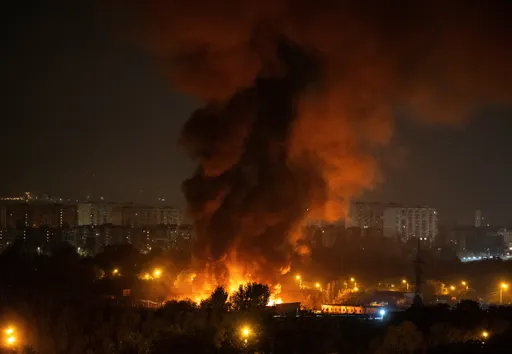
In response to the US-Israeli war against Iran that began on February 28, Tehran has restricted shipping in the Strait of Hormuz, the narrow waterway connecting the Gulf to the Gulf of Oman through which roughly one-fifth of global oil trade passes.
At the same time, Iran-backed Houthi rebels, which have controlled Yemen’s western ports for over a decade, have renewed their attacks on Israel.
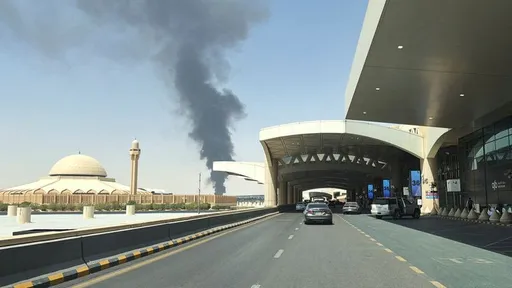
This has raised alarms about the security of key shipping lanes in the Red Sea, a seawater inlet that separates Asia from Africa. The Red Sea is a major interoceanic passage handling 22 percent of global seaborne container trade.
With the Suez Canal to the north and the Bab al Mandeb Strait to the south, the Iran-backed rebel group could disrupt the maritime trade route that cuts the distance between Asia and Europe by half.
Oktay Tanrisever, a professor of international relations at Middle East Technical University in Ankara, tells TRT World that the Zangezur Corridor is a potential alternative amid growing unreliability in key maritime straits.
“The increasing unreliability of Hormuz could necessitate the development of alternative transport corridors. The Zangezur Corridor could be one of these alternatives,” he says.
He also points to Türkiye’s Development Road, a planned trade corridor linking Iraq’s Gulf ports to Europe via Türkiye, as another viable option, if Hormuz disruptions persist.

Khayal Iskandarov, a geopolitical expert associated with Azerbaijan’s National Defence University’s Military Scientific Research Institute, tells TRT World that Türkiye is well-positioned to be the driving force behind most of the regional cooperation projects as an influential player in both Central Asia and the Caucasus.
“The opening of the Zangezur Corridor will change the transit map of the entire region,” he says.
Referring to landmark Turkish-backed initiatives, such as the Baku-Tbilisi-Ceyhan oil pipeline, Baku-Tbilisi-Erzurum gas pipeline, Baku-Tbilisi-Kars railway, Trans-Anatolian Pipeline and Trans-Adriatic Pipeline, Iskandarov says Ankara has set a track record in diversifying routes and reducing dependence on single actors.
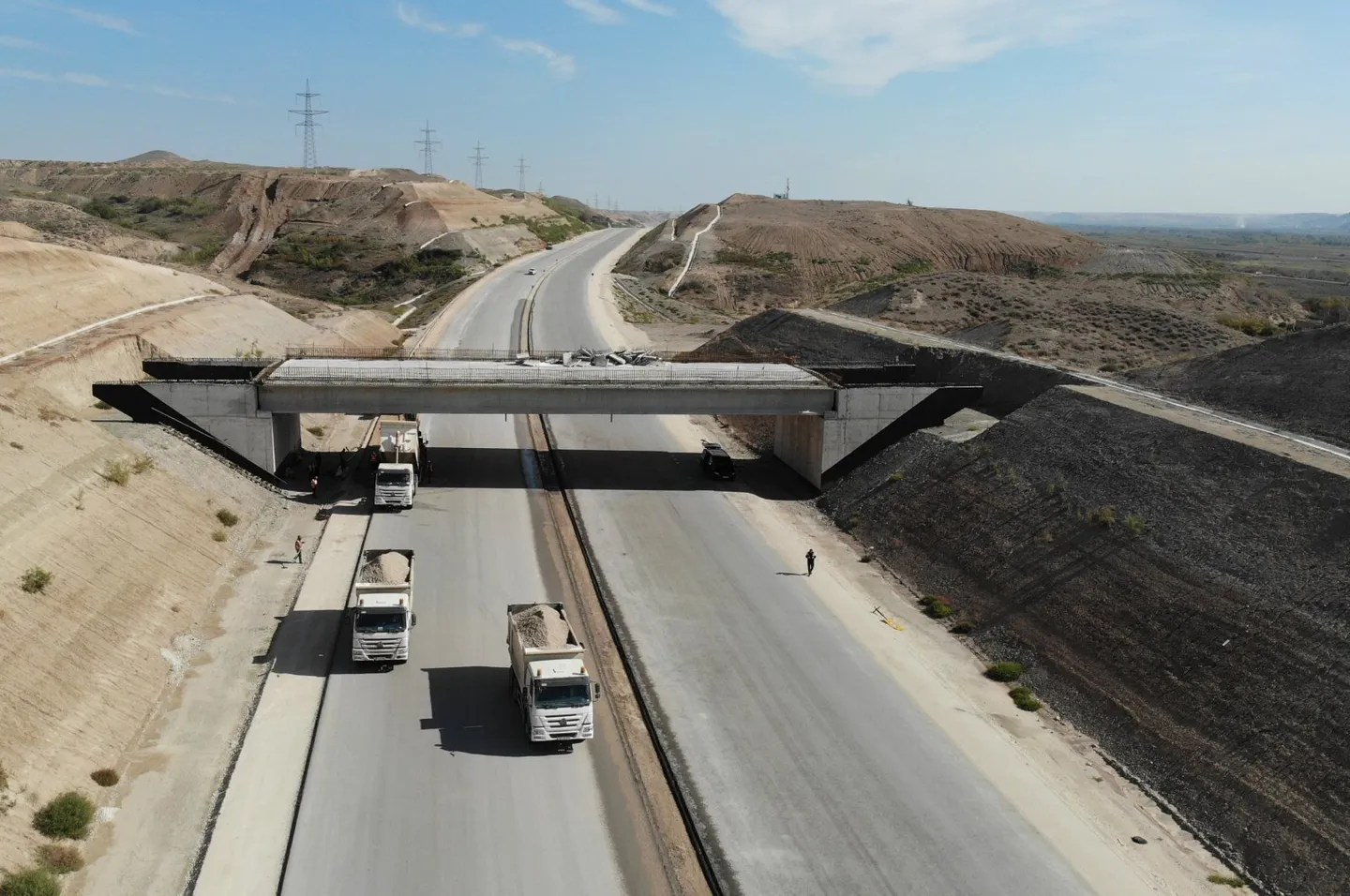
At the moment, highway construction for the Zangezur Corridor on the Azerbaijani side stands at over 95 percent complete and railway work at 70-80 percent, with full operability expected by late 2026, he says.
New projects such as the Kars-Igdir-Dilucu railway will directly feed into the corridor, adding roughly 15 million tonnes of annual cargo capacity.
“Rail is integrated with ports, industrial zones, and logistics centres as part of a national strategy,” he says.






For Türkiye, the gains are going to be substantial.
“The Zangezur Corridor will become the shortest land transport route between the Pacific and Atlantic oceans, as well as the intersection point of the North-South and East-West routes,” Iskandarov says.
He calls Türkiye a natural hub for East Asian, Central Asian and Caspian cargo heading to European markets via the Zangezur link and the broader Middle Corridor.
The corridor dovetails perfectly with the EU’s TRACECA, or the Transport Corridor Europe-Caucasus-Asia programme, which seeks to connect Europe to Central Asia via transport corridors passing through the Black Sea, the South Caucasus, and the Caspian Sea.
It also aligns with China’s Belt and Road Initiative, which Türkiye has actively supported through a 2015 agreement linking the Middle Corridor to Beijing’s multi-billion-dollar infrastructure scheme, Iskandarov says.
Goods moving from China via Central Asia, the Caspian port of Alat, the Baku-Tbilisi-Kars railway and then Türkiye take about two weeks. But the Zangezur link will provide a much shorter and more reliable overland path, he notes.

Political, legal obstacles remain
Tanrisever says Ankara is in an advanced state of preparedness. “Türkiye has completed most of its own technical and infrastructural preparations for making the Zangezur-Middle Corridor system fully operational in the near future,” he says.
However, he points to the fate of the Armenia-Azerbaijan peace deal – tied to Armenia’s upcoming elections – as well as the ratification of the Trump Route for International Peace and Prosperity or TRIPP agreement, and anticipated constitutional changes in Armenia as possible obstacles to the Zangezur Corridor.
“The main obstacle seems to be political and legal,” he says.
Shedding light on the broader geopolitical landscape, Iskandarov says the US-brokered peace agreement on August 8 in Washington, DC, under the TRIPP framework represents a significant breakthrough after three decades of confrontation.
Russia’s reaction remains uncertain, while Iran has repeatedly condemned the Zangezur Corridor as a purported “NATO’s Turan Corridor” aimed at fomenting ethnic unrest, Iskandarov says.
Once operational, the corridor will serve as “a stepping stone towards the long-lasting peace in the region”, fostering cooperation, mutual trust and expanded East-West trade, he says.
However, he warns against presenting the Zangezur Corridor as a perfect alternative for sea routes, noting roughly 70 percent of global oil and the great majority of bulk goods still move by maritime chokepoints, such as Hormuz and the Red Sea.
Yet, the proposed corridor will meaningfully diversify options for higher-value, time-sensitive cargo.
“For businesses, having even a partial alternative route reduces exposure to shocks like those seen in the Red Sea or Hormuz crises,” Iskandarov says.