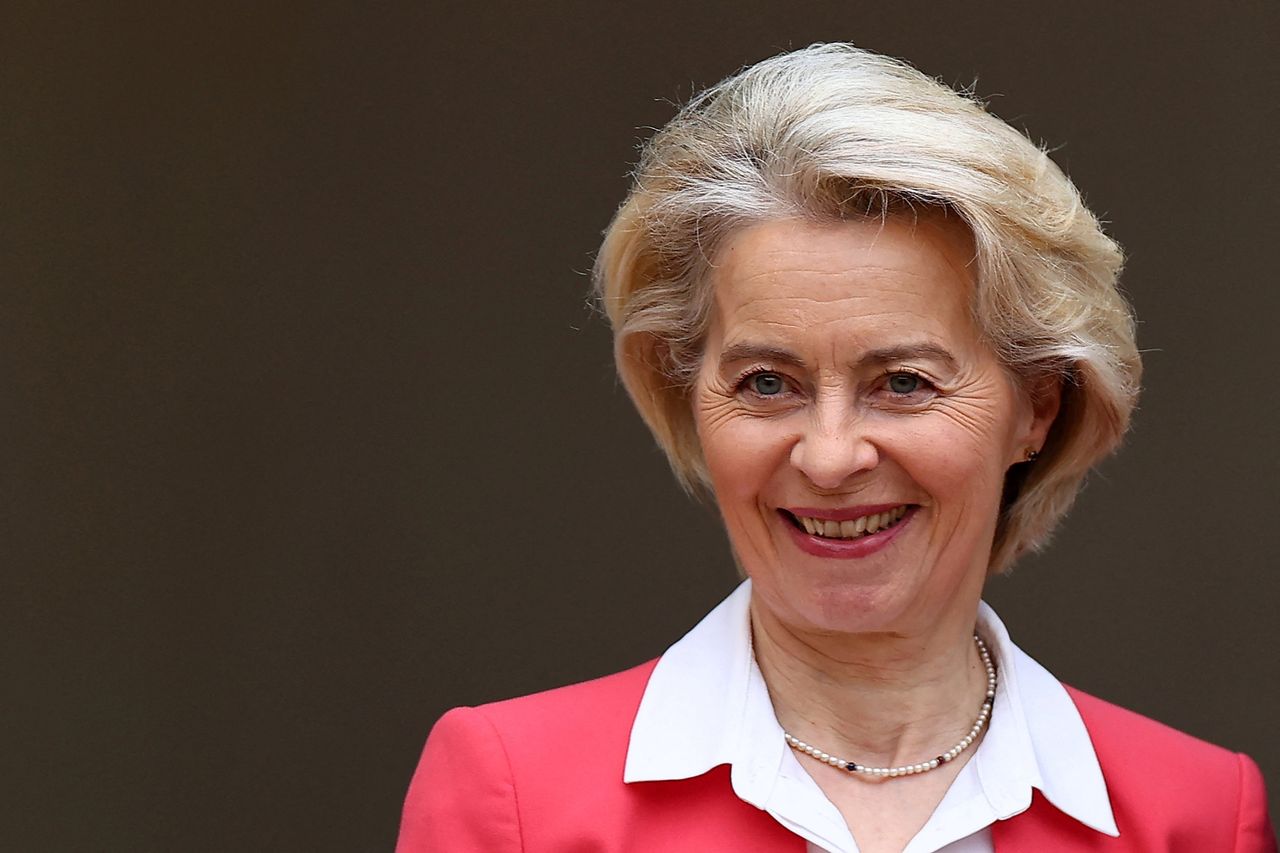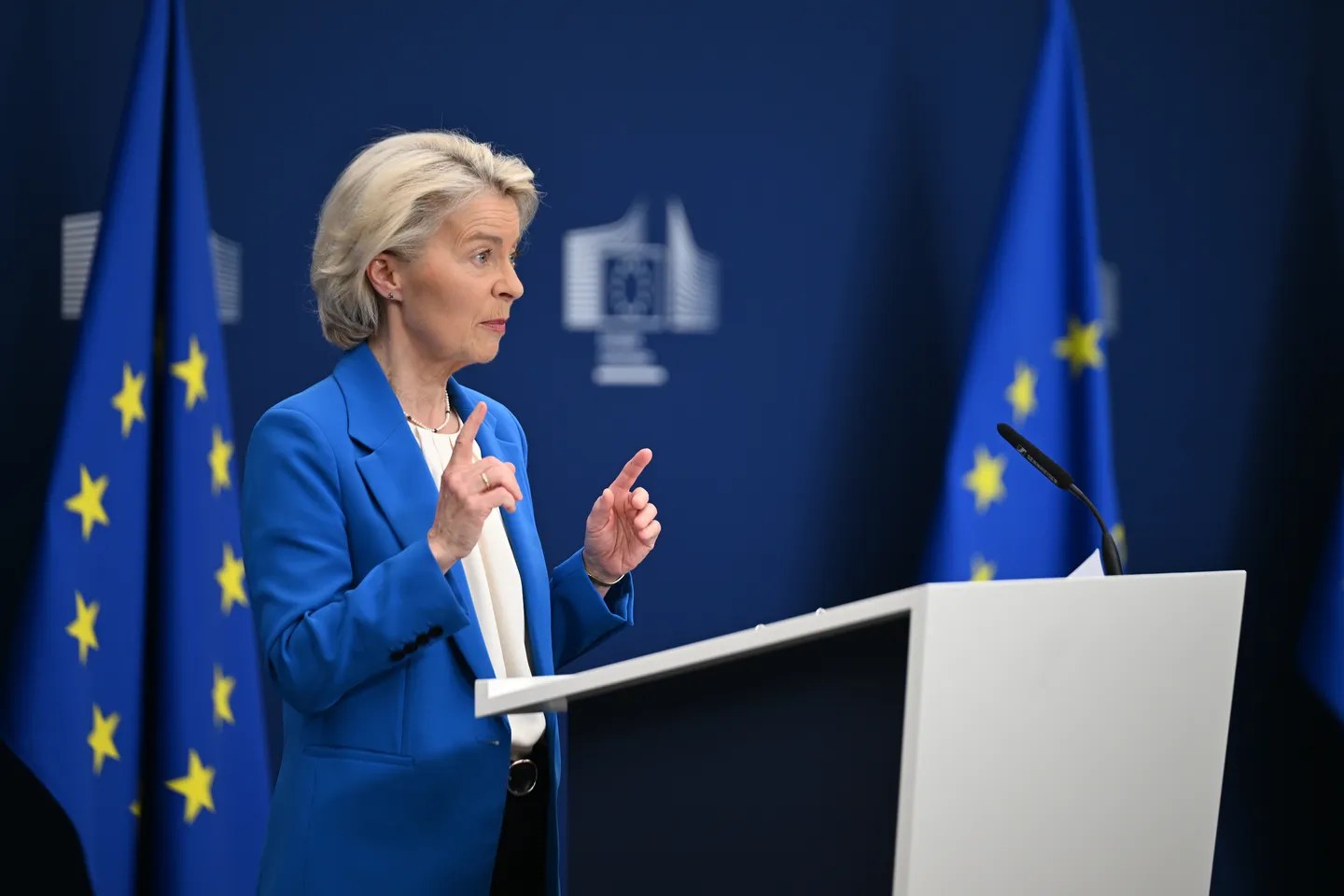
European Commission President Ursula von der Leyen on Wednesday called for the creation of a European Security Council that could bring together EU countries, Britain and Ukraine as Europe confronts growing security threats, particularly from Russia.
“For a long time, we have discussed a leaders' format focused on the security of our continent,” von der Leyen told the European Parliament in Strasbourg. “This is even more urgent now, given the nature and scale of the risks at play.”
She said the European Commission would set out proposals to make the council a reality.
EU seeks NATO-style response to hybrid threats
Von der Leyen also called for a NATO-like mechanism to help European countries respond to drone incidents, sabotage and cyberattacks that fall short of conventional armed aggression but threaten national security.
“Europe needs its own counter-hybrid playbook,” she said, calling for an urgent agreement on how governments should respond to such incidents.
She proposed a system modeled on Article 4 of the NATO treaty, which allows member states to request consultations when they believe their security or territorial integrity is threatened.
European governments have attributed or linked a number of recent acts of sabotage, cyberattacks and other hybrid activity to Russia, while responsibility for many incidents remains unconfirmed
Europe steps up AI oversight

Von der Leyen also said the EU would invite the world's largest AI laboratories for talks on how to manage increasingly capable systems and support industry efforts to develop them safely.
“The dangers of self-improving models are becoming ever more apparent,” she said, warning that incidents involving AI agents escaping controlled environments or inserting malicious code could offer a glimpse of more serious risks.
Her comments come amid growing concerns about AI systems operating with greater autonomy and calls from some researchers and technology figures for stronger safeguards.
EU plans emergency migration framework
The Commission president also announced plans for a European Emergency Response Framework aimed at dealing with what she described as “engineered and weaponised” mass movements of migrants.
The mechanism would be activated only under strictly defined conditions and allow limited, time-bound flexibility in standard procedures during exceptional situations.
“The events of this summer show that our tools need to evolve, especially for emergency situations,” von der Leyen said.
She stressed that any measures would have to comply with European values and fundamental rights while strengthening the bloc's ability to protect its external borders.