 Syed Unns
Who will tell Palestine’s story? It is a million-dollar question begging an answer.
From editorial disputes over Palestinian history to the legal consequences of supporting Palestine, the struggle extends beyond what can be said and who gets to decide how it is heard.
A people can lose their homes, their land and the security of their future. But another struggle follows: telling the world what happened, why it happened, and who bears responsibility.
For Palestinians, this struggle increasingly extends into publishing houses, literary events and the institutions that determine which stories reach the public.
Their suffering may be acknowledged, but the historical context that explains it can become contested. Their writers may find opportunities to publish, but disputes over language and framing can determine how much of their intended message survives.
Two recent controversies in the literary world illustrate different dimensions of this problem: the withdrawal of a Palestinian children's book from Penguin Random House following an editorial dispute, and the decision by Irish novelist Sally Rooney and her publisher to withdraw her books from the British market amid the legal consequences of her support for Palestine Action.
The cases are not identical. One concerns editorial disagreements over historical representation; the other concerns how Britain's terrorism legislation affects a writer's earnings and the distribution of her work.
But both raise a question that deserves greater scrutiny: who gets to determine the boundaries of acceptable expression about Palestine?

When history becomes contested
In October, Palestinian-American writers Alana Hadid and Jenan Matari withdrew their forthcoming children's book, ‘Displacement and the Palestinian American Story’, from Penguin Random House after months of disagreement over editorial changes.
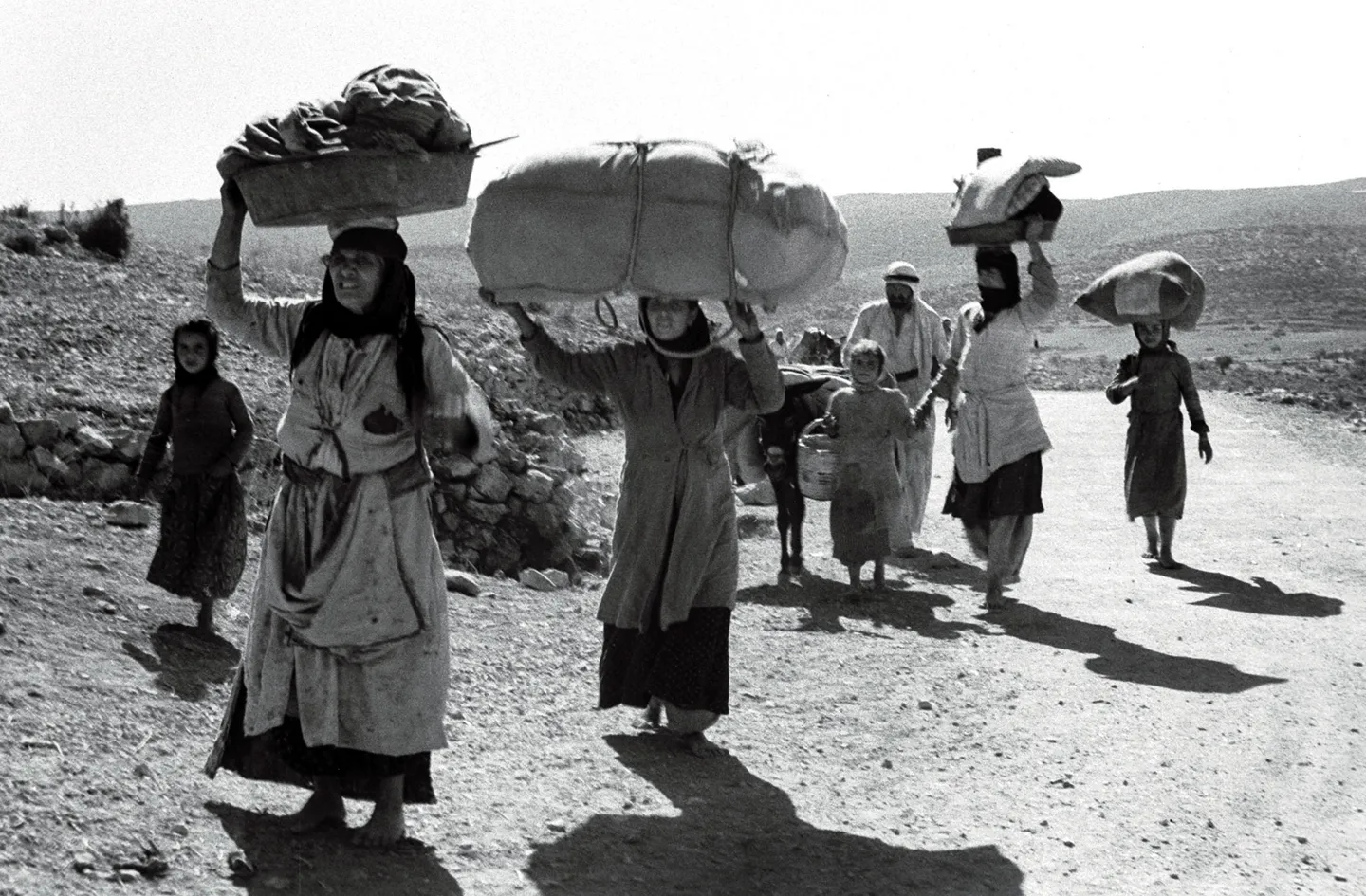
The book was intended for readers aged 10 to 13 and would have introduced them to Palestinian history, the 1948 Nakba, Israeli occupation, resistance, and diaspora experiences.
The authors argued that proposed changes would distort their account, including passages concerning the Hamas-led blitz of October 7, 2023, and descriptions of Zionist militias involved in the displacement of Palestinians in 1948.
According to The Guardian, the publisher added language describing the October 7 blitz as violations of international law, while the authors objected to changes they believed contradicted their narrative.
Penguin Random House defended its editorial process as standard practice. The authors ultimately withdrew the manuscript, which is now expected to be published by Interlink Books in 2027.
Publishers have a responsibility to ensure accuracy and provide age-appropriate context. But whose history receives that context, and whose suffering is subjected to endless qualifications?
If children are expected to learn about October 7, they must also be taught about the Nakba, the mass displacement of Palestinians in 1948, and the decades of occupation, dispossession and violence that followed.
Palestinian history cannot be understood through isolated events stripped of their historical context, nor should political sensitivities shape the telling of that history by determining which truths can be expressed and which must be softened or left out.
The question is not whether editors can challenge an author's interpretation. They can, and sometimes should. It is whether editorial intervention improves an account or fundamentally changes what its author is trying to say.
The authors' withdrawal of the book demonstrates the stakes of that disagreement. They concluded that the manuscript being prepared for publication was no longer the book they had written.
This is where the politics of publishing becomes a question of narrative control. A story can remain technically publishable while its historical interpretation is progressively altered.
Suffering can be acknowledged while responsibility becomes less explicit. Displacement can be described without adequately explaining the events that produced it.
Such sanitisation does not necessarily involve a formal ban. It can occur through omissions, selective framing and decisions about which words require qualification and which historical claims are allowed to stand without challenge.
The cost of expressing solidarity
Rooney’s case is distinct from the dispute over Hadid and Matari's manuscript.
Nevertheless, the outcome raises questions about the boundaries of political expression and the consequences of Britain's approach to Palestine-related activism.
The distinction matters. It would be inaccurate to describe every consequence of a legal restriction as equivalent to a conventional book ban.
But it would be equally inadequate to ignore the implications for cultural expression when a writer's political commitments affect whether her work can continue to circulate.
The broader question is how far restrictions intended to address security concerns can affect artistic freedom, political solidarity and the willingness of other writers to express controversial views.

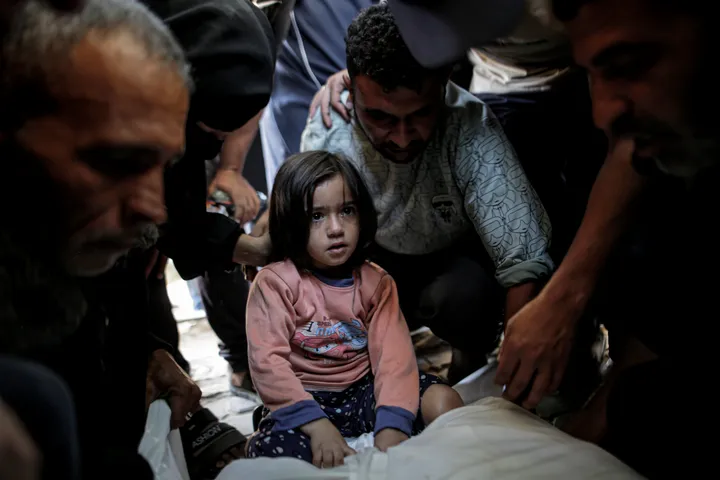
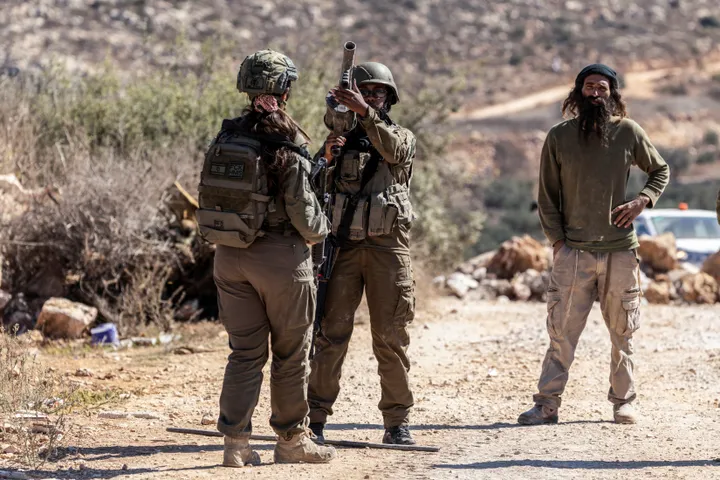
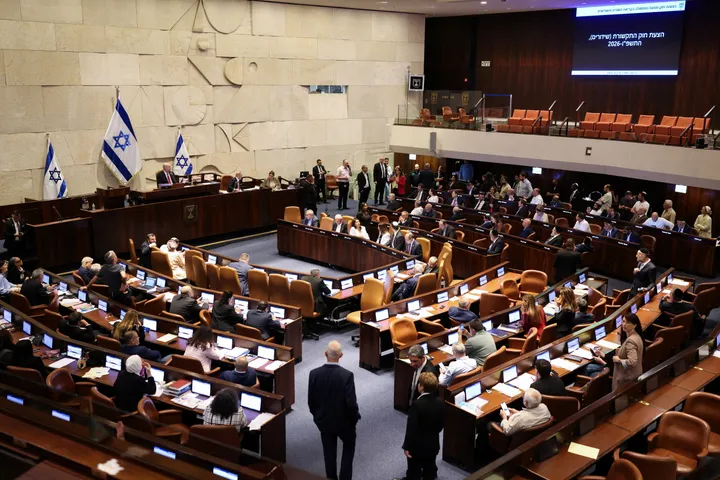

When cultural participation carries significant legal or professional risks, the consequences can extend beyond the individuals directly affected.
Others may become more cautious about the causes they support, the language they use and the subjects they address.
These controversies point towards a broader problem: narrative control does not always require a single authority to prohibit a story outright.
It can emerge through the cumulative decisions of publishers, institutions and legal systems that shape which accounts reach audiences and under what conditions.
Each decision may have its own justification, and each case must be examined on its own evidence. But their combined effects on public discourse deserve scrutiny.
For Palestinians, representation is inseparable from history.
The Nakba was not simply a humanitarian tragedy; it involved the displacement of hundreds of thousands of Palestinians and the destruction or depopulation of hundreds of Palestinian localities.
The subsequent history of occupation, illegal settlement expansion and recurring violence cannot be understood without examining the political and military structures through which these realities developed.
Yet public discussions of Palestine can become detached from that historical continuum.
Particular acts of Palestinian violence may be examined in isolation, while the conditions surrounding them receive less attention.
Palestinian suffering may be presented as a regrettable consequence of conflict rather than an experience that requires sustained examination of power, responsibility, and historical continuity.
Beyond the visible act of censorship
The problem is not simply that Palestinian suffering is denied, but that it is also detached from the history that gives it meaning.
The Nakba becomes a tragedy without perpetrators, displacement becomes a condition without a cause, and resistance becomes an isolated act stripped of the historical realities against which it emerged.
The language of neutrality can itself become a means of obscuring these relationships, particularly when the demands for qualification and restraint fall disproportionately upon those attempting to document Palestinian dispossession.
This is how narrative control operates: not always through the outright denial of history, but through the gradual narrowing of what can be said about it.
A story may be permitted to circulate so long as its political implications remain muted, its account of responsibility softened and its challenge to established power sufficiently diluted.
The result is a version of Palestine that can be mourned but not fully understood, acknowledged but not allowed to disrupt the narratives through which its dispossession is justified or normalised.
Children's literature makes these questions especially important.
Books help shape how young readers understand history, responsibility and the experiences of people beyond their own communities.
If Palestinian history reaches children only after its most contested dimensions have been softened, their understanding of the conflict will inevitably be incomplete.
The issue, therefore, is not merely whether Palestine can be mentioned in a book. It is whether Palestinians can participate in defining how their own history is told.
The withdrawal of a manuscript and the withdrawal of an author's books from a national market reveal different pressures operating on cultural expression. Neither case alone establishes a universal policy of suppressing Palestinian narratives.
Together, however, they invite a serious examination of the institutions and rules that shape what readers can access and what writers can say.
The struggle over Palestine is fought over land, sovereignty and political freedom.
It is also fought over memory, language and representation. A people whose history is contested must be able to challenge not only the denial of their suffering, but also the selective telling of it.
The answer is not to replace one sanitised narrative with another. It is to defend the conditions in which historical accounts can be examined, challenged and debated without the removal of essential context or the unnecessary restriction of political expression.
Palestine should not have to become a more comfortable story to become a publishable one. Its history, with all its complexities and uncomfortable truths, deserves to be told in full.