 Ahmed Najar
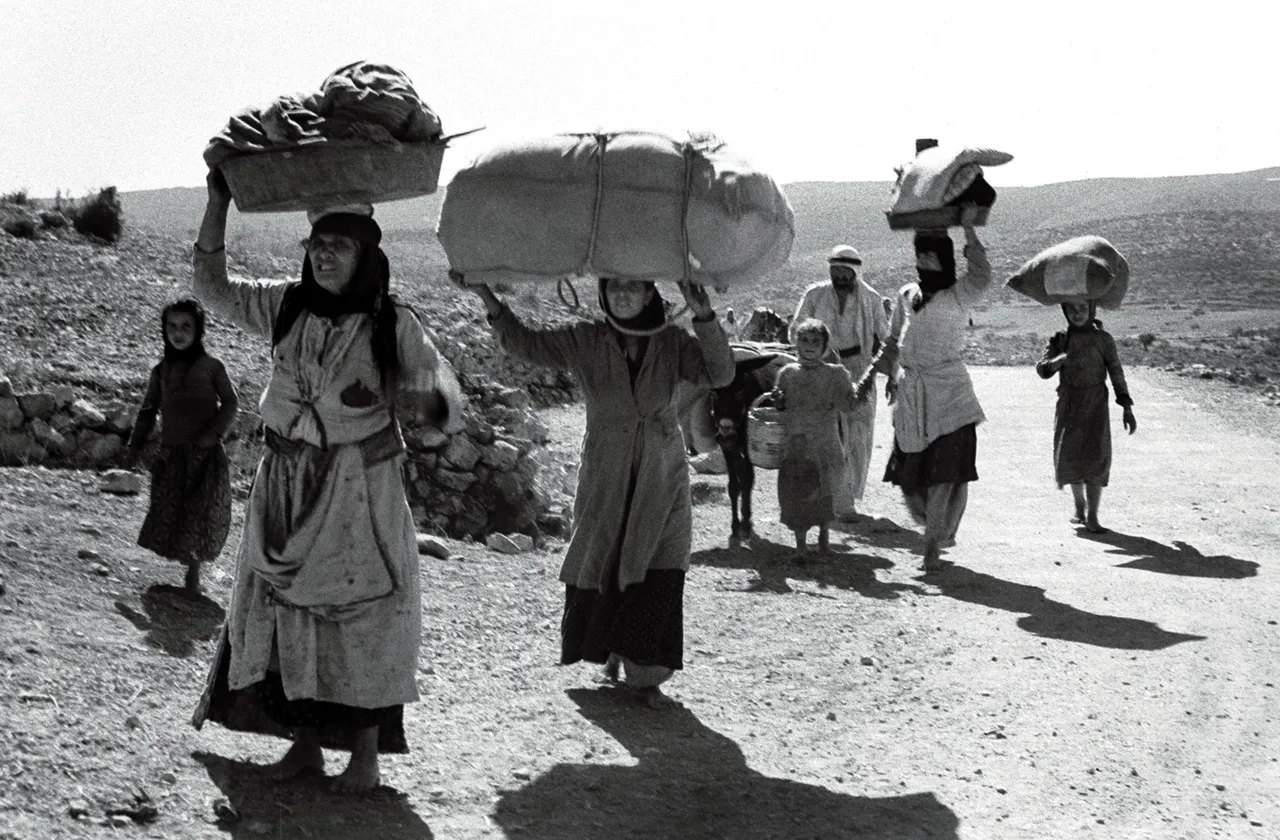
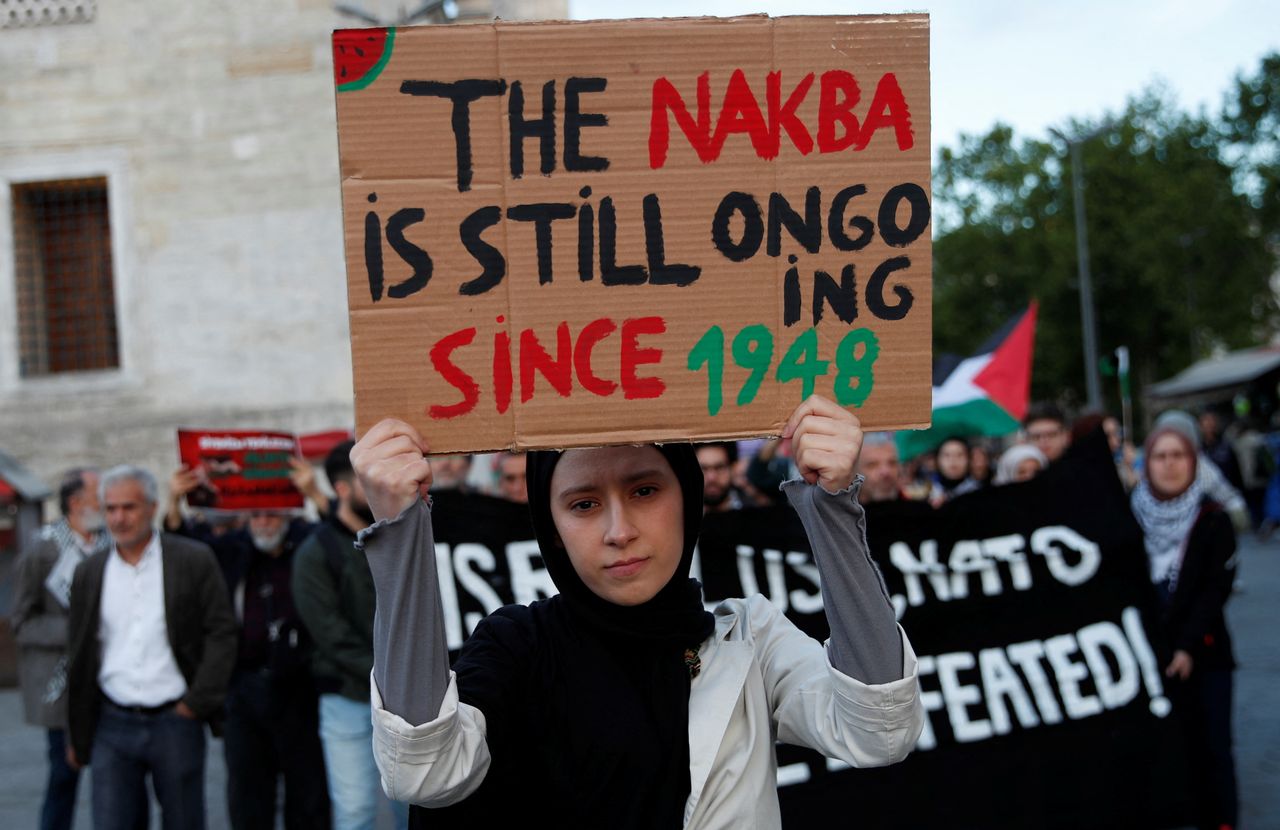
The Nakba is often spoken about as though it belongs to history. The word – which translates to “the catastrophe” – itself evokes black-and-white photographs, frightened families walking dusty roads, villages emptied in 1948, and keys carried into exile.
It is presented as a tragic but concluded event, a painful chapter sealed somewhere in the distant past.
But for Palestinians, the Nakba was never an event. It was the beginning of a structure.
Seventy-seven years later, Palestinians are still being expelled, dispossessed, bombed, starved and erased.
Entire families are still being removed from the land. Homes are still being destroyed.
Refugee camps are still filled with descendants of refugees. The mechanisms may have evolved, and the language surrounding them may have become more sophisticated, but the underlying logic remains unchanged: one people’s claim to the land continues to supersede another people’s right to live on it.
This is why the Nakba cannot be confined to 1948. It continues because the ideology that produced it continues.
My own family is from Huj, a Palestinian village whose inhabitants were expelled during the establishment of Israel.
Like hundreds of thousands of Palestinians, my grandparents were forced from their home and told that the land they had lived on, cultivated and belonged to was no longer theirs.
They were told it was a “promised land”, reclaimed after thousands of years — a political narrative rooted in selective readings of history, archaeology and religious belief, all interpreted in ways that remain deeply contested.
The existence of ancient Jewish communities in Palestine was transformed into a modern nationalist claim that could justify the displacement of another people, including many Palestinians whose own ancestry likely stretches back through the same land across centuries of conversions, empires and changing identities.
But because this narrative aligned with the interests of powerful states, it was elevated to the status of political fact. In that moment, a story was given greater legitimacy than a living people.

The Zionist ideology
This is the philosophical core of the Nakba.
It is not merely military occupation or displacement. It is the idea that the presence, rights and humanity of Palestinians can be overridden by an ideological claim.
It is the belief that one people’s history entitles them to dominate another people’s present. That logic did not end in 1948. It became institutionalised.
It survives in the military occupation of the West Bank, in the genocide in Gaza, in the expansion of illegal settlements, in the fragmentation of Palestinian land into disconnected enclaves, and in the legal and political systems that treat Palestinians not as equal human beings, but as a demographic problem to be managed.
For decades, Israel and its defenders have framed Palestinian resistance to this reality as irrational hatred or terrorism detached from historical context.
But people do not resist abstractions. They resist dispossession. They resist military occupation. They resist watching their homes being demolished, their children being imprisoned, and their futures being systematically denied.
What is unfolding in Gaza today is not separate from the Nakba; it is its most extreme expression.
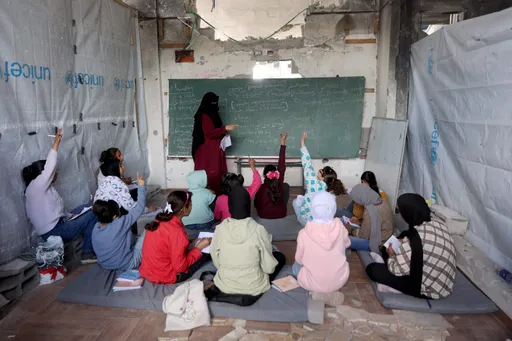
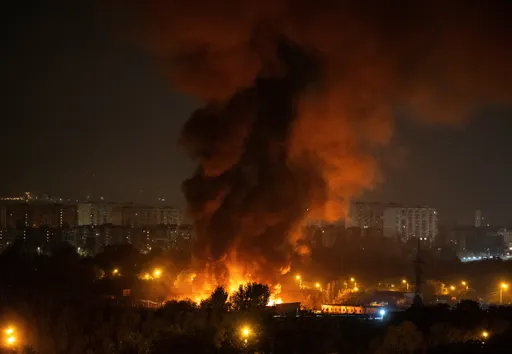
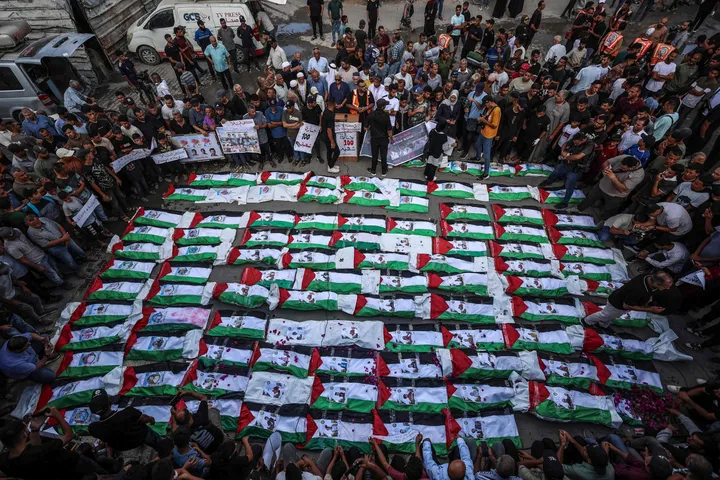
Entire neighbourhoods have been erased. Families have been wiped out across generations. Most of Gaza’s population has been displaced, many repeatedly.
Civilian infrastructure has been systematically destroyed. Starvation has become a weapon. The language used by Israeli officials throughout this assault has often been openly eliminationist, reducing Palestinians to obstacles rather than human beings.
This is why increasing numbers of legal scholars, genocide experts and human rights organisations are using the word genocide.
Not because the suffering is merely large in scale, but because the destruction itself has become systematic, explicit and normalised.
And yet much of the Western political and media establishment continues to discuss Palestinian death with extraordinary caution and abstraction.


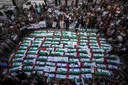

The destruction of entire families is described as “complex”. The starvation of civilians becomes a “humanitarian concern”. Calls for accountability are diluted by endless qualifications designed to preserve political comfort rather than human truth.
The result is a grotesque inversion of morality in which Palestinians are continuously required to justify their humanity while the structures destroying them are treated as fundamentally legitimate.
This inversion is often condensed into one deceptively simple question: “Does Israel have a right to exist?”
The question sounds reasonable, even philosophical, but it functions primarily as a rhetorical tool.
People have rights. States do not possess rights in the same moral sense as human beings. There is no principle in international law that places the preservation of a political structure above the lives of the people subjected to it.
Yet Palestinians are repeatedly forced into this framework, where the conversation begins not with their dispossession or survival, but with affirming the legitimacy of the very system dominating them.
The effect is to shift attention away from human beings and towards abstractions — flags, borders, nationalist myths and state narratives.
Nationalism itself is a relatively modern ideology, one that promised collective belonging and security but repeatedly produced exclusion, hierarchy and violence.
In its most dangerous form, nationalism transforms land into entitlement and history into justification. It divides humanity into those who naturally belong and those whose existence becomes conditional.
Palestinians have lived under the consequences of this logic for generations.
A ‘blind’ world
The Nakba also persists through the international systems that protect and sustain it. Israel’s actions have not occurred in isolation.
They have been armed, funded, diplomatically shielded and politically justified by powerful Western states that speak constantly about human rights and international law while enabling their destruction in Palestine.
The United Kingdom, where I live, exemplifies this contradiction.
British politicians invoke the language of democracy, legality and universal values while continuing to support a state accused before international courts of committing genocide.
This is not passive complicity. It is active participation in maintaining a global order where Palestinian lives remain negotiable.
There are moments when it becomes impossible not to notice the moral absurdity of the situation. Palestinians are expected to condemn every act of violence, apologise for their grief, moderate their language and prove their humanity repeatedly to the world.
Meanwhile, the destruction of Gaza unfolds in real time before a global audience, yet the primary concern of many governments and commentators remains protecting the legitimacy and image of the state carrying it out.
The Nakba continues precisely because it has been normalised.
It has become administratively managed, legally rationalised and politically protected. It is no longer seen as an emergency, but as part of the natural order of things.
But there is nothing natural about the destruction of a people.
The Nakba did not end in 1948. It continues because the ideology that produced it was never dismantled.
It merely adapted to the modern world, learning how to present dispossession as security, domination as self-defence and mass death as an unfortunate necessity.
For Palestinians, the Nakba is not a memory. It is the present.