 Mursel Dogrul
The race to deploy sixth-generation fighter aircraft is no longer just an aspiration. It is a live, high-stakes competition whose winners and losers will determine the strategic landscape of the 2030s and beyond.
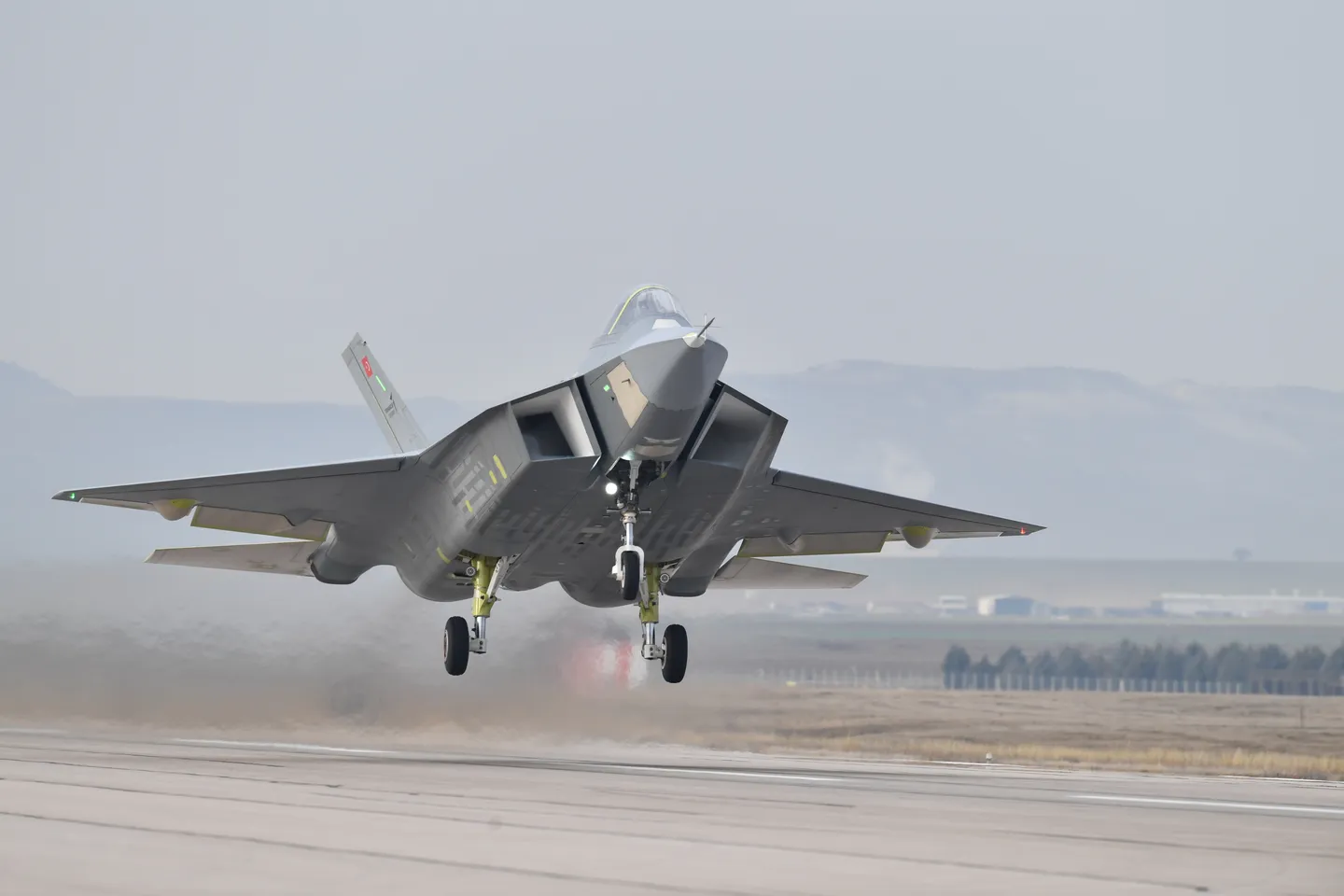
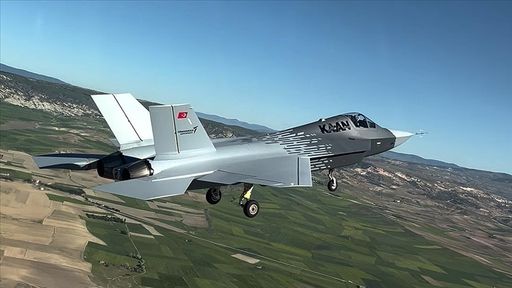
Yet, as ambitious programmes multiply and political fault lines widen, one contender is advancing with a clarity of purpose that many across the world are taking note of: Türkiye's homegrown fighter jet KAAN.
And there are very good reasons for this faith in Kaan.
KAAN began as a fifth-generation project. It has now unveiled a sixth-generation model.
The global landscape is crowded but uneven. The United States is forging ahead with its Next Generation Air Dominance programme (NGAD).
Meanwhile, Europe is divided between the Franco-German-Spanish FCAS and the UK-Italy-Japan Global Combat Air Programme (GCAP).
However, 'crowded' does not mean 'stable'. Europe's ambitions for a sixth-generation fighter jet are facing structural challenges.
Disputes over industrial workshare, budgetary stress, and the perpetual difficulty of coordinating sovereign defence priorities across multiple governments are taking their toll.
Reports now suggest that Italy, the UK and Japan are manoeuvring to bring Germany into the GCAP programme, even though Berlin is still involved in the competing FCAS project. This reflects a lack of coherence in European airpower planning.
Japan, for its part, finds itself at a crossroads. While GCAP offers credible technology and a partnership with NATO, the programme is not without complications.
Attempting to add Germany or Saudi Arabia to the programme would introduce governance complexity at a time when momentum matters most.
The GCAP programme is scheduled to enter service in 2035, and the window for adding partners without missing this deadline is closing.
A programme that keeps moving
Against this backdrop, KAAN's trajectory is notable for its orderliness.
Türkiye has unveiled new prototypes, signed a procurement contract with Indonesia for 48 aircraft and announced joint production plans with Pakistan.
It is also in the final stages of negotiations with Saudi Arabia regarding their participation in the programme.
This is a significant international footprint for a programme that is still maturing. It suggests more than just diplomatic activity. It reflects genuine confidence in KAAN's viability across very different strategic cultures.
Despite Washington reportedly urging its Gulf partners to reconsider their participation in negotiations on Turkish and Pakistani fighter programmes, talks are ongoing.
This kind of resilience in the face of geopolitical pressure is precisely what countries seeking strategic autonomy would expect from a long-term partner. It also suggests that a wider change is afoot.
This means that nations across the Middle East and Asia are no longer willing to allow Washington to dictate their defence portfolios.
What Japan needs
This matters specifically for Japan. Tokyo is located in one of the world's most challenging security environments.
North Korea's missile programme, China's growing air and naval capabilities, and the wider uncertainty surrounding deterrence in the Indo-Pacific region mean that capable platforms and resilient partnerships are both required.




Overreliance on US systems carries well-documented risks, such as export controls, political conditionality, and the ever-present possibility that foreign policy friction will interrupt supply chains.
While European partnerships are technologically sophisticated, they remain hostage to EU consensus dynamics that are slow-moving and vulnerable to internal disruption.
The KAAN's architecture is based on a different philosophy.
Rather than being conceived as an isolated platform, the aircraft is viewed as the centrepiece of a networked combat system.
Türkiye's jet-powered unmanned combat vehicle, the Kizilelma unmanned fighter jet, is designed to operate alongside the KAAN as a loyal wingman.
This represents a serious attempt to incorporate manned–unmanned teaming into the programme from the outset.
This is not just a conceptual addition, but an operational doctrine that has been incorporated into the development roadmap.
For Japan, which is planning to develop its own manned–unmanned teaming concepts in response to the security situation in the Indo-Pacific, this Turkish collaboration presents significant cooperation opportunities.
Sceptics will point out that Türkiye still relies on imported engines while its own engine programme matures. They will also highlight the size difference between TAI and the companies behind the GCAP or FCAS programmes.
However, scepticism once surrounded Türkiye's drone sector, too.
The Bayraktar TB2 has since transformed battlefield tactics everywhere, from Ukraine to the Sahel.
It is institutional learning, supply chain discipline and export culture that enabled this success, which now underpin KAAN's development. The trajectory is familiar.
None of this requires Japan to abandon the GCAP. Strategic diversification is a prudent move, not a betrayal.
By engaging with KAAN through technology cooperation, observer participation, or parallel procurement, Tokyo could leverage its existing partnerships, mitigate the risk of schedule delays, and strengthen an emerging Asia-centred aerospace dialogue (involving Indonesia, Pakistan, and Saudi Arabia) that is independent of Washington and Brussels.
Spain has already expressed interest in the KAAN platform. The notion that KAAN's relevance is confined to its immediate neighbourhood is becoming increasingly difficult to justify.
What lies ahead
Sixth-generation aviation may ultimately be defined less by any single technology, such as stealth, directed energy or quantum sensing, and more by the ability of programmes to remain politically, financially and industrially viable over the course of a decade of development.
In other words, it will be about which programmes can remain politically, financially and industrially viable over the course of a decade of development. Many will not succeed.
Despite the challenges it sometimes faces, KAAN has demonstrated its ability to attract partners, sign contracts and maintain progress.
In a field where momentum is the rarest commodity, this counts for more than it might seem.
For Japan and other major Asian middle powers with sizeable defence industries, the question is no longer whether to diversify, but how to do so. Japan has advanced technology and strategies that are complementary to Türkiye's.
Cooperation with KAAN could mitigate the country's vulnerability to GCAP. This constitutes strategic autonomy, providing manoeuvring room in today's international system.