Kazim Alam
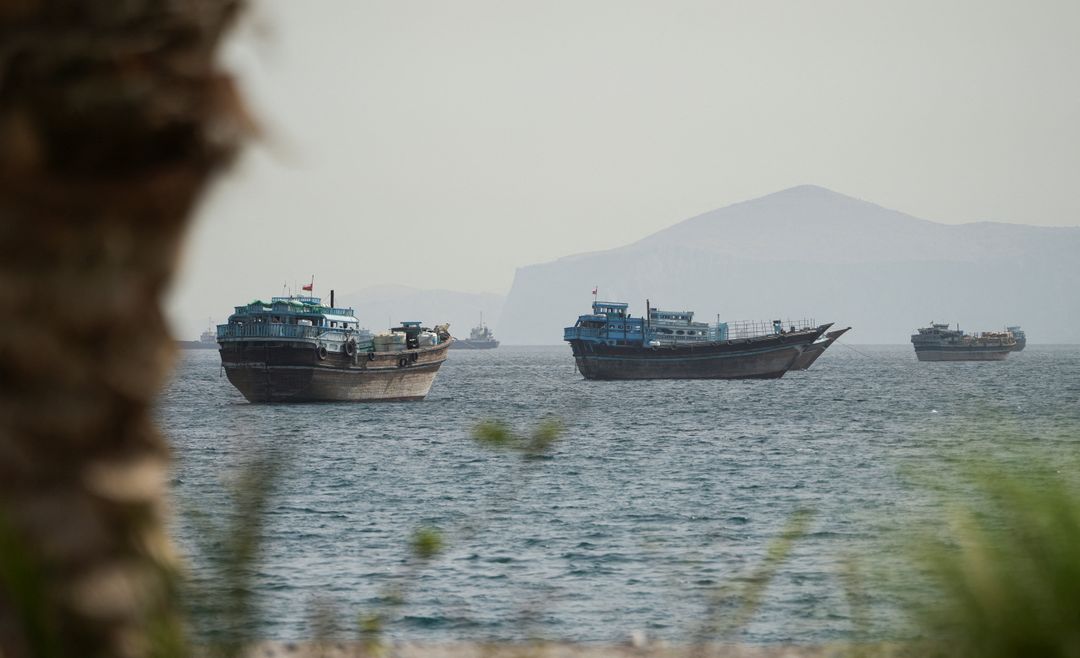
Naval mines widely believed to have been planted by Iran in the flashpoint Strait of Hormuz have emerged as one of the biggest threats to maritime traffic through the strategic waterway, which accounted for one-fifth of global energy shipments before the start of the US-Israeli war in late February.
At least 25 sea-farers have been killed and several oil tankers have sunk since February as the US and Iran engaged in a war of attrition over who controls the Strait of Hormuz.
As a result, the number of ships passing through the strait remains well below the pre-war level of roughly 125-140 ships a day.
The on-again, off-again war has increased the war-risk insurance costs, even as some oil volumes have partially recovered in recent months.
According to Alexandru Cristian Hudisteanu, a maritime security expert based in Doha, the US Navy has “constantly surveilled” the strait and worked to keep the internationally recognised traffic separation scheme – commonly known as TSS – “free of mines”.
“That is to say, the level of confidence the US Navy has is very high,” he tells TRT World, referring to Washington’s repeated reassurance to shipping lines about the mine-free status of the waterway.
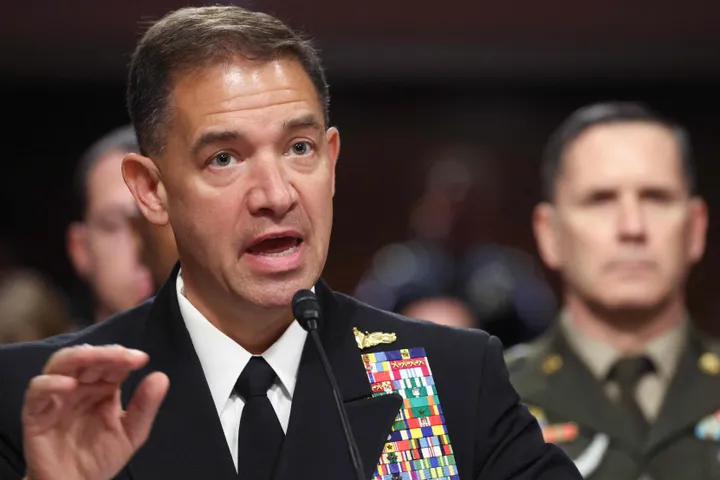
Last month, CENTCOM commander Admiral Brad Cooper said primary transit routes “remain free and clear of Iranian sea mines” after US forces cleared lanes previously mined by Iran’s Revolutionary Guard (IRGC).
CENTCOM said it has supported more than 3,000 commercial transits and facilitated the export of more than 1.5 billion barrels of crude since the summer. More than 95 per cent of vessels navigated the strait safely despite IRGC activity, it claimed.
However, Hudisteanu cautions that demining operations are “never perfect”.
“Mine countermeasure operations, especially demining, are not a ‘clean’ business… confidence is never 100 per cent once a space has been mined,” he says.
Any recommendation to resume marine traffic is not issued lightly, he says.
Even one verified incident can severely damage confidence in US Navy operations, including its shuttling of vessels, he adds.
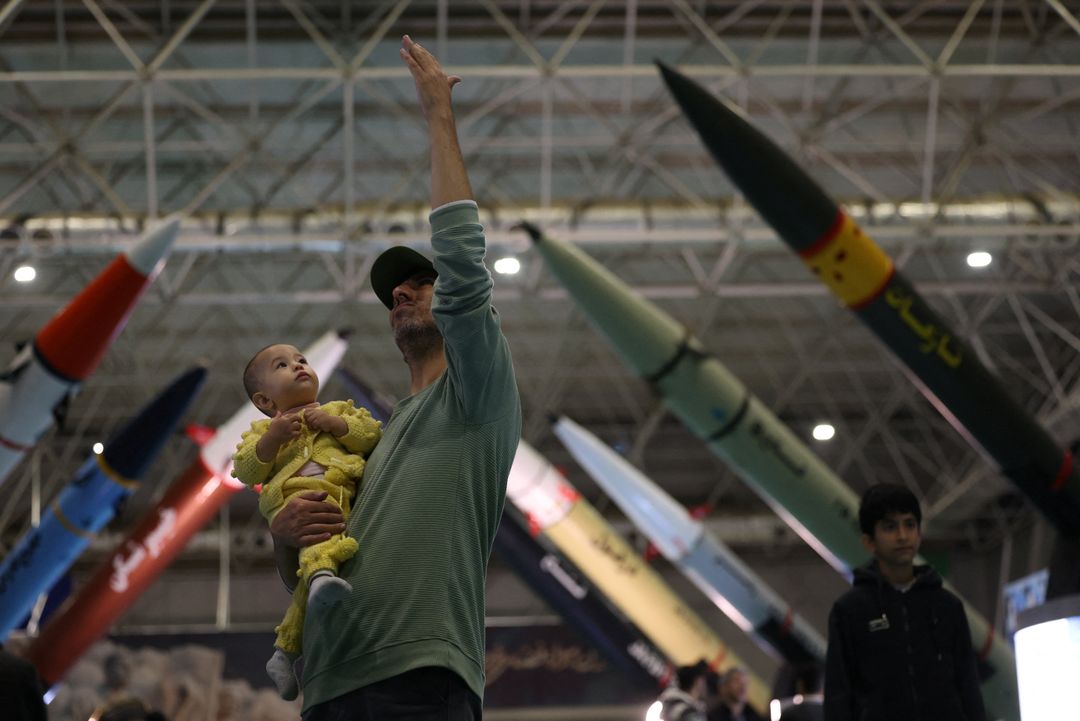
What Iran claims
In contrast to US assertions about the free movement of tankers through the Strait of Hormuz, Iran has offered a different account.
The IRGC has claimed almost daily incidents in recent weeks in which oil tankers struck naval mines, while trying to use what Tehran calls an “unauthorised” southern route – alternatively called the Omani corridor or TSS-aligned passages.
Tehran rejects the southern passage favoured by the US. It insists that vessels should use the northern corridor under Iranian control after obtaining clearance.
Ships trying to take the southern route often do so after switching off their transponders, which means no broadcasting of real-time data, such as the ship’s position, identity, and speed.
Also, such commercial ships reportedly move under US guidance or air cover.
On Tuesday, Iranian state media reported that four ships caught fire after striking sea mines in different parts of the Strait of Hormuz.
However, most of these claims remain unverified because Iranian officials have not publicly identified the names or flags of the vessels involved.
Hudisteanu notes that many of the claimed incidents do not match classic mine damage patterns.
“The incidents claimed never showed mine-like damage patterns: structural damage to the vessel, impact below the waterline or at the waterline, water column, low visible explosion plume, etc,” he says.
Importantly, Iran has focused its claims on passages via the TSS or the Omani corridor, and never on the northern route preferred by the IRGC, he says.
“This is simply messaging to try to wrestle back control from the US Navy, apart from outright attacking the vessels,” he says.
Independent reporting has frequently described different causes for the maritime incidents. The UK Maritime Trade Operations (UKMTO) Centre has consistently issued advisories for tankers struck by unidentified projectiles, resulting in engine-room fires.
One confirmed incident in late October involved a small boat attaching explosive devices – called limpet mines – to the hull of a tanker above the waterline, causing a fire.
Hudisteanu notes that there might have been a few incidents with manually applied limpet mines in the past month or so – “which is not mining” in the strictest sense of the word.






Iran’s stockpile of mines
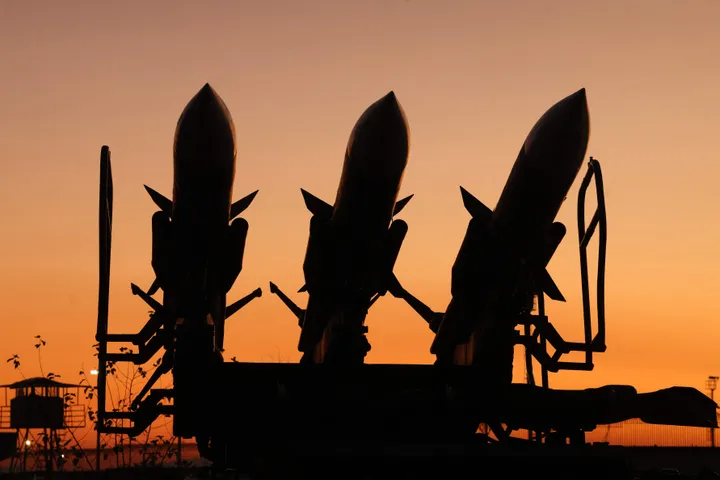
Pre-war estimates put the pile of Iran’s mines at 2,000-6,000.
Iran’s arsenal mainly consists of the Maham series. Maham-1s are contact moored mines, which have a buoyant explosive device tethered by a cable to an anchor on the seabed. It floats just below the water’s surface and detonates when a ship's hull physically strikes it.
Another type of mine that Iran possesses is Maham-2, which rests directly on the seabed and detonates when a vessel passes by without requiring any physical contact with it.
Then there are influence-fused moored mines, which remain tethered to a seabed anchor. Without physical contact, they detonate when triggered by a passing vessel's movement.
Iran also has limpet mines, which are simple explosive devices that attach directly to a ship's hull using powerful magnets.
“Mines are some of the least expensive and least sophisticated weapons out there,” Hudisteanu says.
“(Their) production can be domestically supported, even under the worst conditions,” he adds.
Hudisteanu describes them as weapons of the “poor man’s navy” because of the asymmetry they create in cost and effect.
Iran’s mining of the Strait of Hormuz has not resembled systematic, large-scale barrages, though.
“Iranians mined the Strait of Hormuz via small-boat operations, dropping several mines, possibly a couple of dozen here and there, because the intended effect was to generate further distrust in the (Hormuz), rather than cut off the strait entirely,” Hudisteanu says.
The US Navy, with virtually uncontested air access over the strait, has maintained surveillance for loitering small boats, abnormal sailing patterns, and communications, he notes.
While Iran retains the ability to drop additional mines opportunistically, let some drift, or use commercial vessels, such tactics carry risks, including mines washing ashore or striking Iranian-linked shipping, he says.
A recovery in oil volumes?
Ship traffic through the strait remains depressed relative to pre-conflict levels, even though oil volumes have somewhat recovered.
Hudisteanu identifies three main factors contributing to the shippers’ risk perception.
One, oil and gas are not the only cargoes passing through the waterway: many operators still rate the strait as “very dangerous” to “do not service”, thus driving up insurance premiums, wages and other costs, or prompting avoidance altogether.
Oil and gas tanker rates have been at historical highs for months, he says. The US Navy shuttling has made some voyages commercially viable, but this has not applied equally to other types of vessels.
Two, many vessels transit with transponders and other tracking devices switched off, making passages harder to count.
Three, the US Navy’s blockade has reduced Iranian-flagged traffic to virtually zero, he says.
The war has increased the risk insurance for Hormuz transits sharply from roughly 0.25 per cent of the hull value before the conflict to 6-10 per cent in recent months, adding millions of dollars per transit.
Similarly, crude prices have stayed in the low-to-mid $90s range per barrel in recent weeks. This level is significantly higher than the pre-war level of mid-$70s, but lower than the earlier peaks of $115-plus.
Hudisteanu expects a protracted recovery similar to the one in the Red Sea maritime traffic, which suffered because of attacks by the Houthi militia in 2023-25.
“Disruptions in the Red Sea… have lowered passage numbers through that area below 50 per cent of normal. Even one year afterwards, those numbers have not recovered to pre-disruption levels,” he says.
“I expect a similar development in the Strait of Hormuz case.”