 Kazim Alam
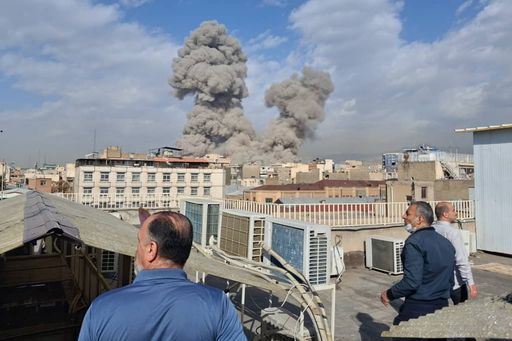
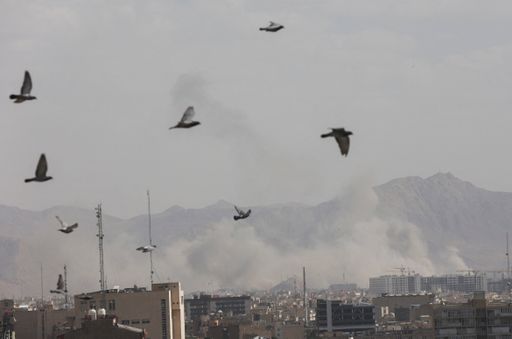
Tehran and other Iranian cities came under heavy fire on Saturday as the US and Israel launched “pre-emptive” strikes against the West Asian country bordering Türkiye.
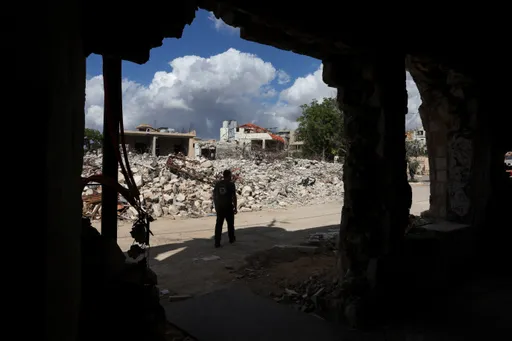
The US-Israel joint strikes aim to take out Iranian leadership, nuclear facilities, and missile infrastructure. The civilian death toll is already rising as a US-Israeli bombing on a girls’ school in southern Iran killed at least 40 people in initial strikes.
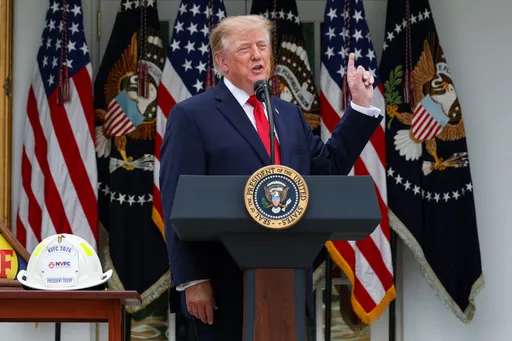
US President Donald Trump asked the Iranian people to “topple their rulers,” while Israeli Prime Minister Benjamin Netanyahu described the operation necessary to eliminate an “existential threat”.
Iran has retaliated with the “first wave” of missile and drone attacks on Israel, with some reaching Israeli airspace and triggering sirens across the country.
Separately, Iran hit US bases in Qatar, Kuwait, the UAE, Bahrain and Jordan.
Despite the swift response, experts warn that Tehran is fighting back with significantly degraded capabilities following the 12-Day War with Israel in June 2025.
The 2025 war destroyed roughly one-third of Iran’s missile launchers and depleted long-range missile stocks.
The Iranian government has also faced a depletion in its political capital in recent months. Mass protests over economic conditions have eroded the appearance of political cohesion in the country.
Reports say Iran has paid special attention to rebuilding its military capability lost during last year’s war against Israel.
“It has been widely reported that Iran has been rapidly replenishing its ballistic missile supplies since its 12-Day War with Israel last June,” Matthew Bryza, former US ambassador and an Istanbul-based international affairs specialist, tells TRT World.
“Iran retains 2,000 or so ballistic missiles,” he says, while noting uncertainty over attack drones that Iran has reportedly supplied to Russia for use in Ukraine.
According to Oral Toga, a researcher at the Ankara-based Centre for Iranian Studies (IRAM), Iran’s post-2025 inventory has fallen from about 2,500 to 1,500 missiles, while two-thirds of its launchers have also been destroyed.
“However, thanks to an industrial base capable of producing several hundred missiles per month and underground ‘missile cities’ built over decades, Iran is assessed to have significantly replenished its stockpiles,” he tells TRT World.
Quoting Israeli intelligence analyses conveyed to the US, Toga says there were still approximately 2,000 heavy ballistic missiles in the Iranian inventory prior to Saturday’s strikes.
In the so-called first wave of retaliation, Iran launched around 35 ballistic missiles at Israel, while simultaneously hitting multiple US bases across Gulf nations, he says.
The primary objective of the US-Israeli strikes is to dismantle Iran’s missile architecture.
“But rendering mobile launchers and dispersed underground sites completely inoperative is technically extraordinarily difficult,” Toga says.
Therefore, Iran retains the capacity to carry out additional ballistic missile strikes in the “coming hours and days”.
In other words, Tehran is currently at a diminishing, but far from zeroed-out capacity, he says.
Iran’s proxy forces, from Iraq to Lebanon
Iran’s so-called ‘Axis of Resistance’ stands largely battered, as each member of the loose network of militants from Iraq to Lebanon and Yemen has taken serious hits over the last two years.
For example, Hezbollah has suffered devastating losses since 2024.
But whether Tehran is able to revive Shia militant group to use it as a proxy in the fight against Israel is “unclear” at the moment, says Bryza.
“Israel has reportedly attacked presumably Hezbollah positions in Lebanon today, after having devastated Hezbollah’s leadership and command-and-control systems last year,” he says.
Toga sounds more sure. He insists that Hezbollah has lost much of its leadership already.
“There is an active disarmament process underway in Lebanon. So do not expect the Hezbollah of 2006,” he says.



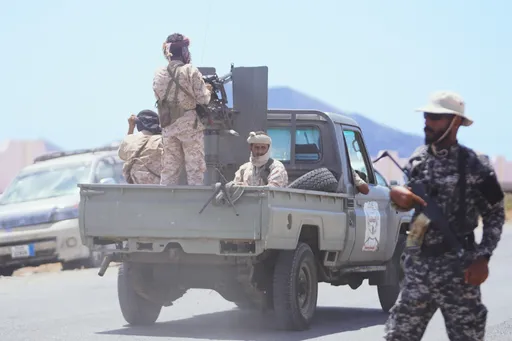
As for Houthis, another Tehran-aligned group that controls parts of Yemen along the Red Sea, Toga says they are currently the “most operational proxy” in Iran’s fight against Israel.
Even though Iraqi militias remain “numerically strong and ready to mobilise,” a lot depends on how Baghdad decides to play its cards in the ongoing crisis.
Is blocking the Strait of Hormuz an option?
One asymmetric option Tehran has actually rehearsed is the disruption of the Strait of Hormuz, through which most of its own oil exports and roughly one-fifth of global oil transits every year.
Toga points out that Iran’s Revolutionary Guards conducted an exercise called ‘Smart Control of the Strait of Hormuz’ just 10 days ago.
It closed parts of the waterway for several hours, the first such act in history, even though US-Iran nuclear talks continued in Geneva.
An Iranian admiral declared at the time that the navy was “ready to shut down the Strait of Hormuz” if ordered by the country’s senior leadership.
“The weapons that arrive on the battlefield on the day of war are different from those shown in exercises,” the admiral was quoted as saying amid the naval exercise to block access to the strategic waterway.
Toga says Iran is technically able to disrupt the strait, and has already demonstrated that it is preparing to do so.
A sustained closure of the Strait of Hormuz, however, is another matter.
“Operationally, there are currently two US aircraft carriers in the region… Iran’s naval assets would be degraded within hours,” Toga says.
Additionally, a closure of the strait will sever Tehran’s lifeline to China, its largest oil customer, while alienating Gulf neighbours.
“If you close the Strait, you sever your own export lifeline and antagonise your last remaining major economic partner,” he says.
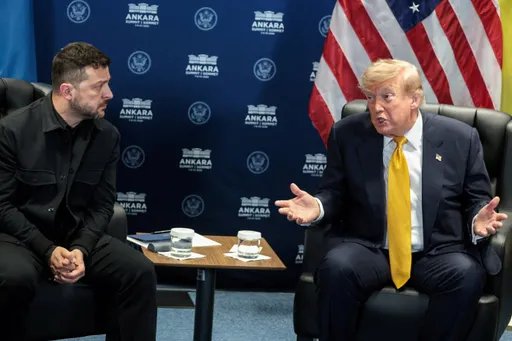
In the current political context, where Trump is openly advocating regime change in Iran, Toga says a “short-term symbolic closure” or mining attempt remains possible.
Such a move will only be aimed at driving up global oil prices and raising the cost of war for the US, “not a sustainable blockade”.
Is Iran looking for a long confrontation?
The latest attack on Iran has given rise to the question whether Iran will opt for high-intensity rounds of retaliation that risk full-scale war, or quickly pivot to a lower-level proxy campaign spread over months on end.
Toga says the option of short-term asymmetric actions looks feasible for now.
“The Strait of Hormuz, attacks via Iraq, and cyber operations are all on the table,” he says.
Yet he questions Iran’s capacity to sustain such a campaign for a longer period of time.
Iran faces its deepest economic crisis in its modern history, with inflation nearing 50 percent.
While the Iranian government still allocates more than half its budget to security, its financial resilience and internal cohesion to sustain a prolonged war are in serious question, he says.
Bryza agrees, saying that Iran’s political-social cohesion stands “severely weakened” by nationwide protests a few weeks ago.
“Those protests were initially focused on the dire state of Iran’s economic conditions, and the clerical regime’s brutal suppression of protestors further undermined social cohesion,” he says.