 Ziyad Motala
No constitution enjoys perpetual legitimacy simply because it once commanded political acceptance.
Constitutions endure because successive generations continue to recognise the authority they exercise. The United Nations Charter is no exception.
Although formally a multilateral treaty, it functions as the constitution of the contemporary international legal order.
It establishes the institutions of global governance, allocates authority among them, and entrusts the Security Council with primary responsibility for maintaining international peace and security.
Like any constitution, the Charter should ultimately be judged by the standards we apply to all constitutional orders. Like every constitution, it should ultimately be judged not only by how it was created but by how it performs the extraordinary constitutional responsibilities entrusted to it.
That is the constitutional question the international community has been remarkably reluctant to ask.
There is an assumption that has rarely been examined: that the Security Council continues to possess the constitutional legitimacy necessary to exercise a near monopoly over the maintenance of international peace and security.
That assumption deserves closer scrutiny.
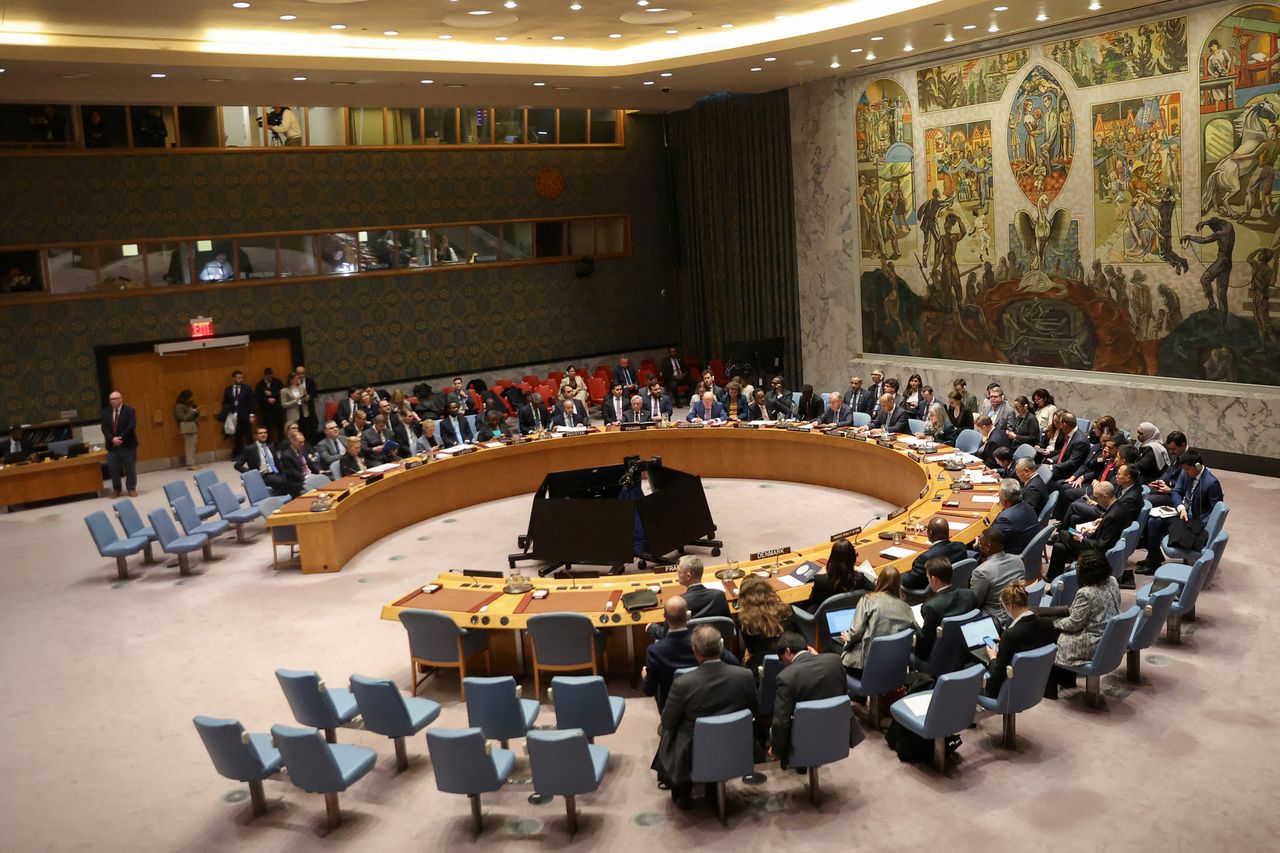
For more than half a century, governments and scholars have debated how the Security Council should be reformed.
They have proposed expanding permanent membership, limiting the veto, strengthening regional representation, and improving accountability. These proposals differ in important respects, but they share a common premise.
They assume that the constitutional settlement negotiated in San Francisco in 1945 continues to command the legitimacy necessary to govern a profoundly transformed international community.
President Recep Tayyip Erdogan has long argued that "the world is bigger than five," stressing the need for the Security Council to better reflect today's geopolitical realities rather than the interests of its five permanent members.
He says the current international system has struggled to respond effectively to conflicts, terrorism, pandemics, and other global crises, and advocates a more inclusive and just multilateral order.
The real constitutional question lies one level deeper. Before asking how the Security Council should be reformed, we should first ask whether it continues to deserve the extraordinary constitutional authority it exercises.
When the Charter entered into force, the United Nations consisted of just fifty-one member states. Most of Africa remained under colonial rule. Much of Asia had yet to achieve independence.
Only a handful of Middle Eastern states participated in the founding conference.
The overwhelming majority of today's 193 member states neither participated in the negotiation of the constitutional allocation of authority embodied in the Security Council nor exercised any meaningful influence over its design.
More importantly, the distribution of authority reflected in the Charter was never the product of constitutional principle. The veto was not adopted because it embodied democratic legitimacy, sovereign equality, or the rule of law.
It was the political price demanded by the victorious powers of the Second World War for participating in the new organisation.
That compromise may well have been understandable in 1945. Constitutional settlements are rarely products of philosophical perfection. They are products of political necessity. But constitutional legitimacy is not frozen in time.
Constitutional allocation of power
Every constitution rests upon assumptions about the political community it governs. When those assumptions fundamentally change, constitutional lawyers instinctively ask whether institutions continue to deserve the authority they exercise.
International lawyers have been remarkably reluctant to ask that same question of the United Nations Charter.
International law itself recognises that radically altered circumstances matter. The doctrine of rebus sic stantibus allows treaties to be reconsidered when the assumptions upon which they were founded have fundamentally changed.
Although narrowly applied, it reflects a broader constitutional insight. Legitimacy cannot remain permanently detached from profoundly altered historical realities.
The world of 1945 has disappeared, but the constitutional allocation of power established in 1945 has not.
This is not an argument that the Security Council has occasionally failed. Every constitutional institution fails. Legislatures enact unwise laws. Courts issue controversial judgments. Executives abuse power.
Constitutional legitimacy is not measured by isolated mistakes. The constitutional question changes when failure ceases to be episodic and becomes structural.
The historical record is difficult to escape. Rwanda revealed catastrophic institutional paralysis in the face of genocide. Srebrenica demonstrated the inability of the international community to protect civilians even within areas designated as safe.
Kosovo exposed profound disagreement over humanitarian intervention outside the Charter framework. Iraq demonstrated a permanent member's willingness to bypass the Security Council when legal constraints became politically inconvenient.
Repeated military interventions undertaken by the United States across the Middle East and elsewhere reinforced the perception that the Charter's restraints increasingly bind the weak more than the powerful.
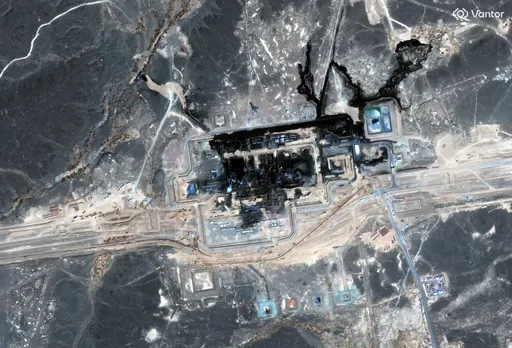
More recently, the bombing of Iran without Security Council authorisation, coupled with rhetoric suggesting the possible acquisition of Greenland despite the Charter's prohibition on the threat or use of force against the territorial integrity or political independence of states, further underscored major powers' growing willingness to subordinate constitutional principle to geopolitical calculation.
Syria repeatedly demonstrated how the veto could shield geopolitical allies from meaningful collective action. Ukraine exposed the constitutional absurdity of allowing a permanent member accused of aggression to frustrate decisive institutional responses.
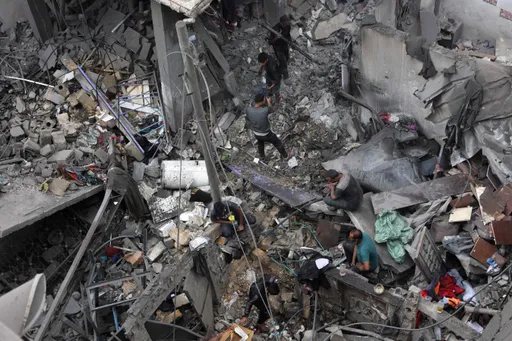
Gaza has once again revealed how profoundly legal principle can be subordinated to geopolitical calculation.
Each crisis involved distinct legal and political complexities. Yet together they reveal a common constitutional pattern.
Decisions that ought to turn on legal principle repeatedly become contingent on whether the interests of one or more permanent members are engaged.







The Charter promised collective security. The constitutional architecture increasingly delivers selective security.
Nothing is more corrosive to the rule of law than a constitutional order in which identical conduct is judged according to the identity of the actor rather than the principle being applied.
The problem extends beyond institutional performance. A central component of the Charter's constitutional design was never implemented.
The founders envisioned a genuine system of collective security, supported by standing military arrangements under Articles 43 through 47. Those provisions never became operational.
For nearly eighty years, the Security Council has exercised extraordinary constitutional authority without the institutional framework the Charter itself expected to accompany it.

Nor does reform provide a convincing answer. Meaningful reform requires the consent of the very permanent members whose constitutional privileges would necessarily be curtailed.
Those who benefit from the existing constitutional settlement have the power to prevent any meaningful alteration.
Reform has become the international lawyer's equivalent of prayer: sincere, repetitive, and almost universally regarded as desirable, yet it is directed towards a constitutional process whose design allows those who benefit most from the existing order to block fundamental change.
The debate, therefore, needs to move beyond reform.
This is not an argument against the United Nations. The organisation performs indispensable humanitarian, developmental, health, refugee, and diplomatic functions that remain essential to international society. These functions should continue and be strengthened.
The argument instead concerns one institution and one responsibility: the constitutional monopoly on maintaining international peace and security.
Constitutional history teaches that institutions are not preserved merely because they once possessed legitimacy. They endure because successive generations continue to recognise the legitimacy of the authority they exercise.
Institutions do not exist to preserve themselves. They exist to preserve the constitutional purposes for which they were created.
When constitutional assumptions have fundamentally changed, constitutional purpose has progressively failed, essential elements of the constitutional design have never been realised, and meaningful constitutional renewal has become functionally impossible, constitutional succession becomes not a revolutionary slogan but a constitutional necessity.
The international community should therefore begin establishing a successor institution to the Security Council, entrusted with the primary responsibility for maintaining international peace and security.
Its design should emerge from an inclusive constitutional process that reflects the international community as it exists today, rather than as it did at the end of the Second World War.
Victorious powers
But constitutional succession should not entail reproducing the constitutional compromises of 1945 under a different institutional name.
A successor institution should instead be built on five constitutional principles capable of commanding legitimacy in the twenty-first century.
First, democratic legitimacy ensures that constitutional authority derives from the participation of today's international community rather than from the geopolitical realities of a bygone era.
Second, representative legitimacy, ensuring that every major region of the world meaningfully participates in decisions affecting international peace and security.
Third, the consistent application of the rule of law, so that legal principles are applied equally regardless of the identity, military strength, or geopolitical influence of the states before the institution.
Fourth, meaningful constitutional accountability, ensuring that no state or institution enjoys permanent constitutional immunity from legal constraints.
Finally, constitutional adaptability enables future generations to revise constitutional arrangements without requiring the consent of those whose privileges are most affected.
These are not revolutionary principles. They are the constitutional principles by which we judge legitimate government elsewhere. There is no compelling reason for the international legal order to demand less of itself.
Critics will dismiss this proposal as unrealistic, yet constitutional history points in the opposite direction. No constitutional order enjoys perpetual legitimacy merely because it once commanded political acceptance.
Constitutions are created, amended, replaced, and, when necessary, succeeded. The extraordinary claim is not that constitutional orders can be renewed.
Rather, the extraordinary claim is that a constitutional settlement negotiated by a handful of victorious powers in 1945 should continue indefinitely to govern a profoundly transformed international community, even though meaningful constitutional renewal has become impossible.
Constitutional succession is not the exception. It is one of history's principal mechanisms for restoring the legitimacy of public authority. Permanence, rather than renewal, has become the extraordinary claim.
The twentieth century gave the victors of the Second World War the opportunity to rebuild the international legal order.
It did not confer perpetual constitutional authority upon them over the generations that followed.
The debate over Security Council reform has now lasted for more than half a century. It has produced countless proposals and almost no meaningful constitutional change.
The question facing the international community is therefore no longer how to preserve the constitutional settlement agreed in 1945.
It is whether we possess the constitutional imagination to build a successor institution capable of commanding the legitimacy that every constitutional order must continually earn.