Rifaat al Assad, the brother of the late Syrian President Hafez al Assad, died on Tuesday.
Rifaat was known by critics as the "butcher of Hama" for crushing an uprising in the city in 1982 before unsuccessfully challenging for power and going into exile.
He died at the age of 88 in the United Arab Emirates, two sources with knowledge of his passing said.
A former army officer who helped Hafez al Assad seize power in a 1970 coup and establish his iron rule, Rifaat continued to harbour presidential ambitions during years of exile spent mostly in France. He returned to Syria in 2021, before fleeing again in 2024 following the ouster of his nephew, former President Bashar al Assad.
When Hafez died in 2000, Rifaat objected to the power transfer to Bashar and claimed himself the legitimate successor in what proved to be an ultimately toothless leadership challenge.
He weighed in from abroad again in 2011 as uprising swept Syria, urging his nephew to step down quickly to prevent civil war. But he also deflected blame away from Bashar, attributing the revolt against his rule to an accumulation of errors.
More than a decade later, Bashar — who was in power at the time — allowed his uncle to return home, helping him escape jail in France where he was found guilty of acquiring millions of euros of property using funds diverted from the Syrian state.
When Bashar fell, Rifaat had tried to escape via a Russian airbase but was denied entry and eventually crossed to Lebanon, carried over a river on the back of a close associate, according to one of the sources, who had direct knowledge of the incident.

Hama massacre
Rifaat al Assad, a younger brother to Hafez, was born in the village of Qardaha in a mountainous area near the Mediterranean coast which forms the heartland of the minority Alawite community to which the family belongs.
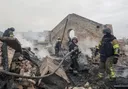
Rifaat became a powerful figure in the Assad regime after the 1970 coup. He commanded the loyalty of elite forces that crushed the 1982 uprising in Hama, one of the biggest challenges to Hafez al Assad during his 30-year rule.
The devastating three-week offensive, which killed more than 10,000 people, has often been described as a model for how Bashar would deal with the uprising against his rule some three decades later.
In 2022, a human rights monitoring group, citing informed estimates, alleged that between 30,000 and 40,000 civilians were killed in Hama.
In March 2024, the Attorney General's Office of Switzerland said that it would put Rifaat al Assad on trial for war crimes and crimes against humanity for his actions in Hama.
According to the Swiss prosecutors' indictment, between 3,000 and 60,000 people, the majority civilians, died in the Hama massacre. In response, Rifaat's lawyers said in a statement that he had always denied any involvement in the alleged acts.



Confrontation with Hafez
His role in Hama massacre further elevated his standing in that administration.
In his book — Asad: The Struggle for the Middle East — journalist Patrick Seale listed success in crushing the 1982 uprising as one of the factors that led senior regime figures to turn to Rifaat when Hafez fell ill in 1983 and they feared he would not recover.
He was appointed vice president the following year.
While Hafez was still unwell, Rifaat started pressing for changes in government, and posters of him in uniform appeared in Damascus. When Hafez recovered, he was "extremely displeased", Seale wrote.
Their rivalry culminated in 1984 when Rifaat ordered his forces to seize control of key points in Damascus, threatening all-out conflict. But Hafez talked his younger brother down from confrontation.
Rifaat left Syria after the failed coup.

Avoiding prison
Establishing himself as a rich ‘businessman’ in Europe, he initially settled in Geneva, later moving to France and Spain.
But his wealth increasingly became the focus of corruption investigations.
In 2020, a French court found him guilty of acquiring millions of euros' worth of French property using funds diverted from the Syrian state, and sentenced him to four years in jail.
All of his property in France, estimated to be worth 100 million euros (~$117 million) at the time, was ordered seized, as well as a property worth 29 million euros (~$34 million) in London.
Rifaat denied the accusations.
His return to Syria in 2021 was not the first time he had gone home since the failed coup: in 1992, he attended his mother's funeral.
A pro-Bashar newspaper reported he had returned in 2021 "in order to prevent his imprisonment in France" and would play no political or social role.