 Kazim Alam
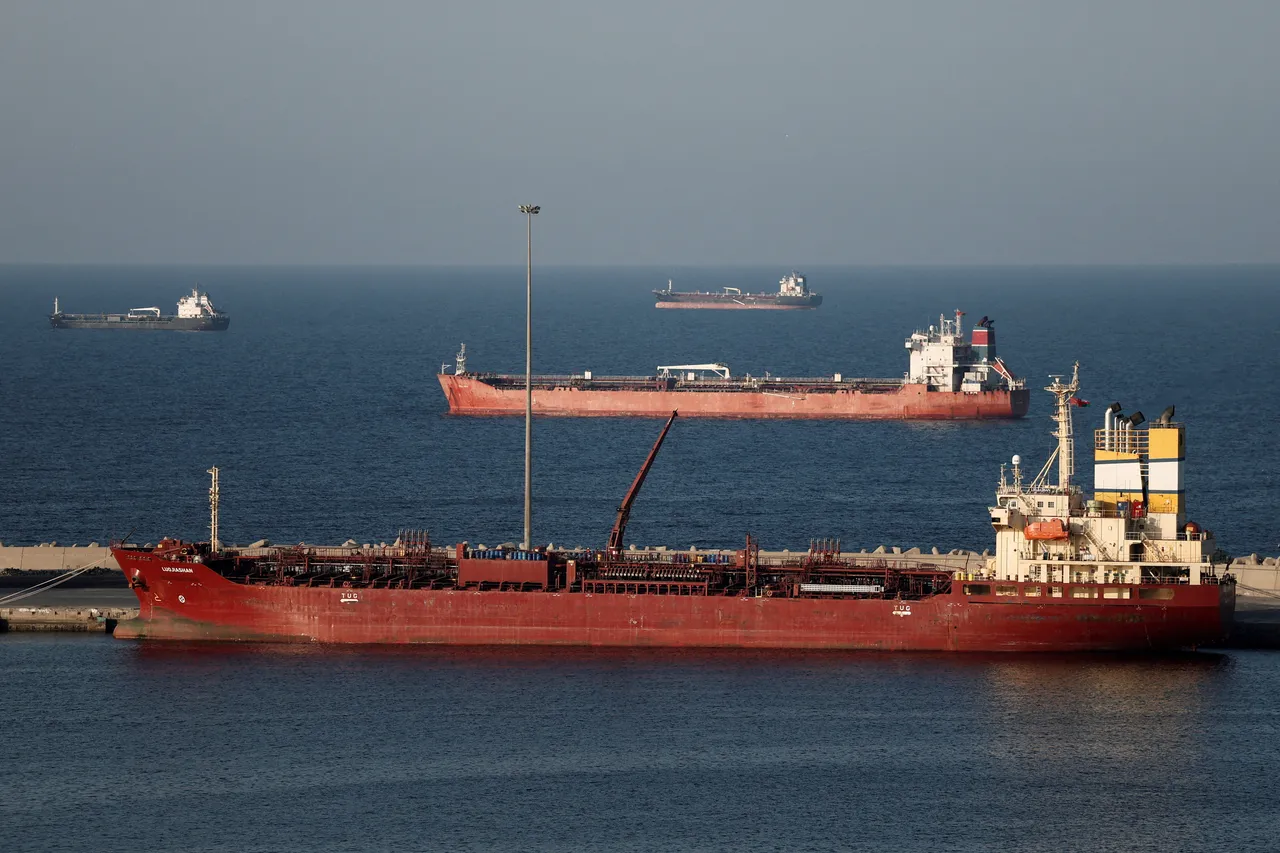
China, the world’s largest crude oil importer, is facing a serious test of its energy security as the US-Israeli war against Iran has effectively blocked the Strait of Hormuz.
Almost 40 percent of China’s crude imports historically pass through Hormuz, the narrow waterway connecting the Persian Gulf to the Gulf of Oman through which roughly one-fifth of global oil trade passes.
The disruption has cut Tehran’s crude flows, a discounted lifeline for Beijing’s small and independent refiners – known as teapots – that purchase Iranian oil shipments after rebranding them as Malaysian or Middle Eastern oil.
At the same time, the closure of the Strait of Hormuz has forced rerouting or outright halts in oil shipments from the Middle East, which account for roughly half of China’s seaborne crude imports.
The combined shock resulting from the loss of Iranian oil and a prolonged closure of the Strait of Hormuz has given rise to fears of price spikes and ripple effects on the broader Chinese economy.
A downswing in the Chinese economy can spell disaster for the rest of the world. Beijing is the world’s biggest manufacturing hub and exporter, contributing roughly 30 percent to global GDP.
But experts say China is better positioned than many assume, thanks to its massive energy stockpiles, growing Russian supplies, and smart policy shifts.
Jianlu Bi, a Beijing-based political commentator, tells TRT World that the country’s combined strategic and commercial oil stockpiles – estimated between 1.2 billion and 1.4 billion barrels – provide up to 130 days of net import cover.
“These reserves… can be strategically released to offset shortfalls from lost Iranian crude or a Strait of Hormuz closure, stabilising domestic prices and ensuring fuel for critical sectors,” he says.
Murat Oztuna, a China analyst and adviser to the president of Ankara’s Centre for Middle Eastern Studies (ORSAM), points to additional buffers.
Over 46 million barrels of Iranian crude are already stored in floating facilities across Asia, while substantial volumes are kept in bonded warehouses at ports such as Dalian and Zhoushan.
“China is fully prepared for a potential supply disruption lasting several months,” Oztuna tells TRT World.
Iranian oil has had few international buyers because of a blanket ban on the sale of crude using Western banking and shipping channels.
But Beijing allowed Iran to circumvent Western sanctions by trading oil in dark-fleet tankers against payments in yuan via second-tier Chinese banks.
These Chinese ‘teapots’ processed as much as 90 percent of Iran’s total oil exports before the beginning of the war.
Oztuna says that Beijing’s long-standing diversification – keeping dependence on any single supplier below 20 percent of the total – and domestic production covering roughly one-fourth of the daily requirement further cushion the expected blow.
The Moscow factor
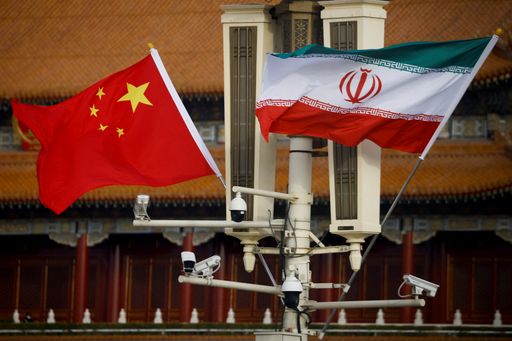
Russia has emerged as the critical swing factor helping Beijing minimise the supply shocks amid the US-Israeli war against Iran.
Noting that Moscow is China’s largest crude supplier – covering 17.5 percent of 2025 imports – Bi says that China can rapidly scale up pipeline and seaborne Russian oil to replace Middle Eastern volumes.
This is because overland routes from Russia and Central Asia bypass the Strait of Hormuz. This diversification allows China to avoid immediate shortages and buy time for longer-term import adjustments, Bi says.
Oztuna provides granular evidence of the Chinese pivot already underway.

Citing data from ship-tracking agency Vortexa, he says China received approximately 2.07 million bpd of Russian oil in February, a “significant increase” from January.
Meanwhile, Iranian deliveries fell almost 18 percent over the same period.
“This adjustment can be attributed primarily to Russian oil currently being considered more reliable than Iranian oil,” he says, adding that Beijing had anticipated conflict risks and prepared accordingly.
Still, higher energy and freight costs are affecting the Chinese economy.
Bi acknowledges that elevated prices directly raise production and logistics expenses, squeezing margins for labour-intensive and low-value-added exports, like textiles and furniture, where transport and fuel account for 10-25 percent of total costs.
The impact, however, is uneven in capital- and technology-intensive exports, such as electric vehicles, renewables, and machinery, which face smaller margin pressure, he says.
“Many competing economies endure similar energy and freight inflation, meaning China’s overall export competitiveness weakens moderately rather than collapsing,” Bi says.
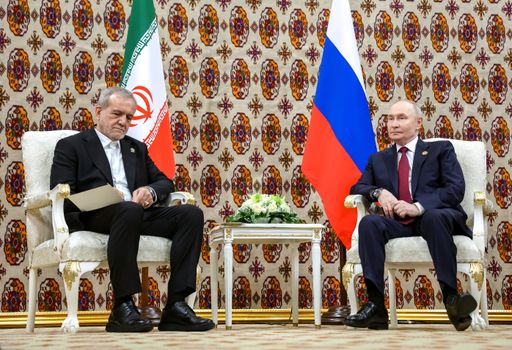
Oztuna also warns against alarmist narratives of an “energy vacuum and chaos” in Asia.
“A severe shock is inevitable,” he says, quickly adding that the shock does not automatically translate into the kind of rapid systemic breakdown one might expect in Japan or Taiwan.
He notes that China meets roughly 83 percent of its total energy demand through domestic coal and clean energy sources, insulating it from pure import dependence.
Beijing has already signalled its inward focus to meet the new challenges.
Oztuna refers to China’s decision to halt refined fuel exports for March, tightening diesel, gasoline, and jet fuel supplies across Asian markets.
“As China absorbs the shock internally, it does not act as a buffer for the rest of the world. Instead, it can become an actor that restricts supply to protect its domestic market,” he says.
In other words, China’s move may lead to higher prices for global consumers of a wide range of energy-linked industrial inputs, he says.
Oztuna frames Beijing’s approach as a three-stage strategy already in motion.
The first step has been to lock down the domestic market by cutting exports and suppressing prices.
The second involves redirecting supply flows – primarily towards Russia and through Saudi Arabia’s Yanbu Port into the Red Sea.
The third stage focuses on protecting strategic buffers by avoiding rapid depletion of stocks and maintaining selective access to reserves, according to Oztuna.
Over the longer term, Bi says China is pursuing deeper structural shifts aligned with official energy and climate plans: accelerating domestic oil exploration, expanding storage capacity, and scaling up renewables.
“Beijing will also strengthen overland energy corridors and promote renminbi settlement in energy trade to mitigate dollar‑denominated price volatility,” he says.