 Zeynep Conkar
A federal judge in California has ruled that immigration provisions used by the US administration to target non-citizens over political speech are unconstitutional, delivering one of the strongest legal challenges yet to its use of immigration law against pro-Palestinian activists.
US District Judge Noel Wise ruled on August 28 that the government's application of the provisions to revoke visas and pursue deportations over protected speech violated the First and Fifth Amendments.
The case emerged from a fear already taking hold on university campuses: that an international student's words could put their legal status at risk.
The Stanford Daily, Stanford University's student newspaper, and an anonymous F-1 visa holder identified as Jane Doe challenged the policy, arguing that it pushed international students to delete posts, avoid political activity, and think twice before reporting on Gaza.
Wise's 90-page decision sided with the plaintiffs on six of eight claims. It also challenged the breadth of the government's claimed authority, finding that its application of the provisions to constitutionally protected speech amounted to viewpoint- and content-based restrictions.
Too many brave and principled pro-Palestinian voices have become collateral damage due to Washington’s attempts to suppress criticism of the genocidal Israeli state, according to human rights lawyer and writer Maria Kari.
"I cannot think of anything more profoundly un-American than silencing students and activists for voicing opposition to the US government funding genocide, war crimes and the murder of thousands of babies and for that reason Judge Wise's ruling is a very welcome and significant victory," Kari tells TRT World.
Kari has represented several people targeted by the administration's immigration crackdown, including Momodou Taal, Yaakub Ira Vijandre and Mahmoud Khalil.
“...Constitutional rights are inalienable and belong to the people and that the free speech rights of noncitizens are not any less than citizens," she adds.
An undefined line
At the centre of the dispute are the provisions of the Immigration and Nationality Act of 1952, which US administration invoked to revoke visas and pursue the removal of non-citizens whose presence and activities were deemed to have potentially serious foreign policy consequences for the United States.
Under the administration's interpretation, Secretary of State Marco Rubio had broad discretion to determine when a non-citizen's presence threatened a compelling US foreign policy interest.
The judge rejected that logic. The government cannot punish protected speech simply because it objects to the viewpoint behind it, she wrote.
Rubio's own arguments showed just how far the provision could reach.
He suggested that protests over something as mundane as paper straws could theoretically fall under the same authority, even as his department was using it against people whose speech concerned Gaza.
"If you're complaining about paper straws, then we're obviously not going to yank a visa over that," he said.
The ruling, which cites the founding fathers of the US, Benjamin Franklin and James Madison at length, therefore goes beyond the fate of the students named in the lawsuit, putting a constitutional limit on a strategy Washington has increasingly used against non-citizens whose political speech it considers objectionable.
However, when it comes to the practical, beneficial impact this ruling can have, Kari believes the answer is, unfortunately, not much.
"This ruling is declaratory and not injunctive which means it does not stop the Secretary of State from future visa revocations nor does it free those in ICE prison currently facing detention and deportation.”
From Columbia to Stanford
By the time the Stanford Daily case reached the courts, the policy's consequences were already evident on university campuses.
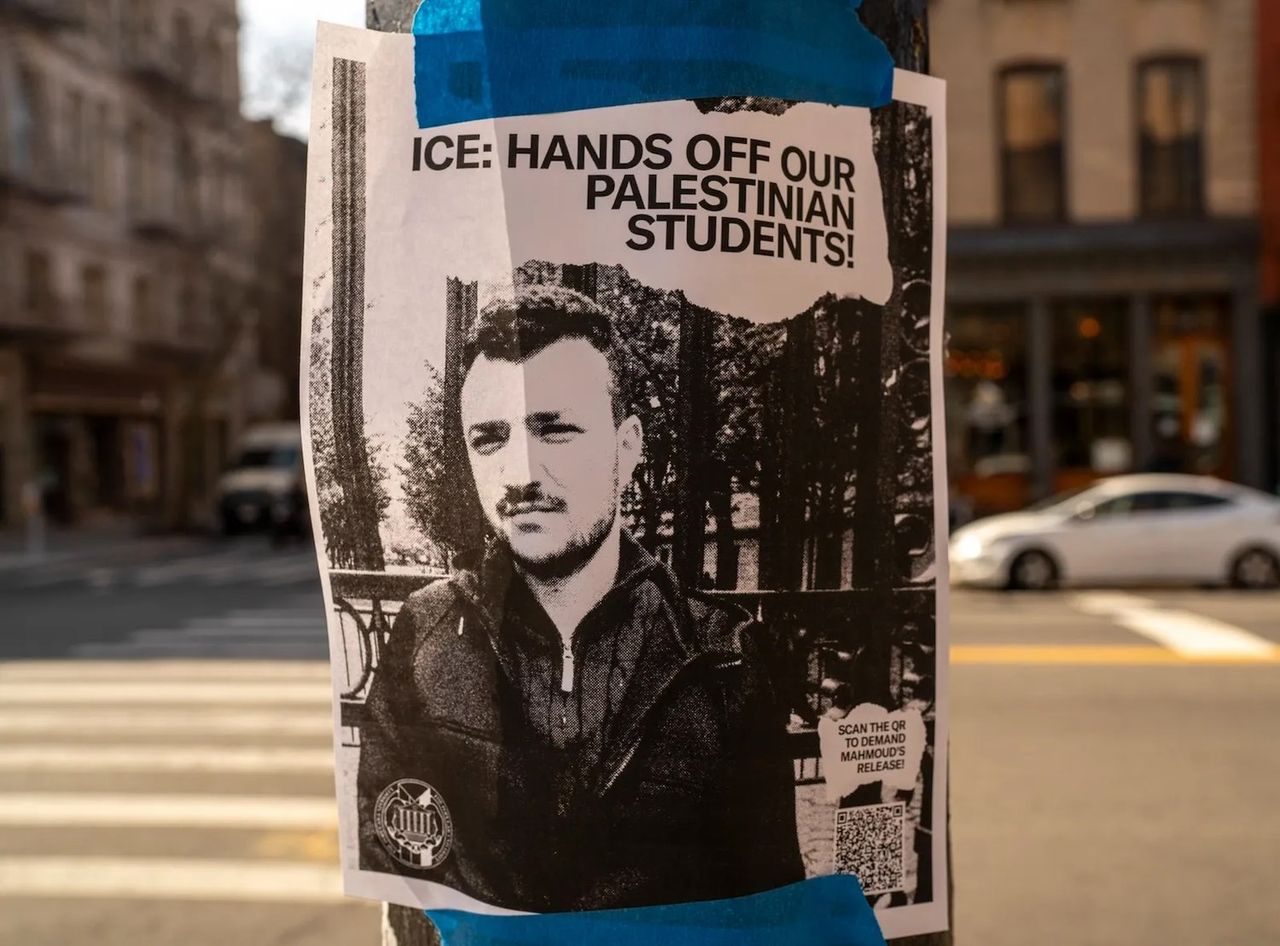
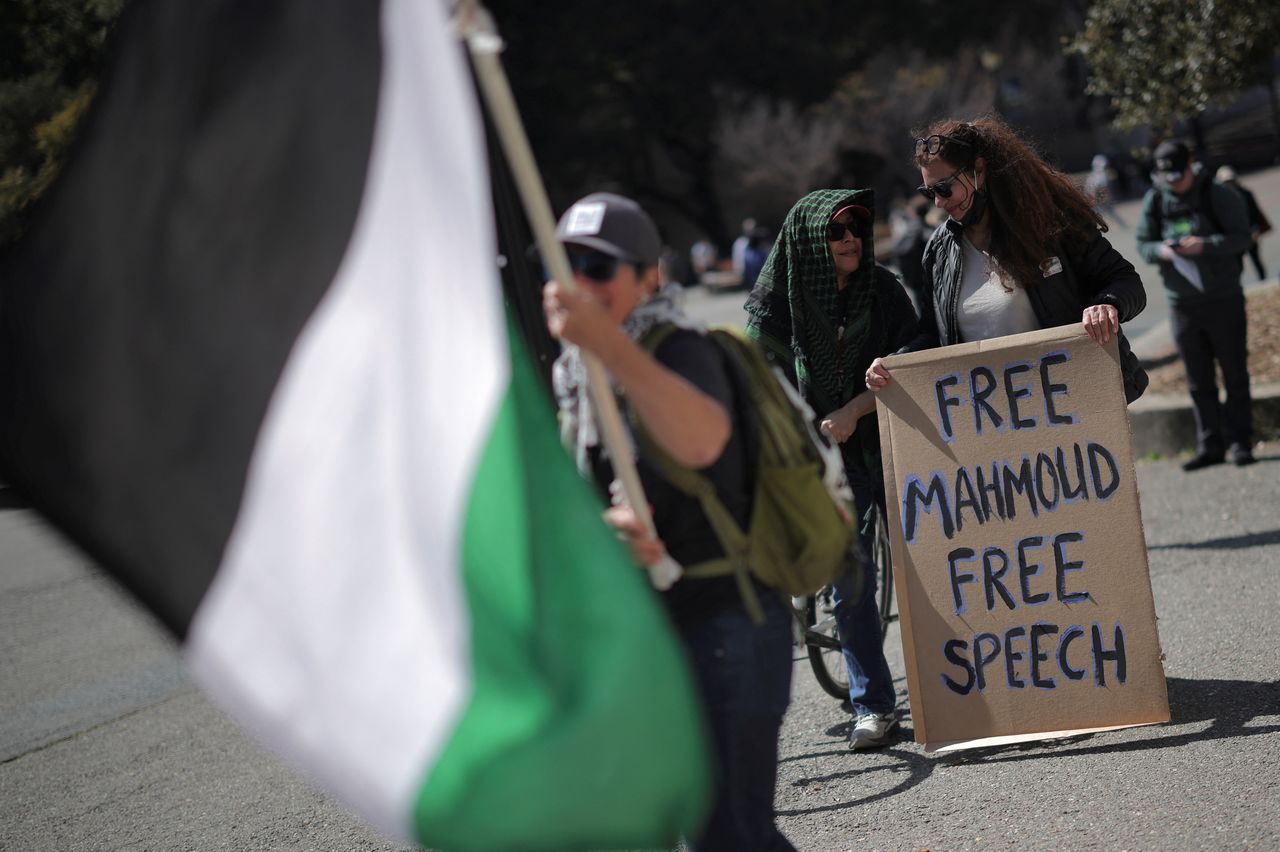
In March 2025, Mahmoud Khalil, a Columbia University graduate and legal permanent resident, was detained by ICE for his role in pro-Palestinian campus organising.
Weeks later, federal agents detained Rumeysa Ozturk, a doctoral student at Tufts University, after she co-wrote an op-ed criticising her university's response to the Israeli genocide in Gaza.
Their cases were followed by those of Cornell University student Momodou Taal and Columbia student Mohsen Mahdawi, turning a series of individual immigration actions into a wider fight over whether political activism could become grounds for removal.
In a January 2025 executive order, the US administration directed federal agencies to identify and remove non-citizen students and faculty whose political activity was deemed contrary to US foreign policy.
Now, with Wise's ruling on the books, the administration faces a choice. According to Kari, the US government will most certainly appeal, and has sixty days to do so.
"When something is on appeal it means that other judges in other jurisdictions are more likely to say, 'that case is on appeal, I don't have to rely on it'.”
But these plaintiffs have an advantage on appeal, because the court that will hear it, the Ninth Circuit, has already ruled that free speech protections apply to noncitizens too, she adds.
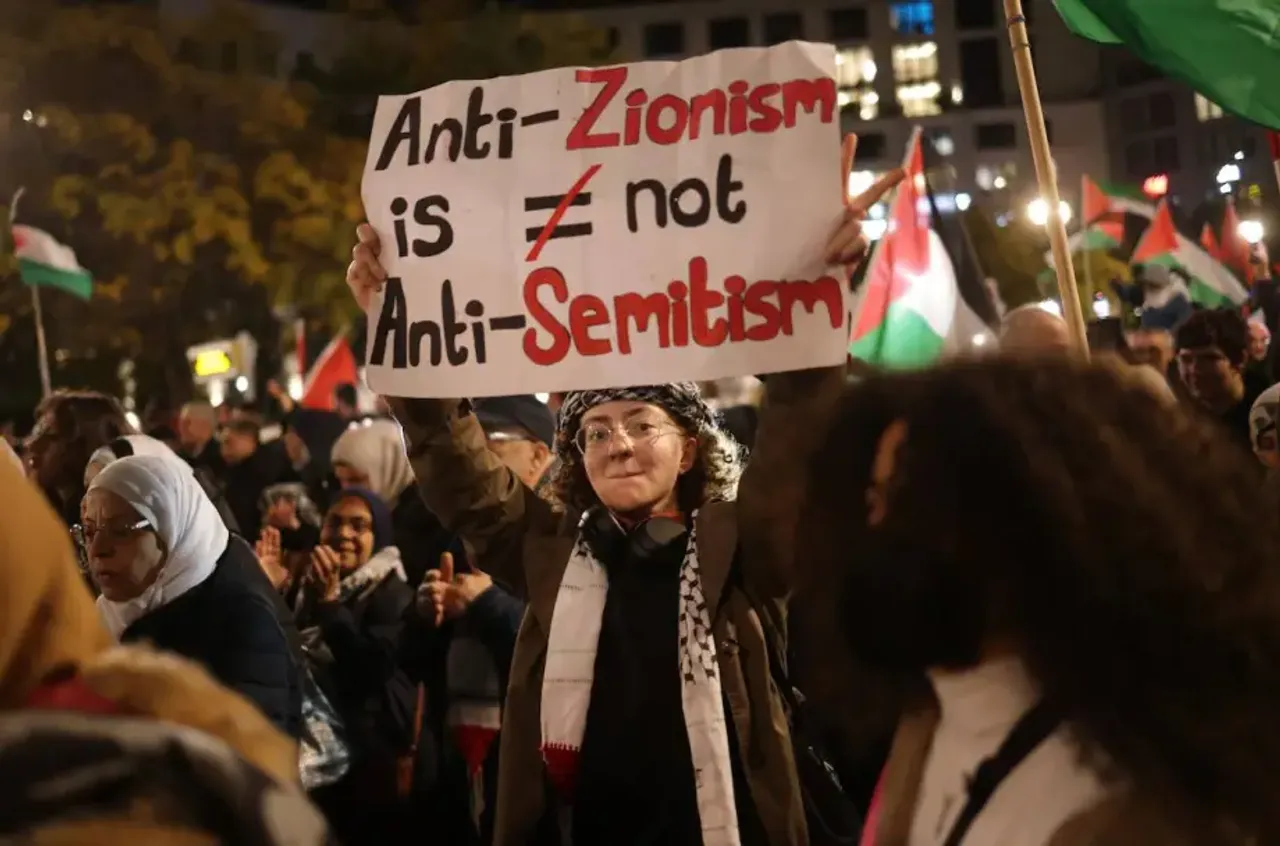
Colliding with constitutional limits
The Stanford Daily's lawsuit took that policy beyond individual activists and into the newsroom itself.
The newspaper argued that international students were deleting pro-Palestinian posts, avoiding political activity and steering away from stories critical of Israel because they feared what speaking out could mean for their immigration status.
The result was a form of censorship that did not require the government to silence every student directly, as the possibility of deportation was enough to make some students think twice.
"I think Judge Wise's decision does a brilliant job of laying out the pattern we've seen unfold since March 2025 when the foreign policy grounds provision was invoked after three decades of non-use with Mahmoud Khalil's request," Kari says.
"Since then… campuses are quiet, protests for Palestine have died down and people - citizens and noncitizens alike - are scared.”
Wise's decision follows a similar ruling last year in Massachusetts in AAUP v. Rubio. In September 2025, US District Judge William Young found that the US administration's policy of arresting, detaining and seeking to deport non-citizen students and faculty for pro-Palestinian advocacy violated the First Amendment. A remedial order followed in January 2026.
Together, the cases reinforce a principle the Supreme Court recognised decades ago: constitutional free-speech protections do not disappear at the border or depend on US citizenship.
The ruling does not undo what Mahmoud Khalil, Rumeysa Ozturk, Momodou Taal, Mohsen Mahdawi and others went through, and the administration is expected to appeal.
Kari says what is most alarming now is how the provision is being weaponised against people targeted purely for their family ties, regardless of anything they've said or done.
"All the cases discussed in the Stanford Daily case involved people who were targeted by the government for their political speech."
"Now, ICE is going after people not because of something they said or did but who they're related to. This is the new and terrifying frontier that's opened up," Kari says.
"I predict the legality of using the foreign policy grounds provision in this way will be tested in the courts next," she adds.