 Zeynep Conkar
More than 300 students at Northwestern University in the US have been barred from registering for classes after refusing to complete a mandatory “anti-Semitism” training created by a pro-Israel organisation.
The module is facing criticism for promoting political indoctrination and whitewashing Israel’s illegal occupation of Palestinian land, while also reigniting a debate over political influence and the limits of academic freedom on US campuses.
Didem Kaya Bayram was one of the students at the receiving end.
“When we refused to complete this training, the University put a registration hold on our accounts. This means you are not able to register for courses. This leads to the inactivation of international student's SEVIS documents and visas.”
According to Bayram, who is pursuing a PhD in Religious Studies and is also a mother of one, the risks went far beyond academics.
“Given the recent abhorrent collaboration of university administrations with providing the names of their pro-Palestine students to the Trump administration and ICE, we did not want to risk ourselves and our child by continuing to stay in the US,” she tells TRT World.
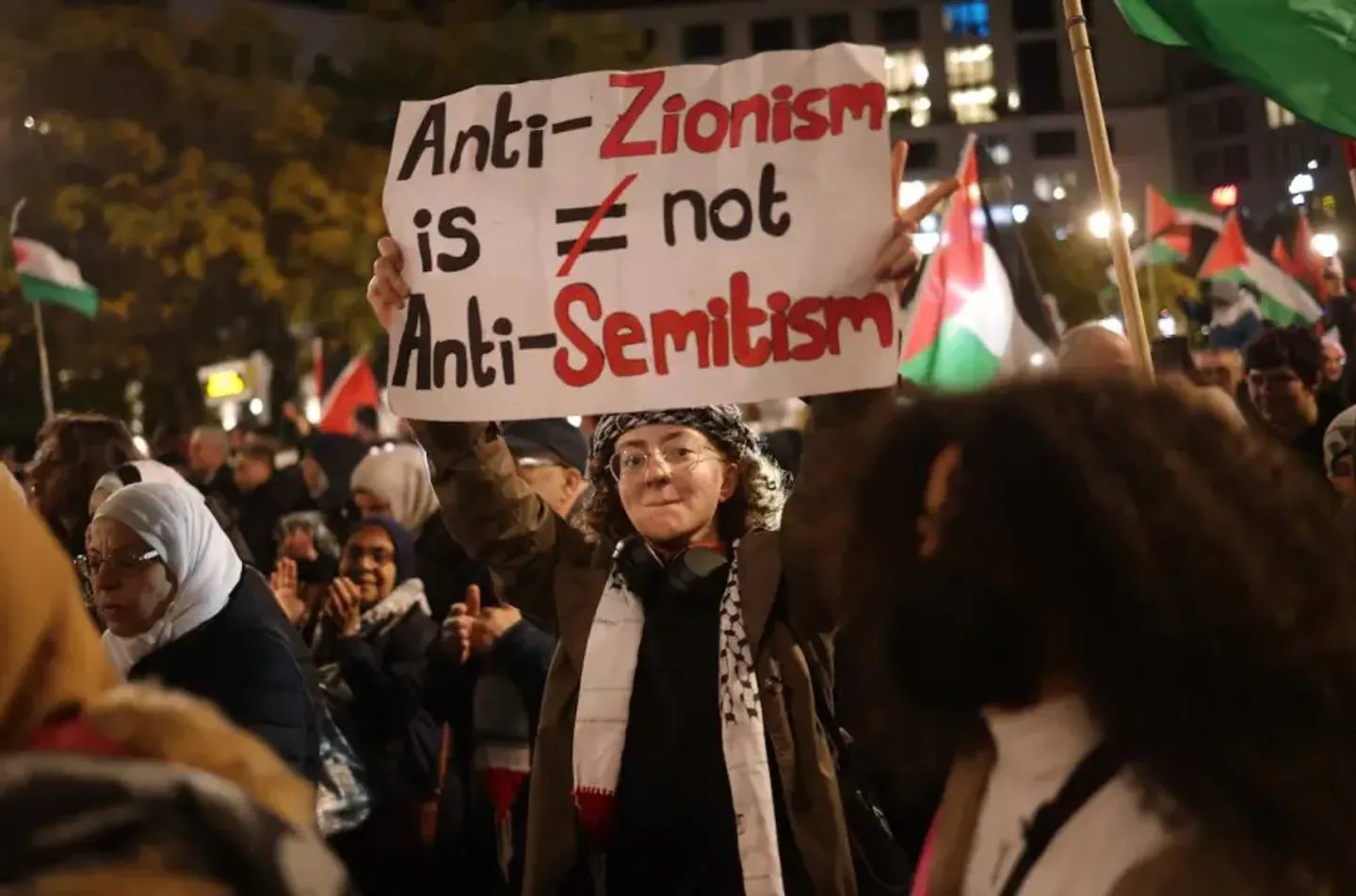
Northwestern is one of several universities that have implemented mandatory “anti-Semitism” training since the Trump administration pressured institutions to adopt federal definitions linking anti-Zionism to hate speech.
In Northwestern’s case, the university had informed students that completing two online modules, one on Islamophobia and another on anti-Semitism, was required to maintain enrollment.
The anti-Semitism module was developed by the Jewish United Fund (JUF), a Chicago-based pro-Israel organisation that has publicly opposed calls for a ceasefire in Gaza.
The Islamophobia video, on the other hand, designed by a corporate diversity consultancy, did not once mention Palestine or anti-Palestinian discrimination on campuses.
Bayram says the experience caused significant personal, academic, and financial losses for her and her family.
Yet she believes the focus should be “less on the undeserving victims, and more on the shameless perpetrators who, with complete impunity, have thrown the full weight of their institutions behind an ongoing genocide”.
“I refused to complete this so-called training because it is disrespectful and humiliating. I am a 32-year-old scholar invited to Northwestern on a fully funded PhD programme for the merit of my intellectual work,” Bayram says.
“Then I am being asked to sit down and nod in silence, watching the total erasure of the past and contemporary crimes against Palestinians. For what? A degree from an institution that is shamelessly supporting an ongoing genocide.”
Students who refused the mandatory training have now taken legal action, filing a federal class-action lawsuit against Northwestern University.
The lawsuit, filed on October 15 on behalf of Graduate Workers for Palestine and other affected students, alleges that Northwestern forced students to align with the institution’s political and cultural views by asking them to complete a training that equates criticism of Israel or Zionism with anti-Semitism.
According to the complaint, the university “has enacted policies and practices that prohibit expressions of Palestinian identity, culture, and advocacy for self-determination and silence those, including Jewish students, who express solidarity with Palestinians or even engage in critical academic engagement with Zionism.”
What the training teaches and omits
At first glance, the anti-Semitism module titled Antisemitism Here/Now presented itself as an educational resource against prejudice. But according to students who reviewed it, the material contained many deliberate factual distortions.







The video asserted that Israel was founded in 1948 “on British land,” omitting any mention of the indigenous Palestinian communities that existed prior or the mass displacement that followed. According to Bayram, several other elements of the video were equally misleading and politically motivated.
“The video normalises language of illegal occupation by presenting a ‘contemporary’ map of Israel that includes the Golan Heights, which is an illegally occupied part of Syria and uses the settler terms ‘Judea’ and ‘Samaria’ instead of the UN-recognised ‘West Bank’ or ‘Occupied Palestinian Territories’,” Bayram explains.
Nowhere does the map label ‘Palestine,’ completely erasing its existence, she adds.
Elsewhere, the training suggested that criticism of Israel can mirror anti-Semitic rhetoric.
“The video also claims that it is ok to criticise Israeli state policies in theory, but as an example of anti-Semitism, it shows protesters holding an Israeli flag with bloody hands painted on it to symbolise state violence,” Bayram explains.
Blood-stained flags and other campus protests have been dismissed as hate speech, yet they have been one of the most effective forms of raising public awareness.
Campus protests across the US have forced universities to confront their financial ties to Israel and brought Palestinian civilian deaths into broader public discourse.
Other students who reviewed the training described it as “unscholarly” and “propagandistic,” accusing the university of outsourcing education to a lobbying organisation. Some Jewish students critical of Zionism were among those who say the material undermines Jewish safety.
A Northwestern spokesperson, meanwhile, defended the module, saying students “are not required to agree” with the material and that it was intended to expose them to “challenging viewpoints.”
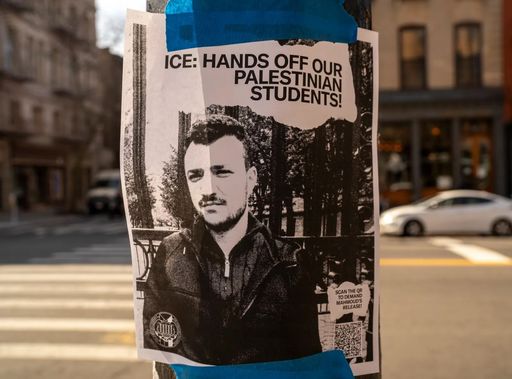
Academic censorship
Across US universities, a similar crackdown on pro-Palestine activism has been unfolding over the past two years amid Israeli genocide, as at least 60 schools are under investigation by the US Department of Education for potential violations.
Since the Trump administration pressured universities to adopt the International Holocaust Remembrance Alliance (IHRA) definition of anti-Semitism, many institutions, including Columbia, Harvard, and Barnard, have rolled out “anti-Semitism awareness” modules produced by lobbying groups.
The IHRA definition controversially equates anti-Zionism with anti-Semitism and its vague, politically charged language has turned into a powerful instrument of censorship.
On campuses, the definition has labelled Palestinian solidarity and criticism of Israeli apartheid as hate speech, leading to disciplinary actions targeting students and scholars.
“Universities' decision to enforce this comes in the context of Trump’s crackdown on campuses and withholding of federal funds; in Northwestern’s case, about $800 million,” says Bayram.
She also points to a well-documented network of Zionist-leaning alumni, trustees, and donors whose personal stakes on university investment boards exacerbate conflicts of interest and institutional corruption.