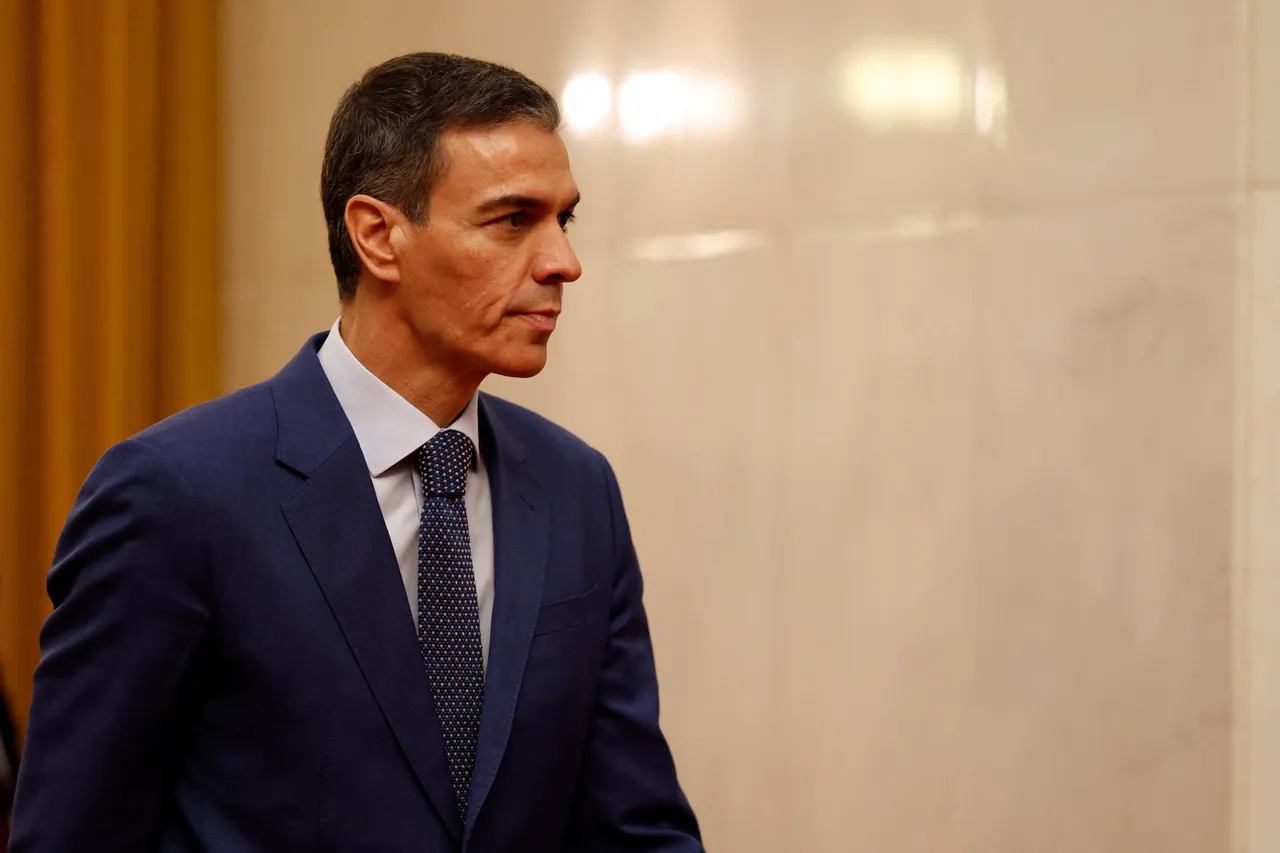
Spanish Prime Minister Pedro Sanchez has urged reform to make the world order "more representative" after talks with Chinese President Xi Jinping in Beijing.
"What we prefer is dedicating all our efforts to reforming a world order that has guaranteed peace for many decades, and also to make it a lot more inclusive, more representative and more democratic," Sanchez told a news conference on Tuesday.
Sanchez also said he discussed with Xi "the reforms our multilateral system needs to better recognise” in the “multipolar reality of today's world".
Pedro Sanchez also accused Israel of violating international law amid tensions involving Iran, saying Madrid had from the outset described the war “initiated unilaterally” by the United States and Israel as a “mistake” and an “illegality”.
Sanchez noted that in moments when the international order "is being openly called into question," the world should return to principles and basics.
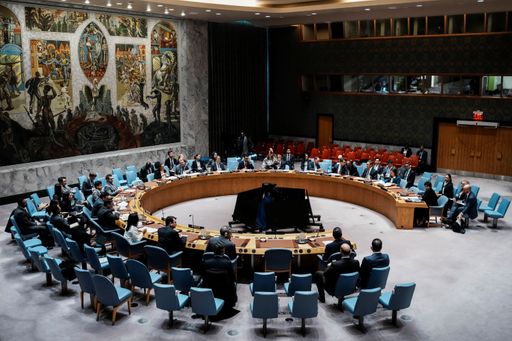
UN has ‘stopped functioning’
His remarks come amid growing calls from world leaders to reshape global governance institutions to reflect shifting geopolitical balances.
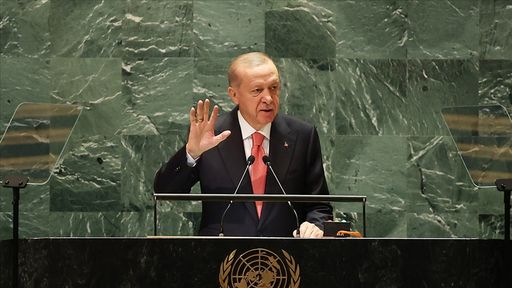
Turkish President Recep Tayyip Erdogan has long argued that the current structure of the United Nations no longer reflects present-day realities, repeatedly urging comprehensive reform of the body, particularly its Security Council.
Erdogan has promoted the slogan “the world is bigger than five”, referring to the five permanent members of the UN Security Council, and calling for a more inclusive decision-making structure that gives greater representation to developing countries.
Similar concerns have been voiced by leaders across Asia, Africa, and Latin America, who argue that the international system established after the Second World War no longer reflects today’s distribution of economic and political power.

Brazil’s President Luiz Inacio Lula da Silva has advocated expanding permanent representation on the Security Council to include major developing economies. Last year he said the UN has 'stopped functioning' and that effective global governance no longer exists.
"Every major war in recent times has been started by countries that are members of that very Council, without consultation, without accountability," he said.
‘Problem of legitimacy and effectiveness’
Chinese President Xi Jinping has called for promoting “an equal and orderly multipolar world”, saying global governance should better reflect the interests of all countries rather than a small group of powers.
African leaders have also pushed for stronger continental representation, saying regions most affected by conflict and instability should have a greater role in shaping international responses.
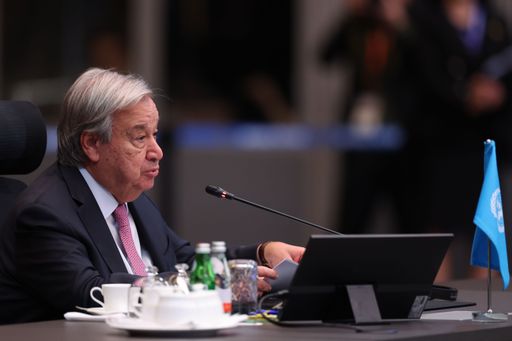
Last year, UN Secretary-General Antonio Guterres also said the UN Security Council suffers from a “problem of legitimacy and effectiveness” because its current composition no longer reflects the realities of the modern world.
Guterres said the council’s structure — which grants permanent membership to France, the UK and Russia but lacks representation from Africa or Latin America — is outdated and unbalanced.
He urged member states to “seriously consider” reforms to both the council’s composition and decision-making process to ensure the institution can meet the challenges of the 21st century.