 Hursit Dingil
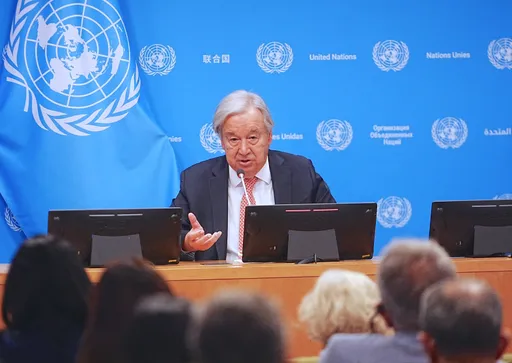
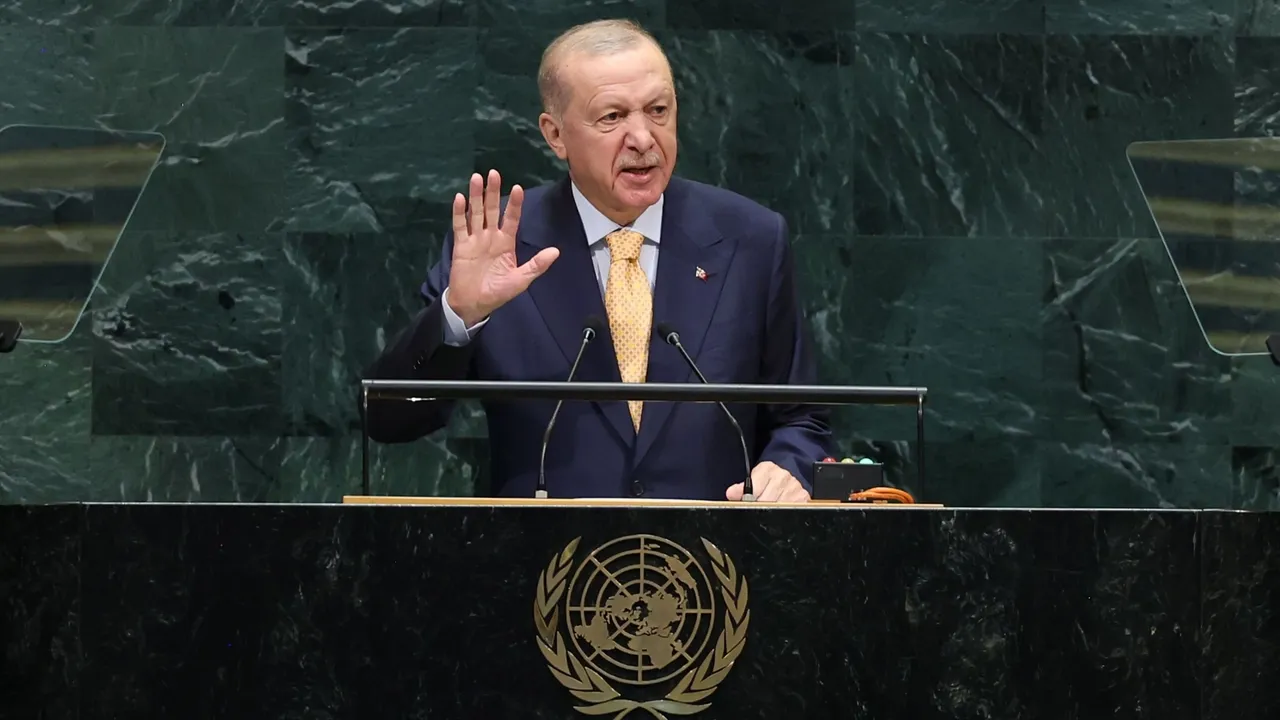
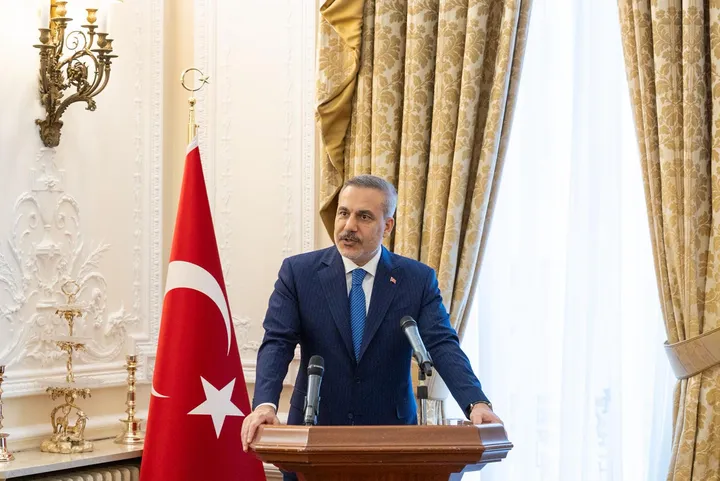
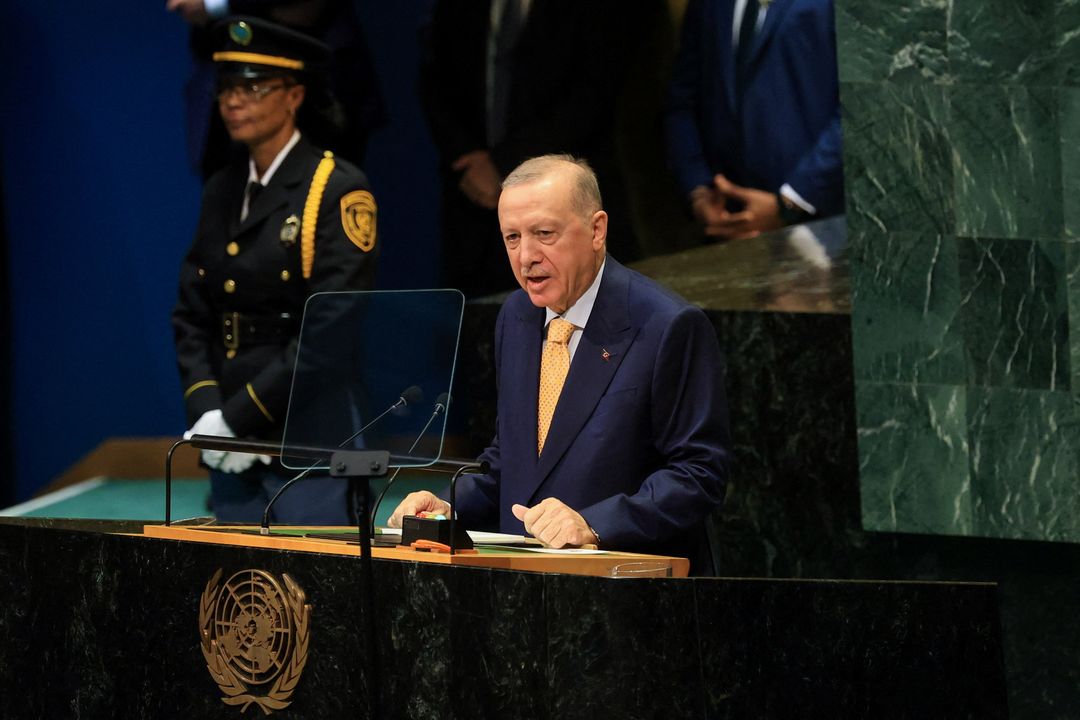
Turkish President Recep Tayyip Erdogan’s address to the 81st United Nations General Assembly on Tuesday ranged across the genocide in Gaza, Israel’s expansionist designs, the Russia-Ukraine war, the Black Sea, the Strait of Hormuz and the South Caucasus.
Read alongside his 2025 UN address, his Bloomberg article and his diplomatic meetings in New York, the 2026 speech, however, points to a broader shift in Turkish foreign policy.
Türkiye is pairing its long-standing criticism of the problems in the international system with clearer proposals for how those problems might be addressed.
The strongest continuity between 2025 and 2026 is Palestine.
Erdogan’s 2025 speech focused on Gaza, criticism of Israel’s genocidal war and wider revisionist regional posture, recognition of a Palestinian state and mobilising the international community.
That line remains intact in 2026, but the agenda has broadened to include maintaining the ceasefire, moving to its second phase, rebuilding Gaza, developments in the occupied West Bank, UNRWA and the two-state solution.
His emphasis on hospitals and basic infrastructure in Gaza also fits within this wider framework.
The Palestinian file therefore shows a shift from immediate crisis management towards reconstruction and long-term recovery from the genocide.
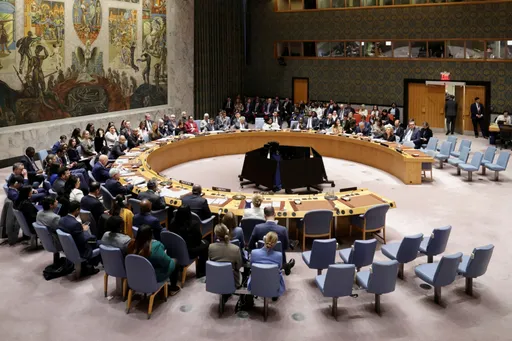
The more striking change lies in Erdogan’s criticism of the United Nations.
“The world is bigger than five” has long been one of the most consistent arguments, aimed primarily at the representation problem in the Security Council and the privileges of its five permanent members.
In 2026, a more concrete model sits behind that criticism. Erdogan’s Bloomberg article is particularly important here.
The proposal is clear: abolish the veto privilege, avoid expanding the hierarchy by granting permanent status to additional states, end permanent membership and have Security Council members elected by the General Assembly for fixed terms.
That takes Türkiye’s criticism beyond the power of the five permanent members.
What is being questioned is the principle of permanent privilege itself. Ankara’s answer is a structure based on elections, rotation and broader accountability.
In Erdogan’s 2026 message, objection is turning into institutional design.
Regional issues
The same pattern can be seen in another prominent concept: regional ownership.
In the President’s formulation, regions facing crises should make greater use of their own political and diplomatic capacities.
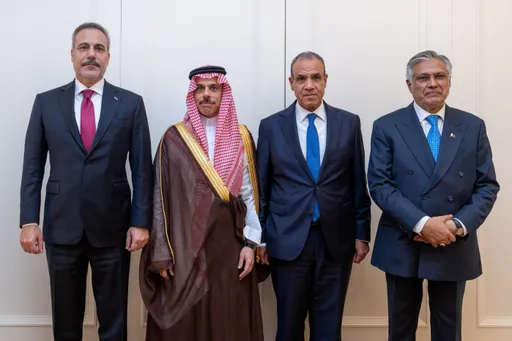
His reference to the Mecca agreement – signed by Türkiye, Saudi Arabia and Pakistan as a regional defence mechanism – is particularly significant in this context.
The same logic appears in the insistence on “Libyan leadership and ownership,” support for regional dialogue in the Balkans and the search for a process emerging from within the region around the Strait of Hormuz.
This should not be read as Türkiye abandoning the Western security architecture for a single alternative bloc.
Erdogan also underlined Türkiye’s importance to European security.
What is emerging looks more like an interconnected security strategy: NATO membership continues, while regional defence mechanisms, bilateral partnerships and mediation diplomacy expand alongside it.
Security crises in Türkiye’s neighbourhood tend to affect Türkiye directly, making regional stability a central motivation of Ankara’s foreign and security policy.
Regional ownership also has an operational dimension: because the UN cannot respond equally effectively to every subregional crisis, greater regional responsibility is presented as one way to support its core purpose of maintaining international peace and security.
The New York meetings broadly reflected this framework and highlighted another concept: connectivity.
For Erdogan, roads, trade, energy routes and joint production are not just economic issues, but also instruments of security and stability.
From Iraq’s Development Road to transport routes across the South Caucasus, the idea is simple: the more economically connected countries become, the stronger their shared interest in preserving stability.
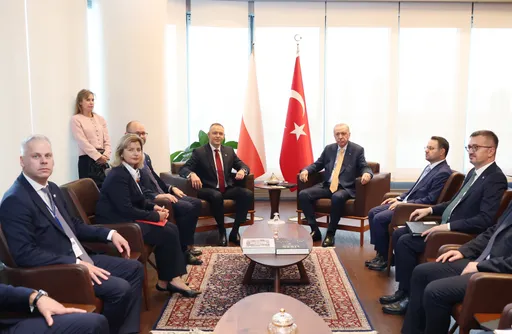
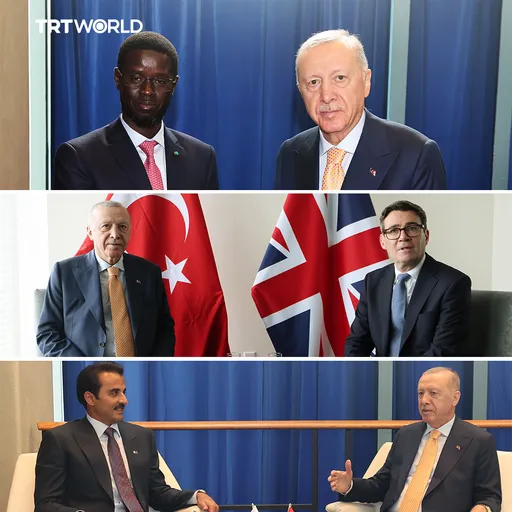
That is why transportation and trade being discussed alongside security in Erdogan’s meeting with Prime Minister Irakli Kobakhidze of Georgia at the Turkish House, and his emphasis on Türkiye-Georgia-Azerbaijan cooperation mechanisms, matter.

Ukraine and beyond
One of the most concrete technical themes is the relationship between food security and Black Sea security.
From Ankara’s perspective, the Russia-Ukraine war now extends beyond ceasefire diplomacy.
The safety of commercial vessels in the Black Sea, the uninterrupted movement of grain to world markets and open maritime routes are directly linked to global food security.
Türkiye’s search for a new Black Sea navigation mechanism involving Russia and Ukraine is therefore significant.
Ankara’s approach is familiar: instead of trying to solve the entire war through one grand agreement, it looks for narrower areas where the two sides may still have overlapping interests.
The 2022 Black Sea Grain Initiative was the clearest example: it functioned while the war continued, allowed Ukrainian grain to reach international markets and was framed by Türkiye as a contribution to global food security.
In 2026, the same method is being carried into a broader maritime security framework centred on commercial shipping, safe navigation and food security.
This reflects Ankara’s preferred mediation model: develop technical mechanisms during conflict and use them to help create conditions for larger political agreements.
This is also where Türkiye’s approach to the Food and Agriculture Organization (FAO) becomes relevant.
Türkiye has nominated former Food, Agriculture and Livestock Minister Mehmet Mehdi Eker for the post of FAO Director-General, putting forward its first candidate for the organisation’s top job.
Eker brings a decade of uninterrupted ministerial-level experience in food and agricultural governance.
Ahead of the 2027 election, Eker has presented his candidacy to bring Türkiye’s experience in agriculture and food security to the international stage, drawing on the country’s long-standing experience adapting its agricultural sector and food systems to climate crisis, one of the defining global challenges of our time.
The Black Sea initiative and the FAO candidacy are separate developments, but together they form a meaningful pattern: Türkiye is seeking to protect food and commercial flows through the Black Sea while putting forward its own candidate to lead a key institution of global food governance.
Seen this way, Black Sea navigation security represents the operational dimension; protecting grain flows and supply chains, the geoeconomic dimension; and the FAO candidacy, the institutional dimension.
Ankara is seeking to deepen its role in shaping both the institutions and the methods through which crises are managed.
The climate agenda fits the same pattern.
Presenting COP31 as an implementation-focused summit, emphasising access to financing and technology transfer for developing countries, and inviting leaders to Antalya in New York show how messages from the UN podium are reinforced through bilateral diplomacy.
Together, these issues reveal the central question of Erdogan’s UN speech: How should power, responsibility and decision-making capacity be distributed within the international system?
Palestine, the Black Sea, Libya, the South Caucasus, UN reform and food security may look separate.
Yet Erdogan’s speech connects them through a common approach that also speaks to this year’s UN theme of rebuilding trust.
In 2025, Türkiye’s message was shaped more heavily around taking positions on ongoing crises, drawing attention to the shortcomings of the international system and emphasising Ankara’s mediation capacity.
That line remains in place in 2026, but it is now accompanied by more concrete proposals at the operational and implementation levels.
Regional ownership, connectivity, functional mediation, collective deterrence, food security and broader representation in international institutions are increasingly becoming complementary parts of the same foreign policy narrative.
That is what distinguishes Erdogan’s 2026 speech. Long-standing objections and criticisms are increasingly being translated into concrete proposals.
Türkiye is seeking to build on its role as an actor that balances between crises and acts as a mediator.
Developing regional security and connectivity architectures, keeping strategic trade routes open, taking on a greater role in global food security and securing stronger representation in international institutions are becoming mutually reinforcing elements of that broader ambition.