 Ibrahim Karatas
The dissolution of the YPG-led SDF terror group in Syria potentially marks a seminal moment in Türkiye’s decades-long quest to eliminate terrorism from its territory and beyond.
The SDF, dominated heavily by the YPG – the Syrian offshoot of the PKK terror group — announced its dissolution and subsequent integration with the Syrian army earlier this week.
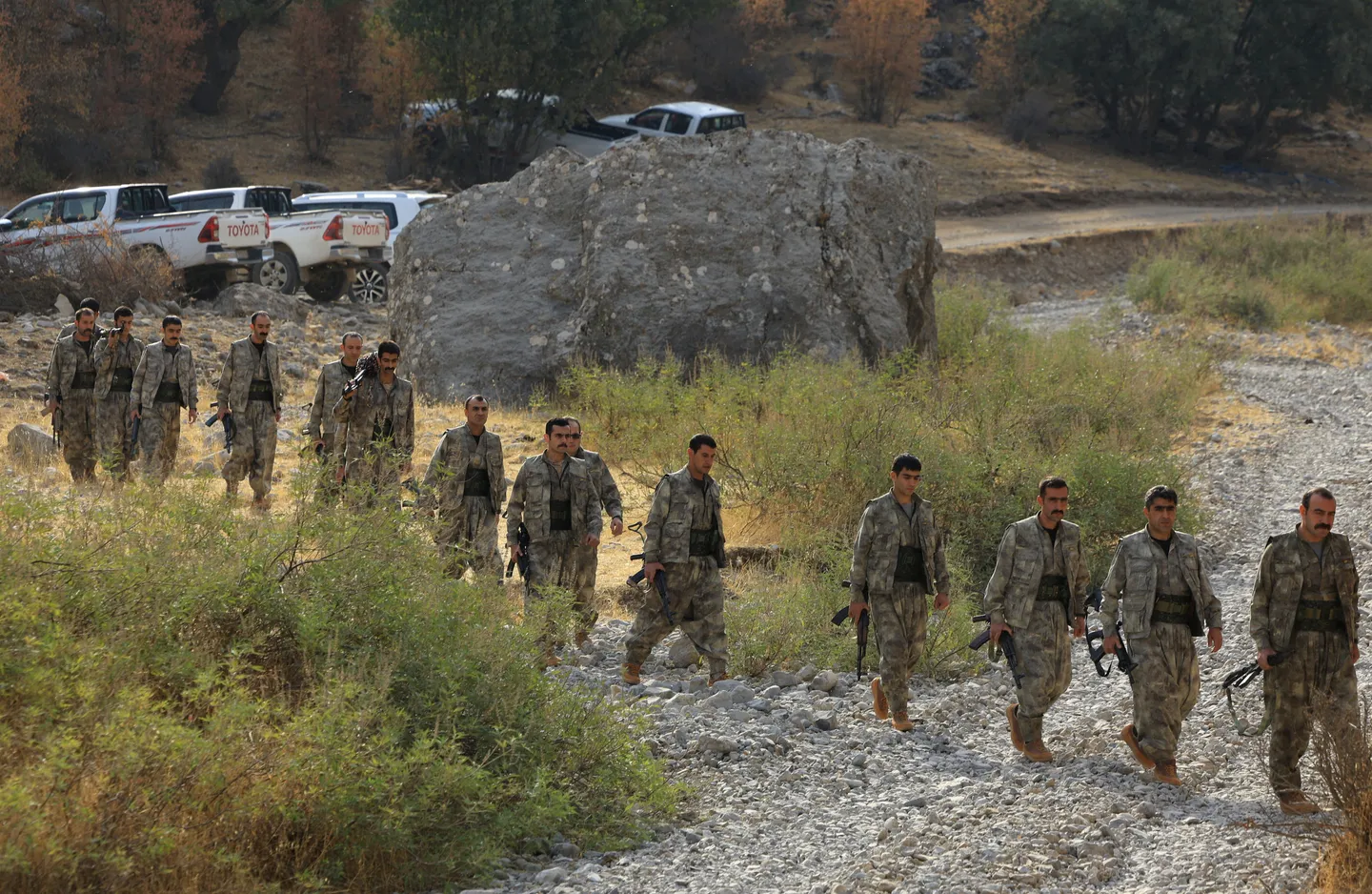
The PKK – designated as a terrorist organisation by Türkiye, the United States, the European Union and several other countries – and its affiliated groups are responsible for tens of thousands of killings in Türkiye and beyond.
Several factors have enabled the PKK to sustain its insurgency over such a long period. Its ability to operate from remote mountainous terrain, access to weapons and the limitations of conventional military operations in such environments all contributed to its survival.
Yet developments beyond the battlefield may have been even more consequential in allowing the organisation to continue its terror campaign.
One important factor was the participation of pro-PKK political movements in Türkiye's political system. In the June 2015 general election, the PKK-affiliated HDP won 13.12 percent of the vote, surpassing the 10 percent electoral threshold.
The result was partly attributed to support from Kurdish-origin voters as well as some left-wing and secular voters who opposed the governing Justice and Development Party (AK Party).
The unexpectedly strong electoral performance appears to have influenced the PKK leadership's calculations at a critical moment.
At the time, a peace process between Ankara and the group had been underway since 2013, with disarmament being discussed. Instead of abandoning its armed struggle, however, the PKK ultimately continued it.
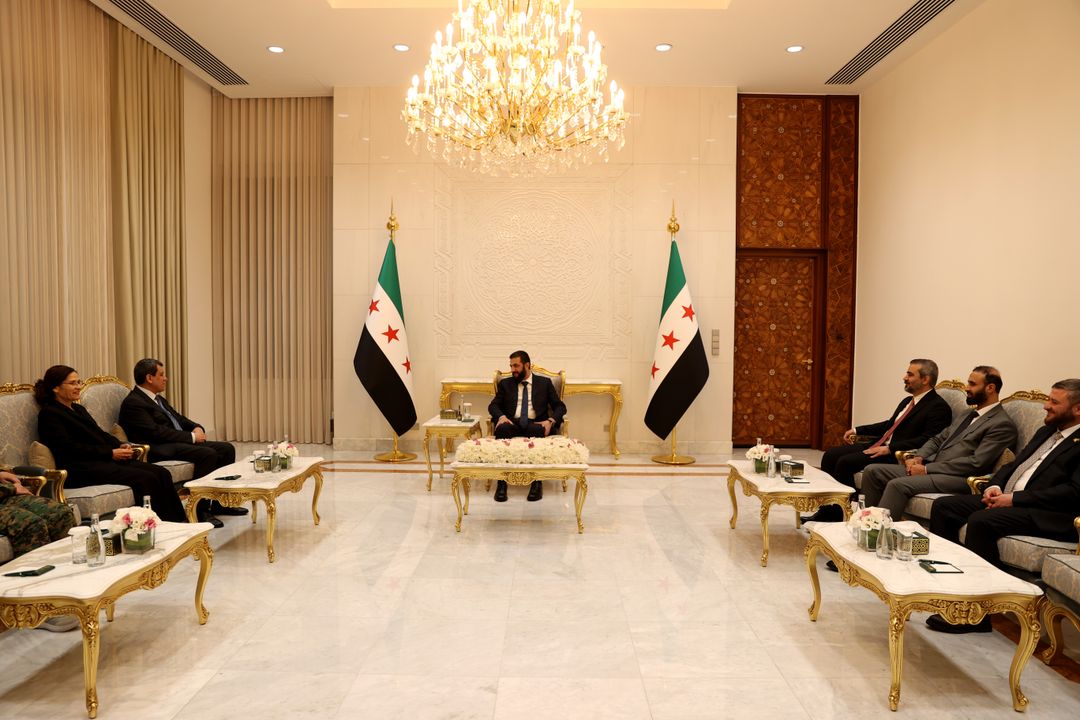
Events in Syria subsequently created another opportunity. The civil war and the collapse of state authority in parts of northern Syria allowed the YPG to occupy and establish control over large areas.
With the emergence of Daesh, the YPG became an important partner for Washington in the fight against the terror group.
Operating under the broader SDF umbrella, the YPG received extensive US military assistance and air support and eventually established control over a substantial portion of northeastern Syria.
That arrangement, however, now appears to be coming to an end.
Why did the PKK dissolve?
The latest developments are closely linked to the PKK's own dissolution process.
In February 2025, the terror group’s imprisoned ringleader, Abdullah Ocalan, called on the PKK to disarm and dissolve.
Subsequent political and legislative developments in Türkiye have provided a framework for militants to surrender their weapons and reintegrate into civilian life.
Reports indicate that Turkish and Iraqi authorities are supervising the disarmament process.
The decision did not emerge in isolation. For years, Ankara pursued the PKK through a combination of military pressure and diplomacy, including against the organisation's affiliates in Syria and Iraq.
Türkiye strongly opposed Washington's decision to partner with the YPG, arguing that an organisation Ankara considers a terrorist group could not be an effective instrument for eliminating another terrorist organisation, Daesh.
Despite the diplomatic costs, including disputes over arms supplies and tensions with its NATO allies, Türkiye maintained its counter-terror campaign against the PKK and YPG.
Ankara also conducted several cross-border military operations in northern Syria and Iraq, significantly reducing the groups' freedom of movement.
Developments in Syria eventually further changed the strategic equation.
Following the fall of despotic leader Bashar al Assad in December 2024, the balance of power in Syria shifted dramatically.
The emergence of a new government, combined with Türkiye's support for Damascus, created a situation in which the YPG could no longer rely on the same degree of US protection.
The YPG had expected Washington's backing to continue.
However, Turkish President Recep Tayyip Erdogan's close relationship with President Donald Trump, together with the US decision to reduce its military presence in Syria, altered those calculations.
Türkiye also signalled its readiness to support the Syrian government militarily if necessary. Faced with the prospect of confronting a Syrian government backed by Türkiye, the YPG increasingly had limited options.
The battlefield had already changed
While the YPG's strategic position deteriorated in Syria, the PKK itself had already suffered a major decline.
Beginning in the mid-2010s, Türkiye increasingly relied on armed unmanned aerial vehicles (UAVs) to target PKK positions and commanders.
The introduction of drones fundamentally changed the nature of the conflict. PKK terrorists increasingly withdrew from Turkish territory and sought refuge in mountainous areas of northern Iraq, where they attempted to avoid detection and precision strikes.
The impact was substantial. PKK terror attacks inside Türkiye declined dramatically, while the outfit’s ability to operate openly was severely constrained.
Over time, the group found itself with increasingly fewer military options. Even without formally disarming, its practical alternatives were largely reduced to operating from caves and underground positions.
In this sense, the dissolution process can be understood not simply as a political decision, but also as the consequence of a fundamental shift in the military balance.
The development has nevertheless generated debate inside Türkiye, particularly among those who opposed talks with the PKK terror group.
Their argument is straightforward: if the organisation has already been militarily defeated, why should the government engage in talks with it?
The government's answer rests on a distinction between defeating an armed organisation and resolving the broader social and political consequences of decades of conflict.
The governing coalition, led by the AK Party and Nationalist Movement Party (MHP), has emphasised strengthening solidarity between Türkiye's Turkish and Kurdish-origin citizens.
From this perspective, the objective is not merely to defeat the PKK but to ensure that Kurdish-origin citizens do not perceive the end of the conflict as a defeat for themselves.
A lasting settlement, therefore, requires more than military victory. It requires preventing the hostility created by decades of violence from becoming a permanent source of social division.
Allowing militants to disarm and, where legally possible, return to civilian life can be viewed as part of that broader strategy.
From military victory to political settlement
In one sense, almost every actor involved in the process stands to gain from the PKK's dissolution.
Türkiye could end a decades-long terror campaign. Syria and Iraq could benefit from greater territorial stability, while Kurdish communities could gain from a reduction in violence and the prospect of a political future without an armed separatist movement.
But not every regional actor welcomes this outcome.
Israel, in particular, has historically viewed Kurdish movements as potential strategic partners against states such as Türkiye and Syria.
The logic was relatively simple: groups opposed to those governments could potentially serve as useful counterweights to them.
While the opportunity to use the PKK against Türkiye had already diminished, the YPG represented a potentially valuable partner in the post-Assad Syrian landscape.
Ankara, however, sought to prevent that scenario through a combination of military, diplomatic and political measures.
Türkiye supported the Syrian government, worked with Washington to reduce its support for the YPG, and, perhaps most importantly, backed the group's integration into Syrian state institutions.
The objective was to persuade the group to integrate into Syria's new political and security structures rather than seek permanent autonomy.
Israel consequently failed to turn the YPG into a substitute for the strategic role once played by the US.
That does not mean that Israel has withdrawn from the Syrian equation. Its military presence in parts of southern Syria and its relations with the Druze community remain important elements of the evolving regional balance.
For Damascus, however, the prospect of resolving the Kurdish issue with Turkish support represents a significant strategic achievement.
The dissolution of the PKK/YPG could therefore mark a turning point extending far beyond Türkiye's borders.
Ankara's combination of military pressure, diplomacy and political engagement has gradually narrowed the organisation's room for manoeuvre in Türkiye, Iraq and Syria.
If the process is completed successfully, the consequences could extend beyond the immediate end of the PKK's terror campaign.
Türkiye could emerge from four decades of conflict with a more stable relationship between its Turkish and Kurdish-origin citizens, while Syria and Iraq could benefit from the removal of a major armed non-state actor.
The broader significance is that the end of the PKK/YPG may demonstrate that military victory alone is not sufficient to achieve lasting peace.
Ankara's challenge now is to convert the organisation's military defeat into a durable political settlement—one that separates the Kurdish population of the country from the terror campaign that claimed to represent it.
If successful, the dissolution of the PKK/YPG could become more than the end of a terror campaign.
It could mark the beginning of a new period of stability across Türkiye, Syria and Iraq, with potentially wider implications for Iran and the broader Middle East.