 Esra Karataş Alpay
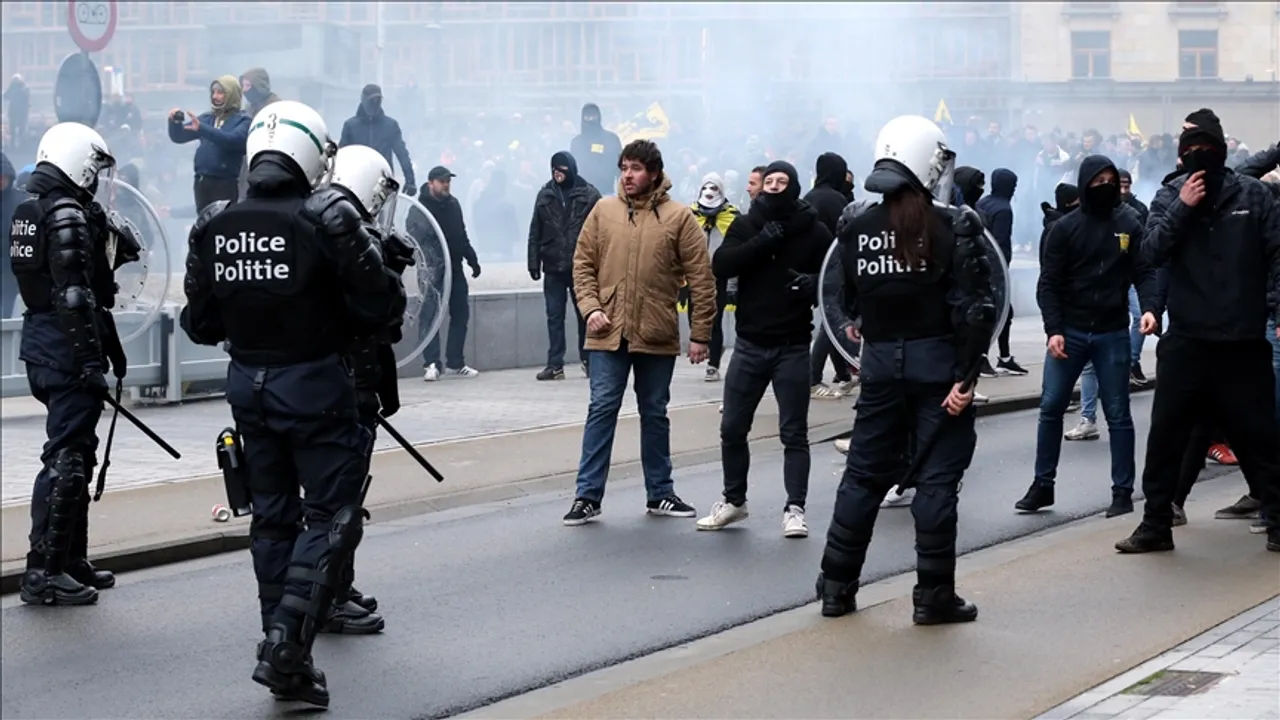
Violent supporters of the YPG/PKK terror group went on a rampage across major European cities last week, highlighting the threat posed by the proscribed outfit well beyond its last remaining pockets of influence in Syria.
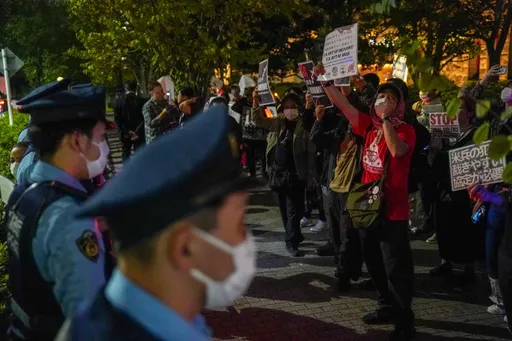
From Berlin and Dortmund to Brussels, Paris, Zurich and Geneva, police were forced to crack down on the wave of violence linked to supporters of the YPG/PKK, listed as a terrorist organisation by Türkiye, the European Union and the US.
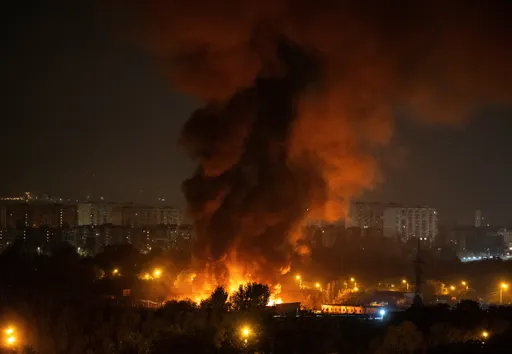
The developments across Europe coincided with violence unleashed by YPG terrorists in northern Syria, where they targeted civilians and government forces in blatant breach of a ceasefire.
Across European cities, the shock lay not only in the violence itself, but in its sudden proximity to daily life.
Among those attacked by terrorist sympathisers and supporters were Syrian business people and citizens of the Turkish diaspora. Several people were injured in the street violence—as the YPG/PKK supporters blocked transport, damaged property, and targeted both police and civilians.
What is unfolding, analysts argue, is not just a breakdown of order but the culmination of years of political hesitation, legal ambiguity, and misplaced tolerance.
Europe’s tolerance problem
If the violence itself was alarming, what troubles analysts even more is the environment that allowed it to unfold.
Central to that environment is Europe’s long-standing tolerance towards PKK symbols in public spaces, says Zafer Mese, a Berlin-based policy analyst at the think tank SETA.
“This is not about political expression,” Mese tells TRT World. “We are talking about the public display of symbols belonging to an organisation that the European Union and many member states officially designate as a terrorist organisation.”
“In the same countries, symbols of other terrorist organisations are subject to zero tolerance,” he says. “When PKK symbols are treated as a ‘grey area,’ the consistency of the rule of law is undermined.”
European authorities have often defended their approach as one of restraint, intervening only once violence occurs. But this, Mese argues, has produced a dangerous double standard.
This inconsistency, he adds, weakens deterrence.
“Tolerating terrorist symbols until violence begins sends a message: boundaries can be tested, consequences will be delayed,” Mese warns.
“That keeps law enforcement permanently reactive and public order permanently at risk.”
Allowing those symbols, Mese explains, creates a legal contradiction—and a security risk.
“A flag is not a neutral object. “On the ground, it binds crowds together, enforces organisational discipline, and legitimises escalation. It is no coincidence that spaces where PKK symbols were freely displayed quickly became associated with stone-throwing, fireworks, and even stabbings.”
A generational blind spot
For London-based political analyst Klaus Jurgens, the crisis reflects not just a policy failure, but a generational one.
“What we are witnessing now is not surprising,” Jurgens tells TRT World. “What is surprising is that European authorities finally seem to understand the risk of criminal and terror-inclined elements acting on their own soil.”
Jurgens traces Europe’s permissive approach back to the post–Cold War era, when democratic idealism shaped political instincts.
That ethos, Jurgens argues, led many Europeans to view almost every foreign movement through the lens of liberation.
“What we failed to grasp was that the PKK should never have been included in that category,” he says. “We acted as if it were a peaceful tea-drinking association.”
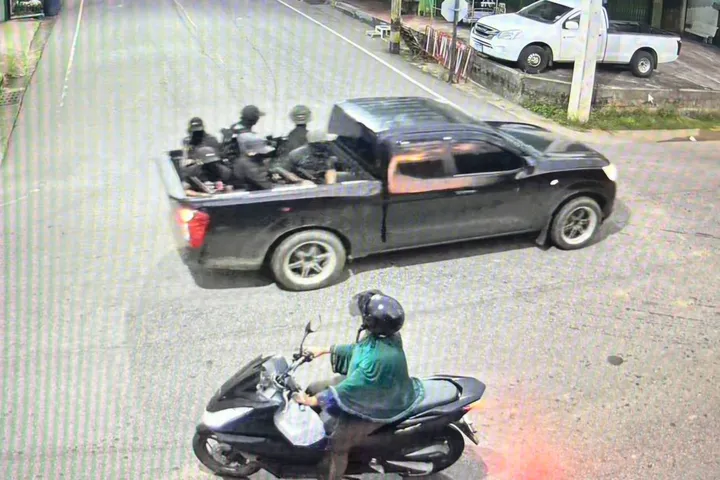
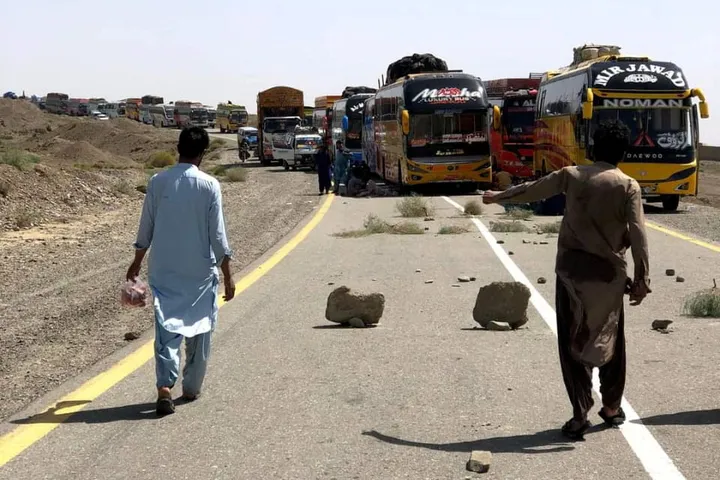
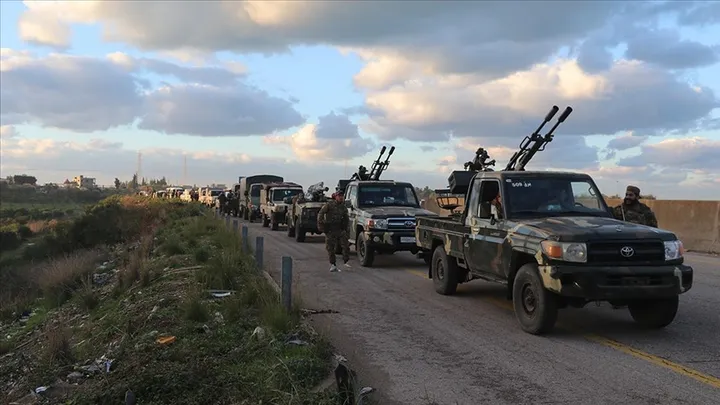


As PKK members fled or were expelled from Türkiye for terrorism-related activities, Europe became a place of regrouping.
“They relocated, they infiltrated diaspora communities, and everyone turned a blind eye,” Jurgens says. “Our intelligence services knew. But the prevailing attitude was: this is Türkiye’s problem, not ours.”
That indifference persisted for decades. Illegal demonstrations were normalised; in some cases, even protected.
“In Berlin, PKK-linked demonstrations were treated as routine,” Jurgens recalls. “It was seen as normal.”
Only recently did official figures begin to penetrate public debate. Two years ago, Germany’s Office for the Protection of the Constitution reported roughly 14,500 PKK supporters living in the country, with more than 1,000 assessed as having latent violent potential.
“It took far too long,” Jurgens says. “But now, after violent clashes in Dortmund, Berlin, Paris, Brussels, Zurich, Geneva and beyond, the European public is shocked—and rightly so.”
The line Europe can no longer cross
Both political analysts stress that the violence must not be misattributed to migrant communities as a whole.
Jurgens is explicit on this point. “The vast majority of the Syrian diaspora is absolutely peaceful,” he says. “The same is true for 99 percent of the Turkish diaspora. No one wants the PKK, the YPG, or the SDF infiltrating their communities.”
What has changed, he argues, is public tolerance.
“Europeans may disagree on many foreign conflicts,” Jurgens says. “But they increasingly agree on one thing: foreign wars must not be imported onto European streets.”
For Mese, this shift presents a stark choice.
“The core failure was not acting too harshly,” he says. “It was waiting for violence instead of preventing the conditions that make violence possible.”
Both political analysts agree that Europe now faces a decisive moment. Reactive policing alone will not suffice. Without legal clarity, consistent enforcement, and early intervention against terrorist propaganda and organisation, the cycle will repeat.
“Consistency in counterterrorism does not weaken democracy,” Mese says. “It strengthens it.”
Across cities, the tactics were strikingly similar: stone-throwing at police, the use of fireworks as improvised weapons, attempts to overwhelm barricades, and deliberate efforts to paralyse traffic. In a smaller number of cases, but with far greater consequences, bladed weapons were used, leading to serious injuries.
“Once a terrorist, almost always a terrorist. Europe allowed these networks to regroup. Now the consequences are visible on our streets,” Jurgens adds.
For the first time in years, the European public appears unwilling to look away.
Whether that resolve translates into lasting policy change remains an open question—but the era of tolerance, the analysts say, has come to an end.
Both Mese and Jurgens make it clear that the issue is no longer one of reactive crowd control but of structural prevention: whether Europe is willing to align its democratic principles with consistent enforcement against organisations that it has already designated as terrorist.
Public patience has thinned, not because Europeans have abandoned pluralism, but because they increasingly recognise that pluralism cannot survive selective blindness to organised crime and extremism.
The decisive question now is whether European institutions will translate this moment of clarity into durable policy for the sake of public security.