 Kazim Alam
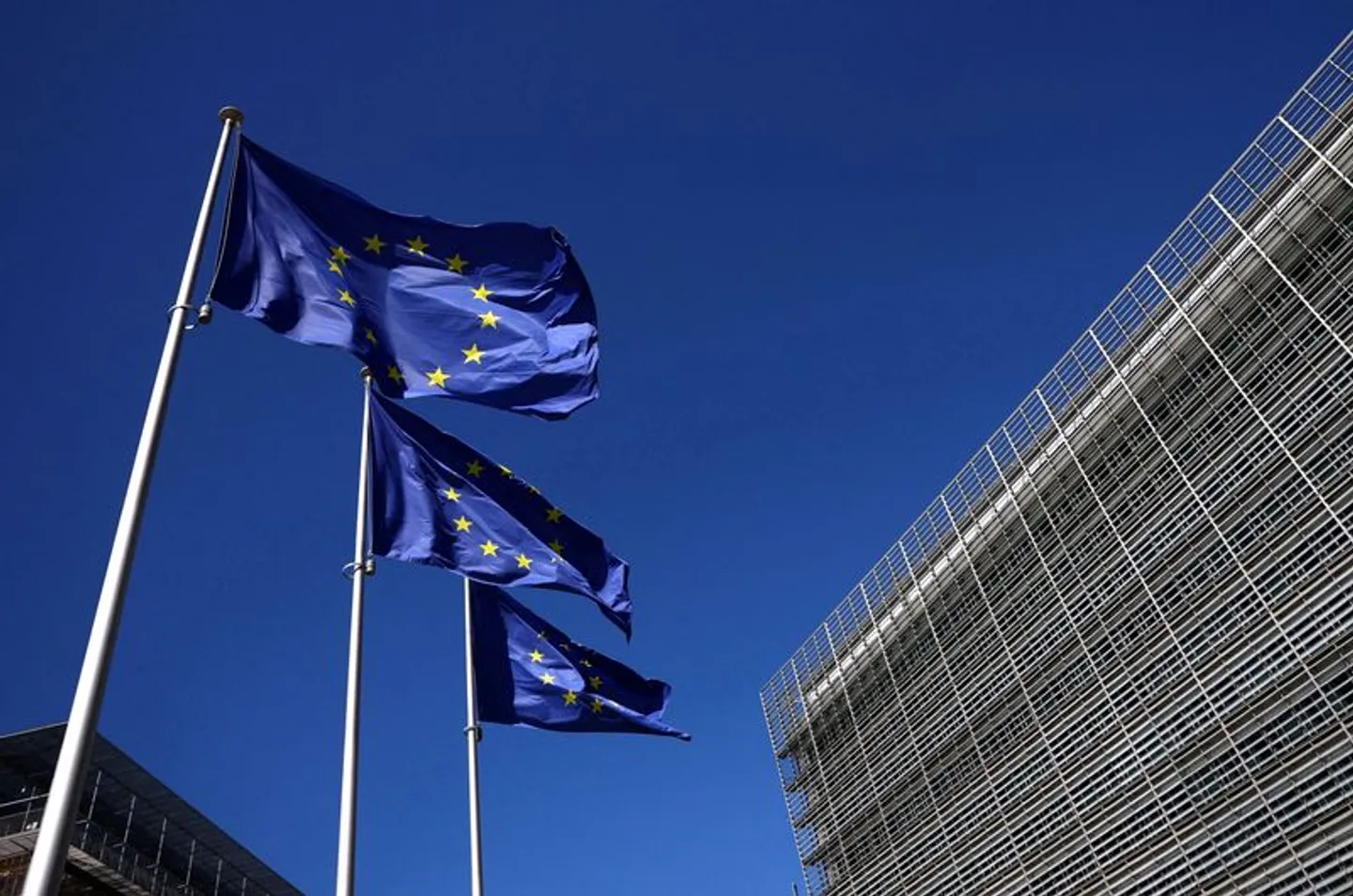
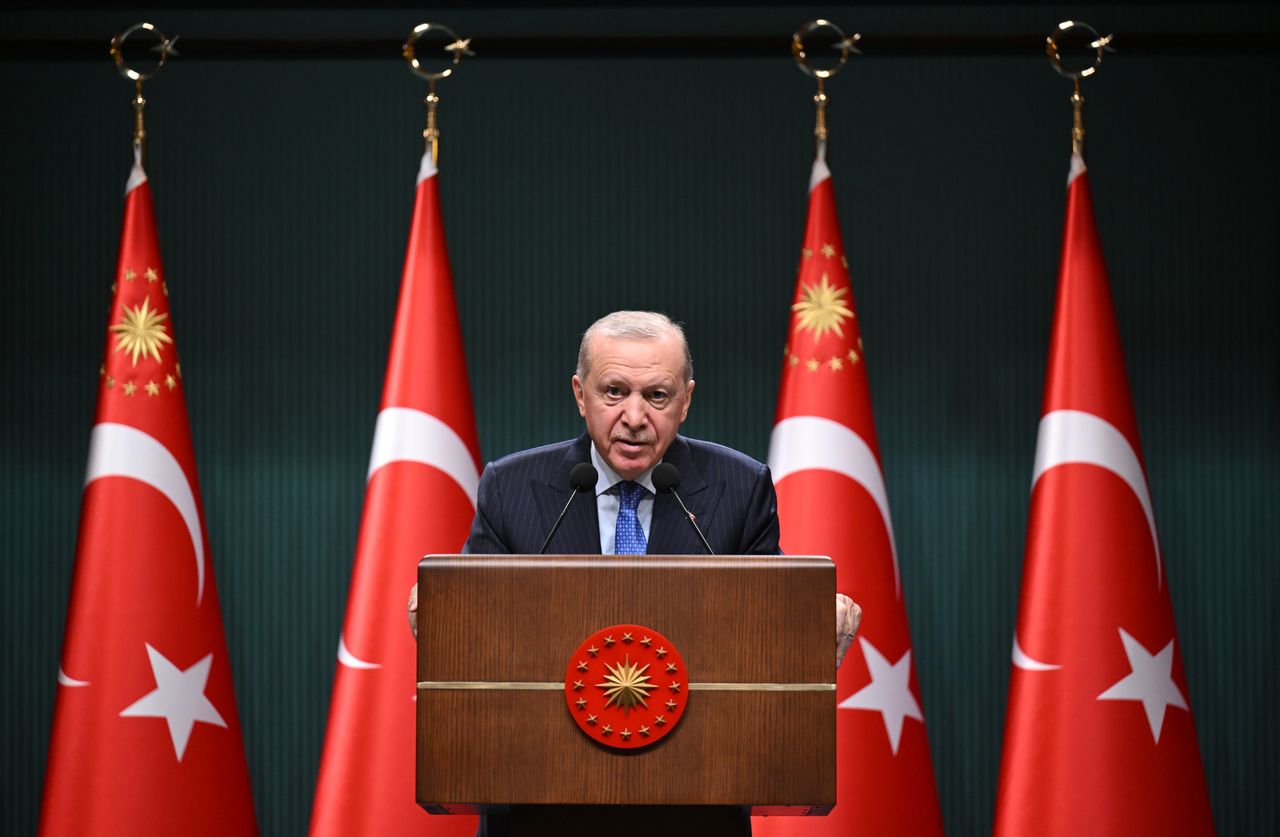
When Turkish President Recep Tayyip Erdogan recently said that seeking membership of the European Union was no longer a priority, it marked a striking shift in Ankara’s views on the political and economic group of 27 countries.
Over the years, Türkiye had framed EU membership as a strategic goal throughout on-again, off-again accession talks.
In unusually blunt comments, Erdogan said that Europe did not appear willing to admit Türkiye, and pointed out that it was EU, not Ankara, that would be the loser as a result of this rebuff.
Joining the EU gives a country enhanced market access and visa-free travel and work opportunities across member nations.
But Brussels has been dragging its feet over Ankara’s accession on frivolous grounds for more than two decades, even though Türkiye is one of the biggest economic and military powers in Europe.
Experts say that Erdogan’s statement about the de-prioritisation of EU membership is grounded in facts rather than rhetoric.
Ankara’s policy shift represents a rational response to two decades of EU double standards, they say. As a result, Europe stands to lose more from the de-prioritisation than Türkiye itself, they note.
Ali Murat Kursun, assistant professor at the Department of International Relations at Marmara University in Istanbul, says that Ankara’s decision is “highly rational and structural” rather than an emotional reaction.
“At the core of this rupture lie the chronic double standards directed at Türkiye,” he tells TRT World.
He says the EU never treated Türkiye as a peer. Instead, it sought to position the country “beneath its own hierarchy, treating it as a peripheral state” to which it could outsource Europe’s security and migration policies.
Over the same period, however, Türkiye built substantial military, diplomatic and technological capacities and achieved “tremendous strategic autonomy”.
For a country that has created “its own centre of gravity in the new multipolar global system”, the EU’s patronising relationship towards Türkiye became “inherently unsustainable”, Kursun says.
The EU’s failure to offer unconditional support during Türkiye’s confrontations with terror groups, such as the PKK, YPG, and FETO, further eroded that trust, he says.
When Ankara pursued its own priorities – in Syria, the Eastern Mediterranean or on the Palestinian issue – the EU often viewed these steps as competition rather than contributions to regional stability.
Türkiye found an “exclusionary club” before it, rather than a rational integration actor, he says.
“President Erdogan's statement is, in fact, the official and highest-level declaration of this de facto reality,” Kursun says.
Not merely a ‘technical process’
According to Muhammed Ali Ucar, foreign affairs expert and chairman of the Vienna-based PLUS Institute, Türkiye’s sustained efforts to get EU membership only encountered “shifting conditions, new political obstacles and moving goalposts”.
A fundamental problem arose when Ankara began to realise that fulfilling the criteria would not necessarily lead to EU membership.
“Conditionality can only work when the candidate believes that meeting the conditions will eventually produce the promised outcome,” he tells TRT World.
The issue of Greek-administered Cyprus stands out as particularly consequential for Ankara’s EU membership.
The EU admitted Greek-administered Cyprus, even though the island remained divided between Greek and Turkish Cypriots.
It created an “extraordinary political exception to its own enlargement logic”, says Ucar.
In the 2004 Annan Plan referenda, a clear majority of Turkish Cypriots supported settlement, while Greek Cypriots rejected it. Yet, the side that rejected the settlement gained EU membership and institutional leverage, Ucar notes.
In addition, repeated questioning of Türkiye’s ultimate membership by leaders in Germany and France and the floating of a “privileged partnership” alternative refuted the idea that accession was a technical process based on objective criteria.
Visa restrictions and the increasingly transactional character of relations around migration further weakened public enthusiasm, he says.

“Türkiye did not simply abandon Europe. Rather, the credibility of the accession mechanism gradually eroded,” he says.
Ankara charted its own path independently
Analysts say that Türkiye’s economic and geopolitical influence has expanded largely independently of the EU accession process.
Had Ankara confined itself to the EU’s bureaucratic boundaries, it would never have attained its current strategic autonomy, Kursun says.
Türkiye has developed an “agile, multidimensional diplomatic posture” in Libya, Syria, the South Caucasus, the Eastern Mediterranean, the Gulf, the Horn of Africa, and across Eurasia, he says.
Meanwhile, the EU has become increasingly paralysed by internal vetoes and maximalist member demands.
“European defence restrictions and arms embargoes backfired, compelling Türkiye to build a world-class indigenous defence industry that now drives its geopolitical influence across multiple continents,” Kursun says.
Economically, geographical diversification reduced Türkiye’s vulnerability to single-market shocks, while major pipeline networks and connectivity projects positioned the country as an indispensable Eurasian energy and transit hub, he notes.
Ucar says today’s Türkiye is “considerably different” from the one that began negotiations in 2005.
That’s because its diplomatic reach, infrastructure, defence industry and capacity for autonomous foreign policy have expanded substantially over the last two decades.
But strategic autonomy should not be confused with separation from Europe, he insists.
Türkiye’s deeper ties with the Gulf, Africa or Central Asia need not come at Europe’s expense.
“A stronger and more autonomous Türkiye can ultimately be a more valuable partner for Europe,” Ucar says.

Who is the net loser?
Erdogan’s assertion that the EU is the net loser for dilly-dallying on the accession issue resonates strongly with both analysts.
Kursun says that the EU has traded its own geopolitical relevance for internal bureaucratic comfort.
Europe faces high-intensity conventional warfare to its east and chronic instability to its south. Yet, it lacks the integrated military capacity and autonomy to manage these challenges effectively, especially under a reduced US security umbrella, he says.
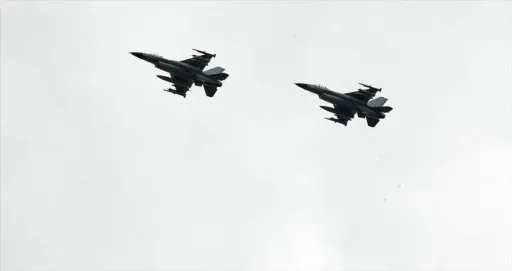
In contrast, Türkiye possesses a battle-tested military, a booming defence industry, and the political will to project power – without which, Europe will become “highly exposed”.
In energy, Türkiye has become the indispensable transit hub for diversification after Europe cut off ties with Russia. On migration, Türkiye’s role as a geopolitical buffer protects Europe’s societal resilience, Kursun says.
“By alienating Türkiye, the EU did not isolate Türkiye. It isolated itself from the geopolitical realities of its own neighbourhood,” Kursun says.
Ucar interprets Erdogan’s statement as an argument about Europe’s opportunity cost.
The relationship remains interdependent, but Europe’s changing environment has increased Türkiye’s strategic value, he says.
Issues relating to security, energy, and migration illustrate mutual dependence, even though the asymmetry between Ankara and Brussels has widened.
“By keeping Türkiye permanently at arm’s length, Europe is not only denying Türkiye something. It may also be depriving itself of an important strategic asset,” Ucar says.