“The truth,” one iconic TV series would have us believe, “is out there.”
For decades, conspiracy theorists, UFO enthusiasts and even the commoner have been seeking the “truth” about so-called alien life, accusing authorities of hiding evidence of the existence of life beyond Planet Earth.
The “truth” might finally be upon us.
On Thursday, US President Donald Trump announced that he is directing the federal agencies to “identify and release” all government files related to so-called aliens, extra-terrestrial life, unidentified anomalous phenomena (UAP), and unidentified flying objects (UFOs).
Citing “tremendous interest” in the topic, Trump said that the files would cover “any and all other information connected to these highly complex, but extremely interesting and important, matters”.
The directive follows years of public curiosity and congressional hearings on UAPs. The Pentagon has denied finding any evidence of extraterrestrial life.
The announcement – which follows recent commentary by former US president Barack Obama – has reignited global fascination in a topic that blends science, culture, and politics.
Famous ‘sightings’ of extra-terrestrial objects
Reports of strange objects in the sky date back centuries, but modern UFO sightings exploded in the mid-20th century.
The 1947 Roswell incident in New Mexico remains the most famous: debris from a crashed object was initially described by the US military as a “flying disc”.
The story quickly grew into claims of a downed alien spacecraft and recovered bodies, even though officials later attributed it to a weather balloon from a secret project.
Roswell has since become a symbol of government cover-ups, attracting thousands to annual festivals.
In 1961, Betty and Barney Hill claimed abduction by humanoid beings who performed medical examinations aboard a UFO. Their story popularised the abduction narrative and influenced how we imagine alien encounters.
The 1980 Rendlesham Forest incident in the UK involved US Air Force personnel reporting strange lights and a metallic object in the forest. Witnesses described radiation and physical traces, while sceptics pointed to a nearby lighthouse or experiments to harness an energy field in the forest.
The 1997 Phoenix Lights saw thousands in Arizona witness distinct V-shaped lights hovering silently. Officials blamed military flares, but many remain unconvinced.
Other notable cases include the 1994 Ariel School sighting in Zimbabwe, where dozens of children reported a UFO and beings with large eyes, and the 1977 Broad Haven event in Wales, involving schoolchildren and a silver craft.

What does science say?
Scientists approach extraterrestrial life with cautious optimism that emphasises probability over proof.
The Drake Equation (1961), created by astronomer Frank Drake, estimates the number of “communicative civilisations” in the Milky Way, the galaxy including our solar system, by considering factors like star formation, habitable planets, and the likelihood of intelligent life.
But the equation yields no concrete answer, given the large number of unknown variables. In simpler words, the number of intelligent civilisations can range from zero to thousands.
While the Drake Equation aims to come up with a specific number for intelligent civilisations on other planets, the Fermi Paradox asks one simple question: If the universe is so vast and old, where has Earth never been visited by aliens?
Explanations vary. One reason can be the immense distance between Earth and the other planet hosting another intelligent civilisation.
Or perhaps there was intelligent life somewhere that progressed so much that it went into the self-destruction mode.
NASA has confirmed over 5,000 exoplanets – a planet that orbits a star outside the solar system – since the 1990s, many in potentially habitable zones where liquid water can exist.
The James Webb Space Telescope – the largest telescope in space capable of viewing objects too old, distant, or faint – now searches for biosignatures like oxygen in exoplanet atmospheres.
Astrobiology missions are looking at Mars, Europa, and Enceladus for signs of microbial life.
While simple life seems plausible, the existence of intelligent extra-terrestrials remains speculative.
SETI, a US-based non-profit that searches for life beyond Earth, continues scanning for radio signals. But no evidence has emerged so far.
Most scientists agree that there is no conclusive proof of alien life, even though the universe’s massive scale makes the existence of life elsewhere statistically possible.





So-called alien hotspots
Certain locations draw intense UFO interest due to secrecy and reported sightings.
Area 51, a classified Nevada military base, is the most famous.
Officially used for testing advanced aircraft like the U-2 and F-117, it has long been linked to alien conspiracy theories, including claims of reverse-engineered UFO technology from Roswell, where debris from a crashed object in 1947 was initially described by the US military as a “flying disc”. The CIA confirmed the existence of Area 51 in 2013.
A 2019 viral “raid” event drew some crowds, but the attempt to forcibly enter Area 51 failed.
Roswell, New Mexico, embraces its 1947 crash legacy with museums and festivals, even though official explanations point to spy balloons from a secret project.
Similarly, Rendlesham Forest in Suffolk, UK, offers the “UFO trail” that lets people revisit the “famous UFO sighting” tied to the 1980 incident involving a reported triangular craft.
The Extraterrestrial Highway in Nevada, near Area 51, sees frequent sighting reports, often linked to military testing.

Government stance
Governments, especially the US, have shifted from dismissal to a structured investigation into UFOs.
Project Blue Book (1947-1969) reviewed 12,000 sightings, concluding most were explainable and posed no alien threat.
Interest waned until 2017, when leaked Navy videos showed objects displaying unusual flight characteristics.
A 2021 US government report examined 144 incidents and found most unexplained, though not extra-terrestrial.
The Pentagon’s All-domain Anomaly Resolution Office (AARO), created in 2022, now tracks UAPs for national security reasons.
Its 2024 historical review found no evidence of alien technology. Most cases were of misidentifications, drones, or classified programmes.
NASA’s 2023 independent study also concluded that there was no proof of extra-terrestrials.
Aliens, UFOs in popular culture
Extra-terrestrials have long inspired books, films, and TV shows.
Their depiction in the mainstream media began in 1947 when pilot Kenneth Arnold described disc-like objects flying near Washington state, coining the term “flying saucer” and sparking widespread press coverage.
The 1950s brought Cold War-era classics like The Day the Earth Stood Still (1951), featuring a peaceful alien warning people in Washington DC that they must live peacefully or be destroyed as a danger to other planets.
Similarly, The Thing from Another World (1951) showed the US Air Force fend off a bloodthirsty alien organism from a remote arctic outpost.
Movies and TV series of Star Trek and Star Wars depicting alien life and humanoids in space have kept a global fandom glued to their TV screens since the 1960s.
Prominent movie director’s Steven Spielberg’s Close Encounters of the Third Kind (1977) and ET the Extra-Terrestrial (1982) portrayed aliens as curious and friendly.
Television shows contributed to amplifying the mystery around extra-terrestrials. The X-Files (1993–2002) made government conspiracies and abductions mainstream.
Recent films like Independence Day (1996) show Earth-invading aliens attempting to destroy human life.
While most movies portray aliens as benevolent creatures, the blockbuster movie series Alien was among the first to show them as deadly lifeforms.
The interest in extraterrestrial life has produced a trove of science-fiction books, starting with The War of the Worlds (1898), an alien-invasion story by H. G. Wells, one of the genre’s most important authors.
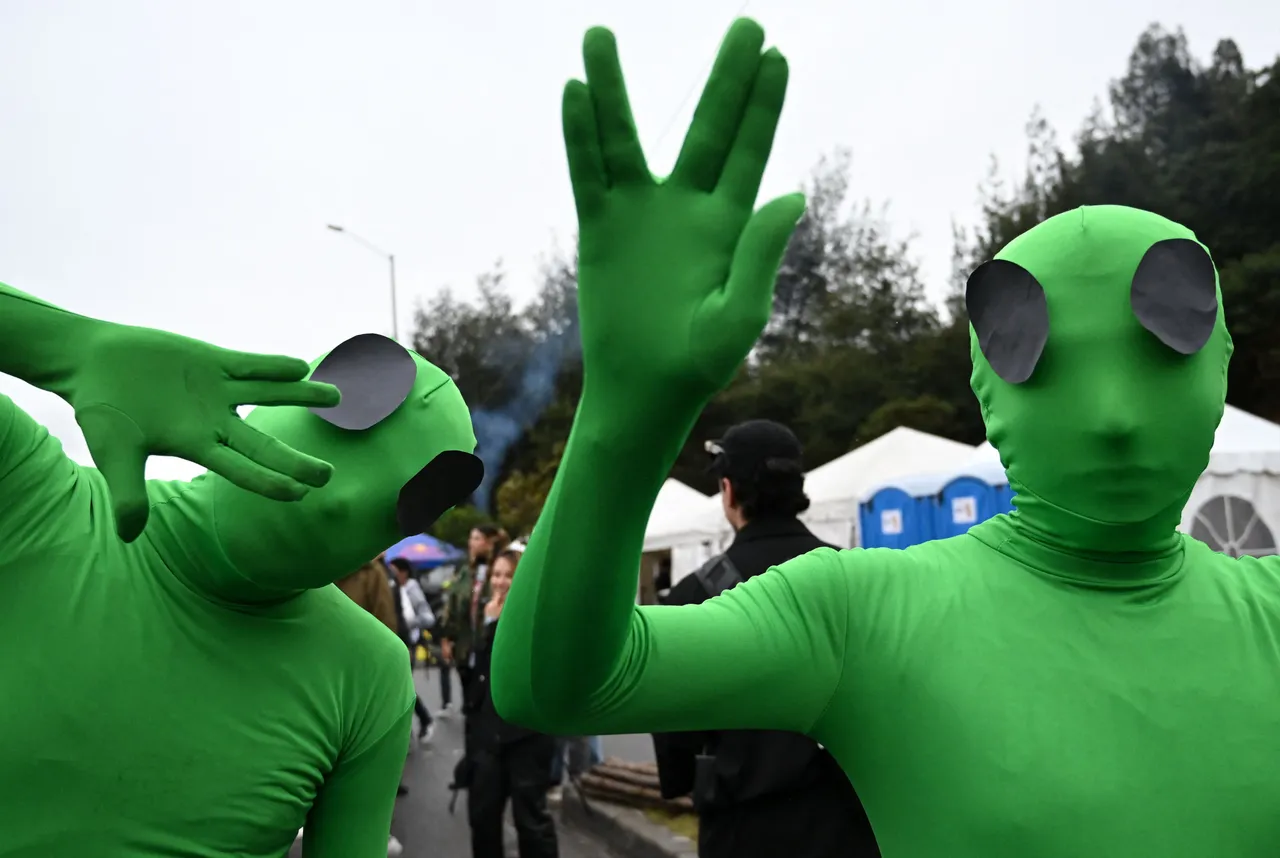
Later works like The Hitchhiker’s Guide to the Galaxy by British writer Douglas Adams further cemented the place of alien species, which are referred to as “little green men” in countless books, movies, and TV series.