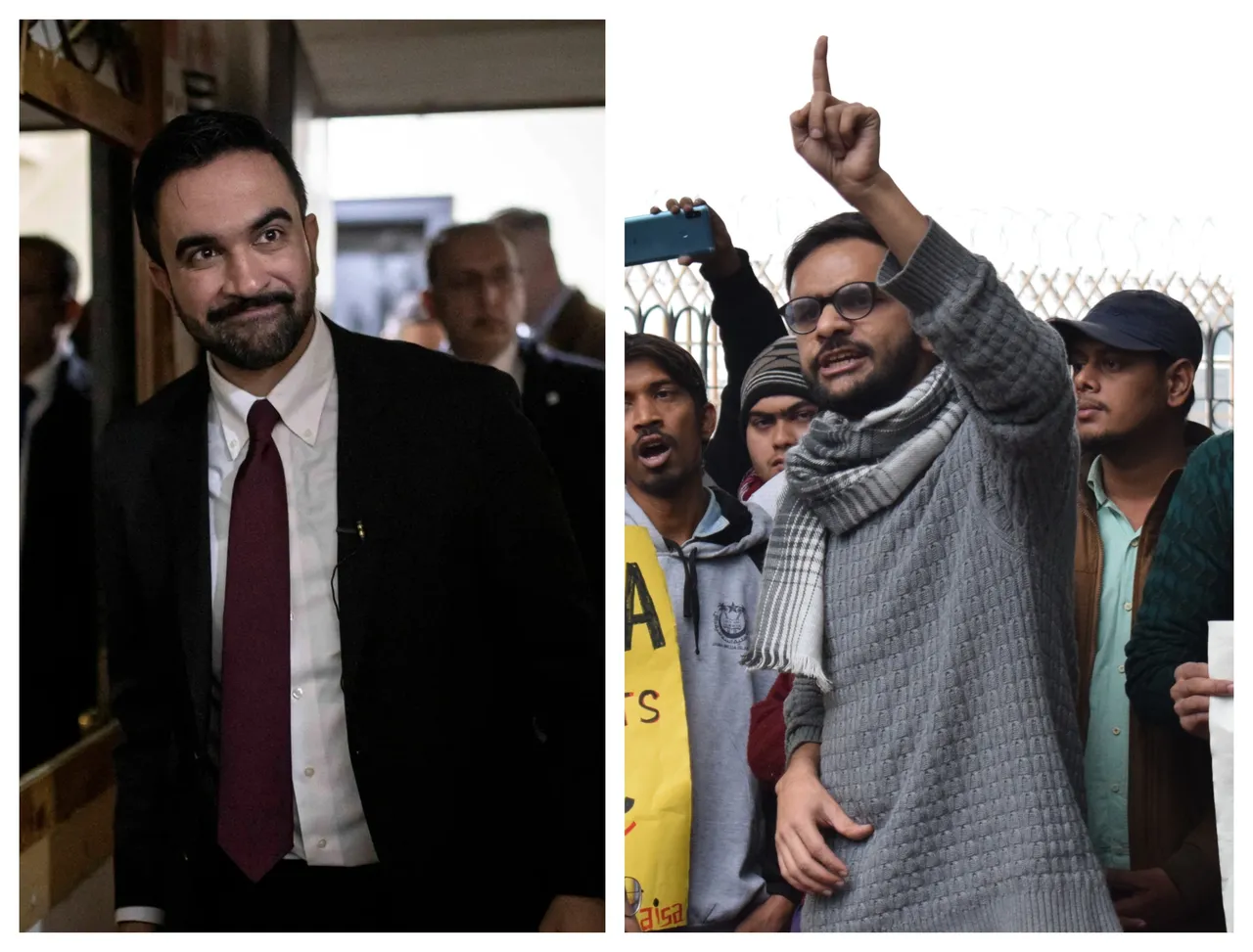
Some gestures are small enough to be overlooked, yet precise enough to matter. New York City's first Muslim and South Asian mayor Zohran Mamdani’s letter to jailed Indian activist Umar Khalid is one of them.
Khalid has spent nearly five years in prison without trial after he was arrested under India’s sweeping anti-terror law that critics say has been weaponised against Muslims by the Hindu right-wing government of Prime Minister Narendra Modi.
Shortly after Mamdani was sworn in, the short, handwritten and undated note was shared publicly by Khalid’s partner.
"Dear Umar, I think of your words on bitterness often and the importance of not letting it consume one's self. It was a pleasure to meet your parents. We are all thinking of you," the letter read.
The letter emerged after Mamdani met Khalid’s family during their visit to the United States in early December. Its timing ensured it would not be read as a private exchange alone.
Khalid has been imprisoned since September 2020, accused of being part of a “larger conspiracy” behind the February 2020 Delhi violence.
He is charged under the Unlawful Activities (Prevention) Act, or UAPA, a law that allows for prolonged detention and makes bail exceptionally difficult.
While Khalid has consistently denied the allegations, his case has become emblematic of how the Indian state has responded to dissent since the mass protests against the Citizenship Amendment Act in late 2019 and early 2020.
Khalid was briefly granted provisional bail in December to attend his sister’s wedding, only to return to Delhi’s Tihar jail days later.
A fair and timely trial
Mamdani’s note was soon followed by a more formal intervention as eight US lawmakers wrote to India’s ambassador in Washington, calling on the Indian government to ensure Umar Khalid receives a fair and timely trial.
The letter underlined that Khalid’s prolonged detention without bail may violate international standards of due process and the presumption of innocence. It was signed by senior Democrats, including Jim McGovern, Jamie Raskin, Chris Van Hollen, Pramila Jayapal and Rashida Tlaib.




Several of the lawmakers noted that they had met Khalid’s parents earlier in December.
In public statements, they stressed that being held for nearly five years under the UAPA without a conclusion to the trial raises questions about equality before the law and proportionality. The intervention placed Khalid’s case firmly within a broader human rights framework, rather than treating it as a purely domestic legal matter for India.
While Mamdani is not among the signatories, the sequence of events matters. His letter helped draw renewed attention to a case that human rights groups have long argued exemplifies the misuse of anti-terror legislation against peaceful protesters and critics of the government.
Khalid’s detention
To understand why a mayor’s note could trigger such reactions, it is necessary to revisit the origins of Khalid’s case.
In December 2019, India’s government introduced the Citizenship Amendment Act, prompting nationwide protests that were largely peaceful. In February 2020, communal violence broke out in north-east Delhi, leaving 53 people dead, the majority of them Muslims.
Rather than holding perpetrators accountable, authorities arrested activists and students who had been prominent in the anti-CAA movement, accusing them of orchestrating the violence.
Khalid was arrested in September 2020 and charged with a wide range of offences, from sedition and murder to promoting enmity between religious groups.
The most serious charges came under the UAPA, including allegations of terrorist activities and conspiracy. Over the past five years, his bail applications have been rejected repeatedly, and his attempt to seek relief from the Supreme Court has faced long delays, leading him to eventually withdraw his petition.
International human rights organisations have repeatedly called for his release, arguing that his detention criminalises dissent and violates basic legal safeguards.