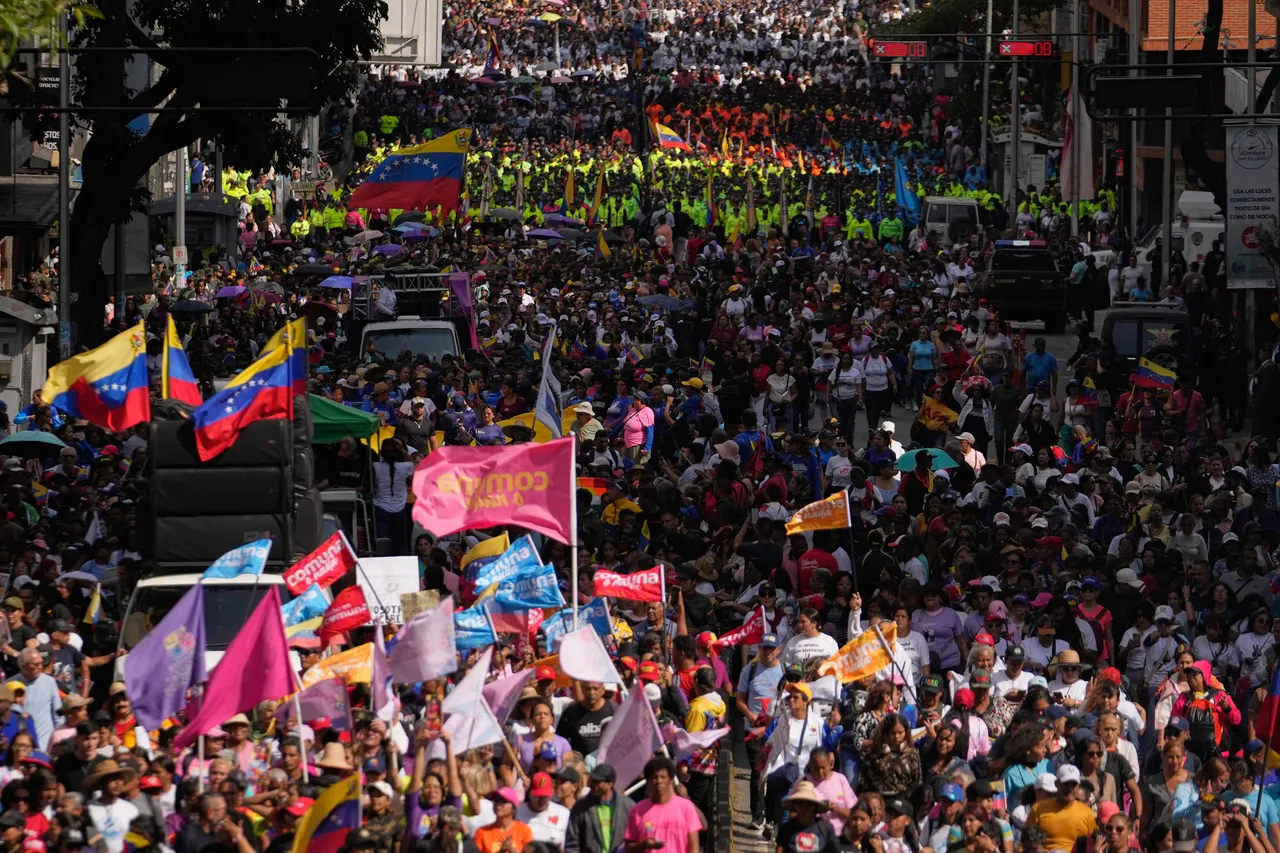
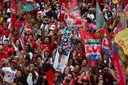
The vast crowds of people in Venezuela’s capital have marched, danced and pumped their fists in a display of support for the government of US-abducted President Nicolas Maduro.
The streets of Caracas, deserted for days as fear descended following the Trump administration’s stunning abduction of Maduro and the First Lady Cilia Flores on Saturday, briefly filled with masses of people waving Venezuelan flags and bouncing to patriotic music.
Marchers flashed V-for-victory signs in support of the government that remains in power despite Maduro's abduction and the US President Donald Trump’s vow to "run" the country.
Interior Minister Diosdado Cabello, one of the defendants named in the US indictment unsealed on Saturday, projected nonchalance as he waded through the crowd.
Wearing a blue cap emblazoned with the slogan "to doubt is to betray," Cabello high-fived supporters and reveled in the festive atmosphere.
The protests are occurring as Venezuela's interim President Delcy Rodriguez insisted that no foreign power was governing her country, after US President Trump said Washington would "run" it pending a transition after snatching her predecessor.
"The government of Venezuela is in charge in our country, and no one else. There is no foreign agent governing Venezuela," Rodriguez said in a televised address on Tuesday.
January 3 attacks
During the January 3 attacks, US forces killed 55 Venezuelan and Cuban military personnel, tolls published by Caracas and Havana showed on Tuesday.

In the first confirmation of its losses, Venezuela's military said 23 of its service members were killed in the attacks by the US. Caracas has yet to give an official figure for civilian casualties.
Cuba, which had already announced that 32 members of its armed forces and interior ministry security personnel assigned to duties in Caracas were killed in the raids, also listed its victims.
They ranged in age from 26 to 67 and included two colonels and one lieutenant colonel.
Many of the dead Cubans are believed to have been members of Maduro's security detail, which was largely wiped out in the attacks, according to Defence Minister Vladimir Padrino Lopez.
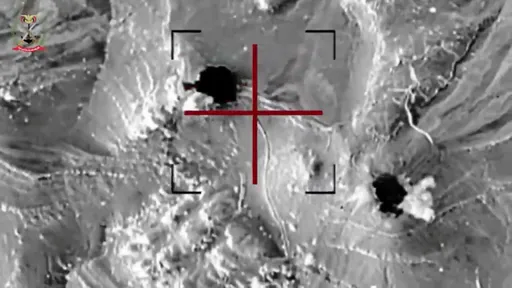
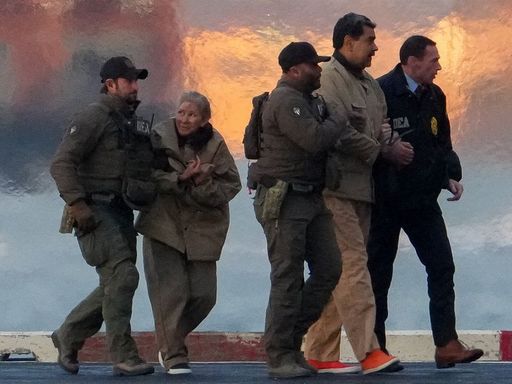
The attacks began with bombing raids on military and residential targets and culminated with US special forces swooping in by helicopter to abduct Maduro and his wife from a compound.
They were later taken to New York, where they appeared in court on Monday and pleaded not guilty to drug trafficking and other charges.
Monroe Doctrine
While Trump has emphasised that the broader oil embargo on Venezuela remains in effect, the administration has framed the intervention as a revival of the Monroe Doctrine, explicitly linking the abduction of Maduro to securing influence on Venezuela's vast oil reserves and combating alleged narcotrafficking.
The Monroe Doctrine is a 1823 document that shaped US policy in the Western Hemisphere.
The Trump administration on Tuesday dismissed analysts' estimates that it would take years to ramp up Venezuela's crude production, saying there were ways to quickly boost the country’s oil sector.
Raising crude output from the South American nation, which sits on the world’s largest oil reserves, is a top objective for President Trump.
The country’s exports have fallen to below 1 million barrels per day from over 3 million bpd two decades ago amid a prolonged lack of investment and harsh sanctions that has left its infrastructure in shambles.