US lawmakers on Sunday unveiled an annual defence policy bill authorising a record $901 billion in national security spending next year, billions more than President Donald Trump's request, and provides $400 million in military assistance to Ukraine.
The sweeping 3,000-page bill includes a 4 percent raise for enlisted troops but excludes a bipartisan effort to spur housing construction that some lawmakers had hoped to include in the final bill.
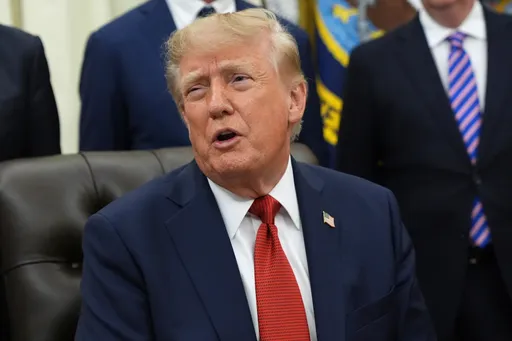
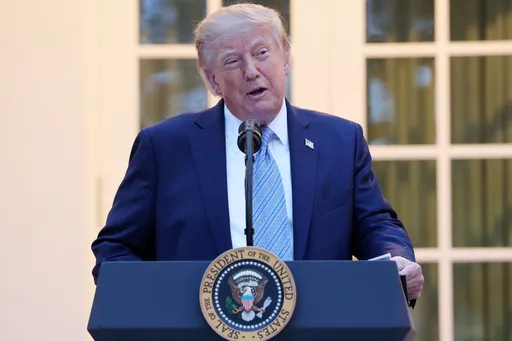
House Speaker Mike Johnson, a Louisiana Republican, said in a statement that the legislation would advance Trump's agenda by "ending woke ideology at the Pentagon, securing the border, revitalising the defence industrial base, and restoring the warrior ethos."
The measure is a compromise between versions of the National Defence Authorisation Act passed earlier this year by the Senate and House of Representatives, both controlled by Trump's fellow Republicans.
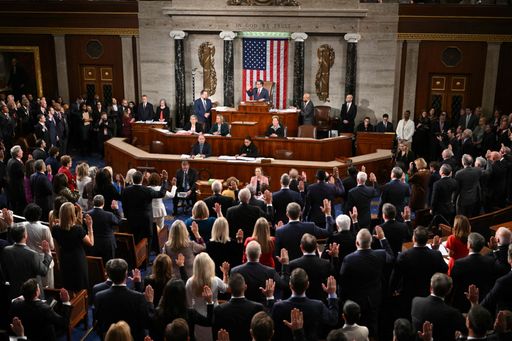
Trump in May asked Congress for a national defence budget of $892.6 billion for fiscal year 2026, flat compared to 2025 spending. That includes funding for the Department of Defence, as well as other agencies and programs involved with security and defence.
The House bill set spending at that level, but the Senate had authorised $925 billion.
The NDAA authorises Pentagon programmes, but does not fund them.






Congress must separately pass funding in a spending bill for the fiscal year ending in September 2026.
In addition to the typical NDAA provisions on purchases of military equipment and boosting competitiveness with rivals such as China and Russia, this year's bill focuses on cutting programmes reviled by Trump, such as diversity, equity, and inclusion initiatives, and deploying troops to the southwest US border to intercept undocumented immigrants and drugs.
It also repeals two resolutions authorising the use of military force in Iraq in 1991 and 2002.
Considered "must-pass" legislation, the massive NDAA is one of a few major pieces of legislation that Congress passes every year and lawmakers take pride in having passed it annually for more than six decades.
The bill typically emerges after Republican and Democratic lawmakers negotiate for weeks behind closed doors. But the process this year was much more partisan than usual.
Some Democrats had threatened to stall the measure over Trump's use of the military in US cities, until Republican Senator Roger Wicker, chairman of the Armed Services Committee, agreed to hold a hearing this week on the issue.
Earlier this year, Republicans defeated Democratic efforts to block the deployment of the military to American cities and to bar the conversion of a luxury jet given by Qatar to serve as Air Force One.