 Doaa Shaheen
For more than five millennia, Gaza has stood at the crossroads of civilisations, an ancient port on the Mediterranean linking Egypt, the Levant, and Mesopotamia.
Long before it became synonymous with siege and war, the narrow coastal strip was a passageway for empires, armies, pilgrims, and traders, each leaving traces still buried beneath its soil.
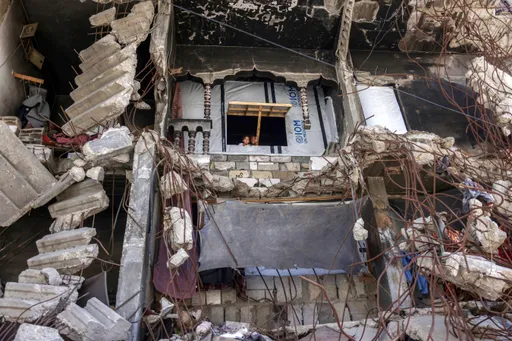
Today, as Gaza’s cities are reduced to rubble from Israel’s brutal assault, another, quieter destruction is unfolding: the systematic loss of cultural memory embedded in museums, artefacts, textiles, and archives that document thousands of years of human history.
Across the devastated enclave, historians, volunteers, and museum founders are risking their lives to rescue what remains, often with bare hands and improvised tools, believing that preserving heritage is inseparable from preserving identity.
Amid the rubble of bombardment and beneath the ominous hum of drones in the so-called Zero Line area east of Khan Younis in southern Gaza, Mohammed Abu Lahia and his companions risk their lives.
Their mission is to rescue archaeological and heritage artefacts from the ruins of the Al-Qarara Cultural Heritage Museum, in a desperate attempt to prevent the erasure of Palestinian cultural memory after Israeli forces destroyed the museum during the war.
The urgency reflects Gaza’s extraordinary historical density. Over centuries, Canaanites, Philistines, Assyrians, Persians, Greeks, Romans, Byzantines, Mamluks, and Ottomans all ruled or passed through the territory.
Legendary figures such as Alexander the Great and Napoleon Bonaparte once stood on its soil. Each era left behind material traces – pottery, mosaics, inscriptions, textiles – many of which ended up in local museums like Al-Qarara.
"The Al-Qarara Cultural Heritage Museum was founded in 2016 in response to the community's need for a cultural institution to preserve Palestinian heritage from being lost," says Abu Lahia, the 30-year-old founder.
From its inception, the museum relied on donations from local families who entrusted it with heirlooms and antiquities meant to testify to Palestine's long history and everyday life across generations.
Before its destruction, "the museum housed about 3,500 pieces narrating 5,000 years of Palestinian history, from Roman, Byzantine, and Mamluk eras to traditional jewellery," Abu Lahia adds.
"Only about 1,000 pieces have been saved from the destruction through arduous manual search, due to the lack of specialised excavation machinery."
Gaza’s antiquities are dispersed across public institutions and private museums established by enthusiasts driven by a desire to protect what they see as shared inheritance.
The Israeli war machine has impacted all museums, causing varying degrees of damage and the loss or theft of parts of their collections.
UNESCO has verified damage to at least 110 sites of cultural, historical, and religious significance across Gaza since the war began, including mosques, churches, archaeological sites, museums, and historic buildings, figures that continue to rise as access remains limited.
Abu Lahia explains the rudimentary salvage operation: "We are racing against time to pull out archaeological pieces. Every passing moment is from the lifespan of Palestinian history and these antiquities. We don't want to lose what remains."
With no access to modern tools, the team wraps artefacts in cloth and blankets, pads them with plastic and sponge, and stores them in vegetable crates, fruit boxes, or discarded humanitarian aid cartons. Heavy stone columns are dragged out using strong ropes and moved to safer locations.
Twenty-five volunteers, young men and women trained in history, archaeology, architecture, and fine arts, are participating in the effort. They view their work not as cultural preservation alone, but as resistance to erasure.
Alongside physical rescue efforts, the team is building a digital archive, recognising that memory must survive even when objects cannot.
Using a makeshift mobile studio, salvaged items are photographed, catalogued, assigned serial numbers, and uploaded under the museum’s name, ensuring that even if the artefacts are lost, their documentation endures.
Abu Lahia emphasises, "The museum has not ended despite the destruction. What survived under the rubble and what was documented digitally confirms that Palestinian memory is still alive."
Saving the Palestinian Thobe


In another corner of Gaza, Suhaila Shaheen is fighting a parallel battle to preserve a different form of heritage: embroidered Palestinian dress.
The Palestinian thobe, known for its colourful stitches, encodes geography, social history, and identity—distinguishing villages, cities, and even family lineages.
For many Palestinians, it functions as a textile archive passed from one generation to the next.
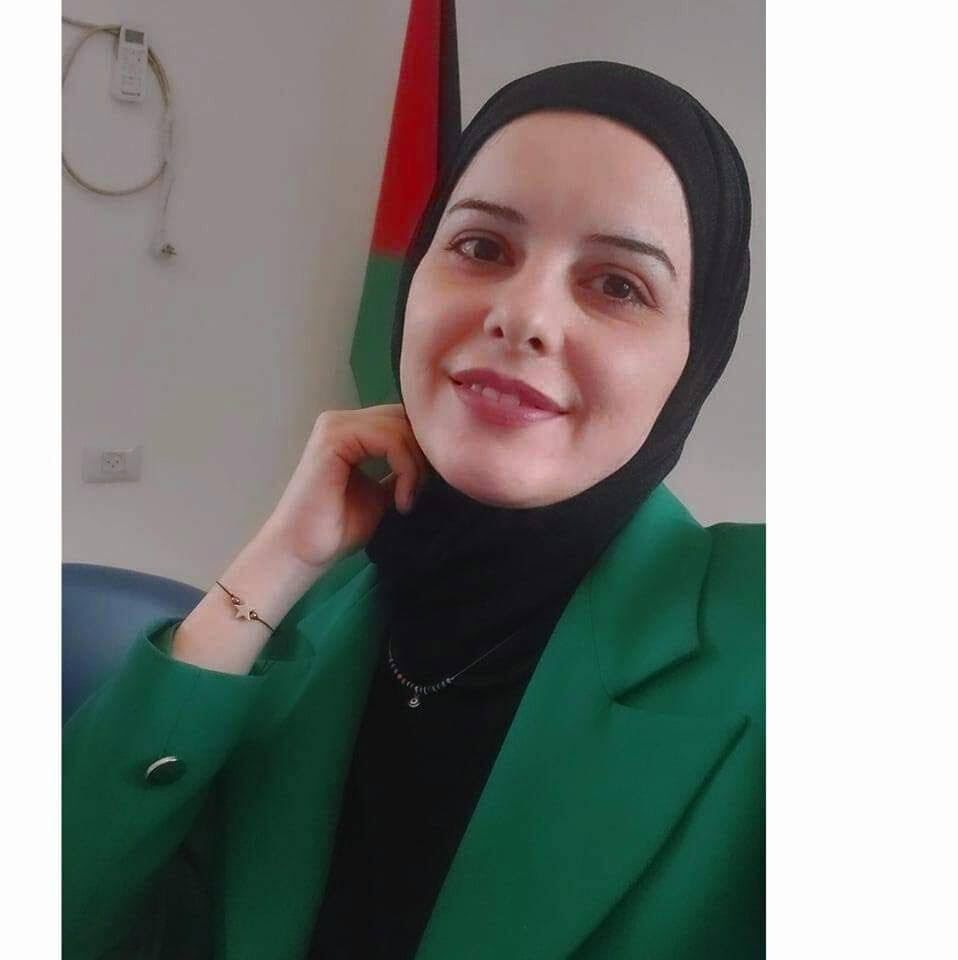
Founded in December 2022, the Palestinian Thobe Museum in Rafah was both a personal dream and a cultural statement for Dr Shaheen. The university professor specialising in art and technology views safeguarding embroidered dress as preserving stories often excluded from official archives.
The museum, funded entirely by Shaheen and her fundraising efforts, became the first Palestinian museum dedicated to embroidered thobes founded by a woman.
Its collection grew to more than 5,600 heritage items, including around 340 hand-embroidered Palestinian thobes representing villages of the Gaza district, alongside original historical documents, rare photographs, agricultural tools, and a Bedouin tent.
Israeli bombardment on October 10, 2023, erased the museum entirely.
From beneath the rubble, Shaheen was able to recover only 64 thobes, some intact, others torn or eroded by the bombing.
“These are what remain of the museum’s memory,” she says. “I carry them with me wherever I go.”
Unable to save most of the collection physically, Shaheen turned to digital preservation, compiling photographs and records taken by herself, journalists and visitors.
"I'm working on gathering everything available digitally, so the story isn't completely lost," she explains.
Looting Gaza's antiquities
Gaza-based Palestinian heritage expert Hammoud Al-Dahdhar describes the current situation as catastrophic.
In Gaza City’s Old Quarter, the iconic Great Omari Mosque, one of the oldest mosques in the Strip, has been left partially destroyed, its distinctive minaret reduced to a broken stump.
Nearby, the 700-year-old Qasr al-Basha, once a Mamluk palace and later the National Museum, has been struck and bulldozed. Thousands of artefacts it housed are now missing or unaccounted for.
Al-Dahdhar points an accusatory finger at the Israeli occupation for looting thousands of archaeological pieces from Gaza’s historical sites, citing the disappearance of more than 17,000 artefacts from Qasr al-Basha alone.
Manual rescue efforts, he says, are carried out amid unexploded ordnance, shortages of equipment, and ongoing bombardment. Digital documentation faces its own risks, including cyberattacks aimed at erasing records.
"These are emergency first-aid operations. We document what is missing, what is looted, and what is destroyed, under impossible conditions," Al-Dahdhar tells TRT World.
International institutions have also sounded the alarm.
During the war, the French Biblical and Archaeological School of Jerusalem reported that tens of thousands of archaeological artefacts from Gaza, including material excavated from the UNESCO-listed Byzantine monastery of Saint Hilarion, had been stored in a facility in Gaza City for safekeeping.
The site was managed and secured by Premiere Urgence Internationale, a humanitarian organisation that has worked for years on the protection of Gaza’s historical heritage while providing vocational training and livelihoods for young Palestinians.
Despite the facility’s protected status under the UN’s deconfliction system, the Israeli military ordered its evacuation ahead of an air strike.
Under sustained risk of bombardment and amid severe shortages of time and resources, 70 percent of the collection, representing more than 25 years of archaeological research, was moved before the Israeli attack. The rest, destroyed.
Scholars and heritage experts have warned that the destruction of such material constitutes an irreparable loss, not only to Palestinians but to global understanding of early Christian and ancient Middle Eastern history.
Al-Dahdhar stresses that the stakes extend beyond preservation for its own sake.
"This is about protecting collective memory. Without it, identity itself is endangered."