 Ahmed Najar
For decades, successive American administrations have insisted that Israeli annexation of the occupied West Bank would undermine international law and extinguish the possibility of a negotiated peace.
Even Donald Trump publicly stated that Israel would not annex the West Bank following the Abraham Accords.
The message from Washington was clear: while the United States might tolerate facts created on the ground, formal annexation remained a red line.
This week, however, a contentious bureaucratic decision by the US Embassy in Jerusalem may have revealed how annexation no longer needs to be declared to be enabled.
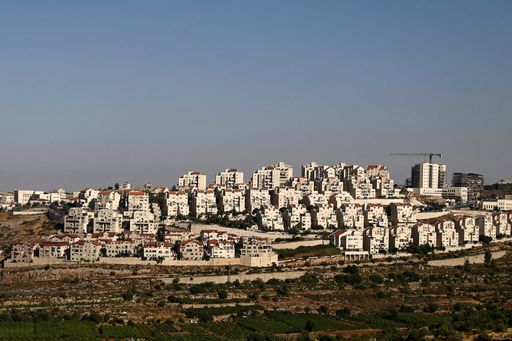
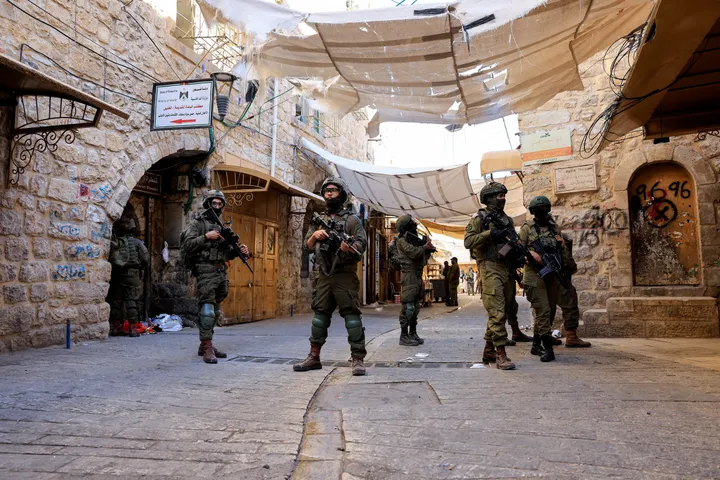
For the first time in history, American consular officials are set to provide passport and citizenship services inside illegal Israeli settlements in the occupied West Bank — beginning in Efrat and followed by Beitar Illit.
These are not recognised Israeli municipalities within Israeli territory – they are settlements established inside occupied Palestinian land in violation of international law, and considered illegal by the overwhelming majority of the international community.
Until now, American citizens living in these illegal settlements were required to travel to recognised diplomatic premises in West Jerusalem or Tel Aviv to receive consular services.
That distinction mattered. It preserved a minimal diplomatic boundary between Israel and the land it occupies. Crossing that boundary changes more than convenience.
The US move is the latest assault on the West Bank and Palestinian dreams of a contiguous state.
Barely a few days ago, Israel approved a proposal to register land in the occupied West Bank as “state property”, a first since Israel occupied the Palestinian territory in 1967.
What it means
There are tens of thousands of dual US-Israeli citizens residing in illegal West Bank settlements.
Providing consular services within illegal settlements directly integrates these communities into the operational reach of the American diplomatic apparatus.
This is not merely administrative outreach. It is the extension of state service provision into territory under military occupation on behalf of a civilian population transferred there by the occupying power — precisely the scenario prohibited under Article 49 of the Fourth Geneva Convention.
Supporters of the move may argue that consular services are apolitical and exist to serve citizens wherever they reside.
But in practice, this risks normalising what Israeli officials themselves have increasingly described as “de facto sovereignty” over the occupied West Bank.
Annexation in the 21st century rarely arrives with a formal declaration.




It emerges instead through the slow harmonisation of legal, administrative, and infrastructural systems between an occupying state and the territory it controls. Roads are extended.
Land registries are integrated. Planning authorities are unified. And eventually, public services — including those of allied foreign governments — begin to operate seamlessly across what was once understood to be an international boundary.
Washington’s decision to dispatch consular teams into illegal settlements fits squarely within this administrative logic.
US double-speak
It also raises a deeper contradiction. If, as American officials have repeatedly stated, the US does not support annexation of the West Bank, why facilitate the civic entrenchment of the very communities whose existence would make such annexation possible?
After all, annexation is not simply a legal act. It is a demographic and bureaucratic condition.
A territory becomes annexable when its political separation from the occupying power is rendered functionally obsolete — when systems of governance, service provision, and legal protection already treat it as domestic space.
By offering passport renewals and citizenship services inside illegal settlements, the US risks signalling that American nationals living beyond Israel’s recognised borders are no longer doing so in politically exceptional circumstances, but as part of a normalised civilian landscape deserving of routine diplomatic support.
The implications extend beyond symbolism.
In international law, the transfer of an occupying power’s civilian population into occupied territory is prohibited precisely because it alters the political and demographic character of that territory.
Third-party states have historically sought to avoid any action that might recognise or assist such transfers.
Providing consular services within illegal settlements moves in the opposite direction — embedding foreign state practice into the everyday life of those communities.
For Palestinians, this reinforces a longstanding concern: that annexation is proceeding not through a single dramatic declaration, but through incremental administrative integration — facilitated, at times, by Israel’s closest allies.
American diplomats may insist that passports are not politics. But when those passports are issued inside illegal settlements, the line between citizen service and territorial endorsement becomes difficult to sustain.
Washington says it opposes annexation. Yet by extending its diplomatic footprint into the illegal settlements that would make annexation possible, it may be helping to bring about precisely the outcome it claims to resist.