 Onur Dogan
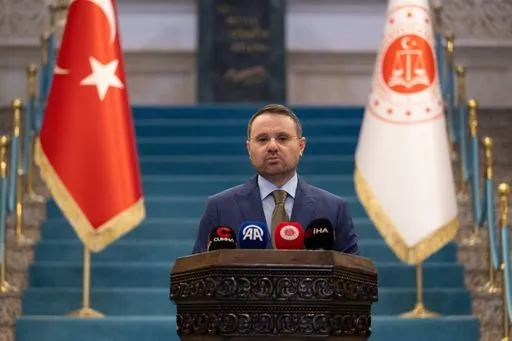
July 2026. The Presidential Complex, Ankara.
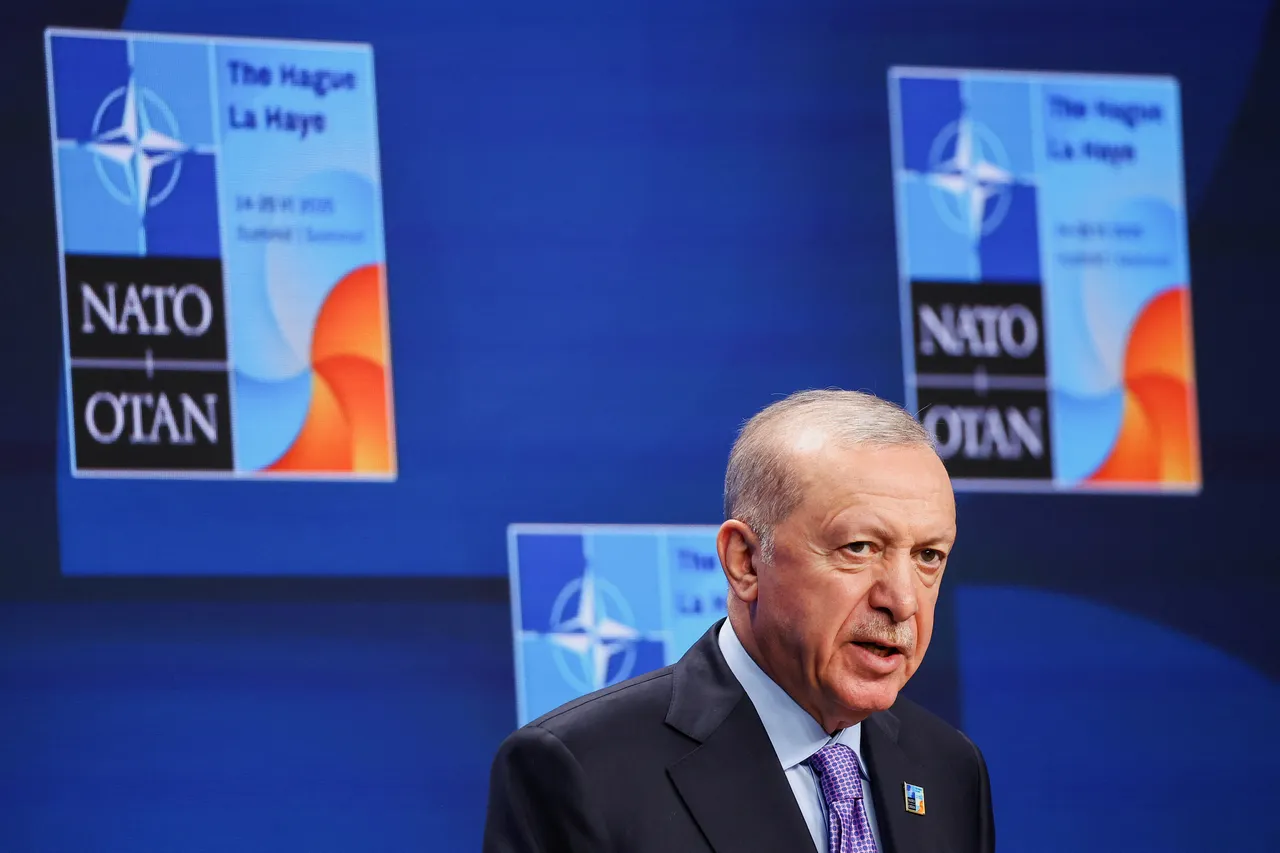
For the first time since Istanbul 2004, Türkiye is hosting a NATO Leaders’ Summit — welcoming the heads of state of 32 allied nations at a moment when the alliance itself is being forced to reinvent its identity.
The 22 years between Istanbul and Ankara tell the story of two very different Türkiyes — and two very different NATOs.
In 2004, Türkiye was a rising regional power, opening its doors to an alliance expanding with confidence.
In 2026, it is a defence exporter, a recognised global mediator, and one of NATO’s most strategically indispensable members — hosting a summit that may define the alliance’s future direction.
Over these two decades, Türkiye has undergone a transformation that few anticipated — from a country seeking validation within Western institutions to one that now shapes the terms of debate inside them.
The Ankara Summit is the international stage on which that transformation is on full display.
Türkiye now commands the Black Sea, offers strategic depth in the Eastern Mediterranean, and serves as the gateway to the Middle East and the Caucasus.
It shares a border with Russia, a frontier with Iran, and stands as the southeastern pillar of the Balkans.
Türkiye is not merely a NATO member — it is an ally called upon to play decisive roles every time a crisis erupts.

Two summits, two worlds
At the 2004 Istanbul Summit, seven new members were admitted to NATO, the alliance’s presence in Afghanistan was expanded, a training mission in Iraq was agreed upon, and the withdrawal from Bosnia was formalised.
The West was confident in its global leadership; the threat was clearly defined and lay outside the organisation.
By 2026, the threat is located within the alliance itself — in the tensions running across the Atlantic.
The period in which the summit takes place reads like a map of how fragile the international order has become.
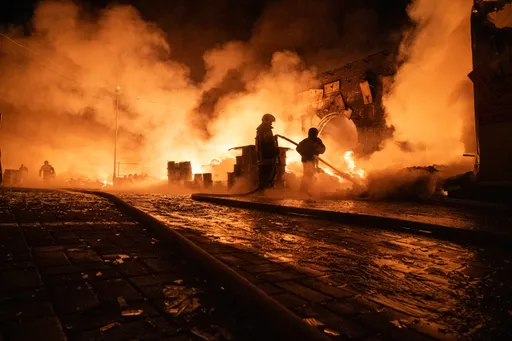
Ukraine-Russia: The war is now in its fourth year. Negotiating sessions were held at tables set up in Türkiye. Yet a lasting ceasefire has not been reached, and the process remains frozen.
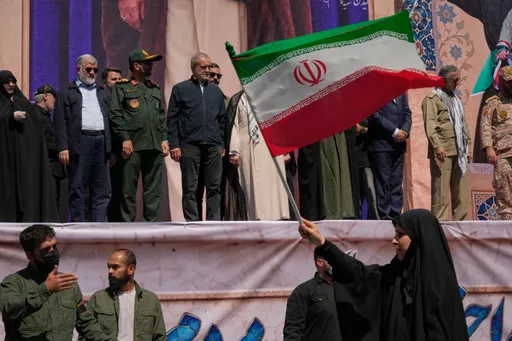
The Middle East: The joint US-Israel war against Iran drove a deep wedge between Washington and its European allies. The Palestinian issue continues to divide international opinion.
The Western Hemisphere: US forces raided Venezuela in January 2026, abducting President Maduro and transporting him to New York.
This was followed by American ambitions over Greenland — Denmark’s autonomous territory — raising an existential question mark within NATO. A US oil embargo on Cuba further escalated regional tensions.
Against this backdrop, the international system is drifting into a new era without a clear definition — one in which power, rather than rules, is becoming the decisive force.
Trump, Iran, and NATO’s existential test
US President Donald Trump labelled Western NATO allies who refused to open their airspace and military bases for the US-Israel war against Iran as “cowards”.
Secretary of State Rubio declared that they “need to reassess the value of NATO”. Trump himself described the alliance as a “paper tiger”.
The European allies’ counter-argument carries weight: the war was launched without any legal framework or joint consultation, and assistance was then sought for the crisis it created.
In this equation, Türkiye also refused to open its airspace or bases for the Iran war and continued to call for a return to the negotiating table.
NATO Secretary General Mark Rutte visited Türkiye’s defence industry facilities and announced that the defence industry forum tied to the Ankara Summit would be the largest industrial event in NATO history.
The concept emerging from this crisis is NATO 3.0.
In Rutte’s formulation, the US continues to provide nuclear and conventional support while European members assume greater responsibility for conventional defence.
The first progress report on the five percent GDP commitment adopted at The Hague Summit will be assessed in Ankara. All 32 chiefs of defence have made clear that commitments must translate into concrete deliverables and readiness levels.
The Ankara Summit will be the first major platform on which NATO 3.0 is formally staged.
Türkiye’s independent foreign policy
Throughout this turbulent period, Türkiye has occupied one of the most distinctive positions within NATO. Three axes stand out.
Ukraine–Russia: Türkiye supplied Ukraine with unmanned aerial vehicles and weapons systems and closed the Straits to warships under the Montreux Convention, preventing Russia from reinforcing its Black Sea Fleet.
At the same time, Türkiye hosted multiple rounds of negotiations in Istanbul throughout 2025.
Talks led by Foreign Minister Hakan Fidan brought both sides to the table over ceasefire terms, but no concrete progress was made. Türkiye remains one of the rare actors keeping the negotiating floor intact.
YPG/PKK: For over a decade, Türkiye warned the US not to support the YPG — the Syrian affiliate of the PKK terrorist organisation — but Washington ignored those warnings.
In January 2026, the US Special Envoy for Syria announced that the SDF’s role as the “primary anti-ISIS force” had “largely come to an end,” and the terrorist organisation’s structures were effectively dismantled over a process lasting several weeks.
Washington had, in effect, conceded Ankara’s long-standing argument — belatedly, but unmistakably.
Israel: Türkiye was among the rare NATO members to condemn Israel’s policies in Gaza from the outset.
That stance earned Ankara a distinctive position in the Muslim world and reinforced Türkiye’s regional standing and credibility.
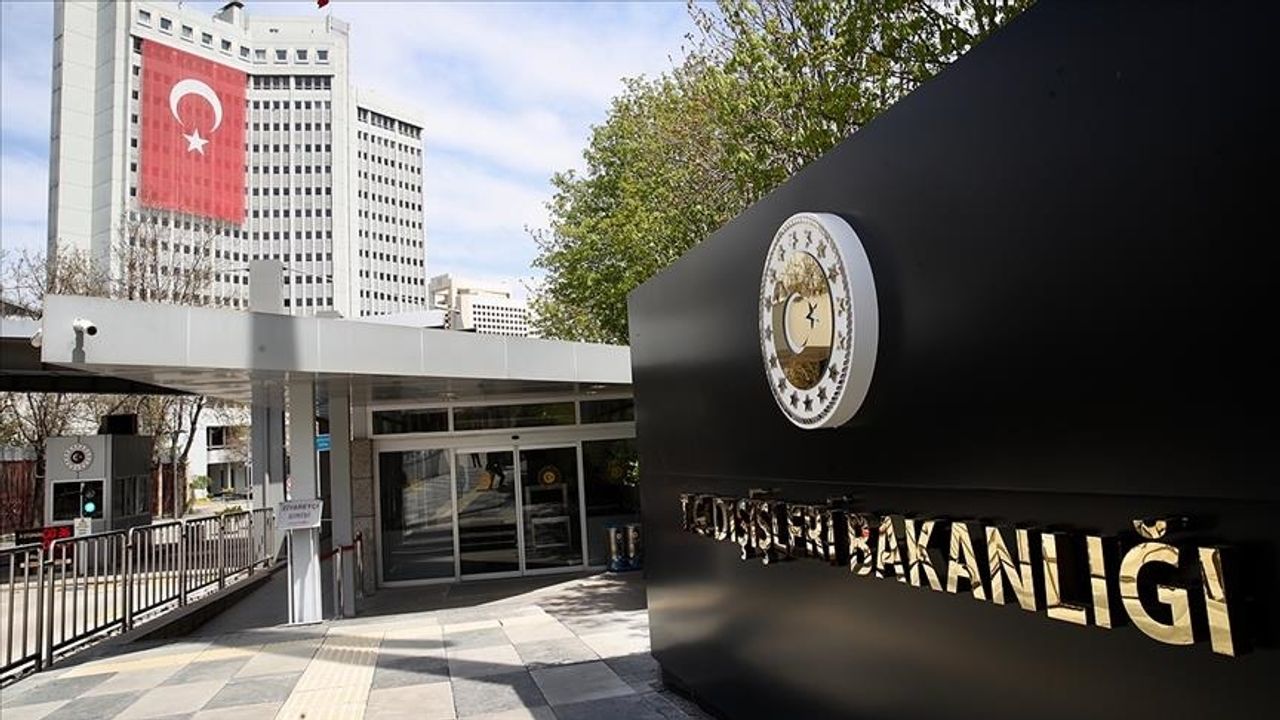
Separately, Türkiye’s ties with the US and Europe have entered a new era of normalisation
Longstanding issues have not been fully resolved, but the relationship has gained significant momentum toward normalisation.
In September 2025, Erdogan was invited to the White House for the first time since 2019.
In March 2026, the US Department of Justice reached a deferred prosecution agreement with Halkbank — explicitly linking the deal to Türkiye’s contributions to the Gaza negotiations and the 2025 ceasefire efforts.
Trump also signalled a positive disposition on the F-35 and CAATSA sanctions files.
The most tangible marker of normalisation with Europe has been the Eurofighter process: the sale of 40 fighter jets, blocked by Germany for years, was approved in 2025.
Türkiye’s defence revolution and rise of a Middle Power
Türkiye is no longer merely a buyer from NATO — it has become a seller.
Eurofighter: Germany’s veto was lifted in June 2025. In October 2025, Erdogan and UK Prime Minister Starmer signed an agreement worth nine billion euros for 20 Eurofighter jets.
HURJET–Spain: Through a consortium formed by TAI, Airbus and Spanish companies, 30 supersonic trainer aircraft will be delivered. Spain’s industry holds a 60 percent share — a co-production model that goes well beyond a conventional sale.
NATO’s first electronic warfare sale: ASELSAN exported a 410-million-dollar electronic warfare system to Poland — the first such sale ever made to a NATO member.
Bayraktar TB3: During NATO’s Steadfast Dart 2026 exercise, the TB3 launched from TCG Anadolu and became the first naval unmanned aerial vehicle to fire live munitions during a NATO exercise in the Baltic Sea.
KAAN: The serial production contract is expected to be signed in 2026. Preliminary talks on the KAAN have also been confirmed as part of Spain’s search for a fifth-generation fighter aircraft.
Türkiye’s defence and aerospace exports reached a historic record of ten billion dollars in 2025.
But rather than economic weight or ideological appeal, Türkiye is positioning itself in the global arena through its geographic centrality and deep-rooted network of relationships.
The list of entries in Türkiye’s mediation record spans Afghanistan to the Balkans, the Horn of Africa to the Caucasus: the Ukraine–Russia negotiating floor and the Grain Corridor; the December 2024 Ankara Declaration that defused the Ethiopia–Somalia tension; diplomatic channels in Libya and Syria; and a bridging role in US–Russia prisoner exchanges.
Twenty-two years ago in Istanbul, Erdogan opened doors to new members as Prime Minister.
Now, as President, he sits at the head of the table that will determine in which direction NATO moves — and under whose leadership.
Throughout this process, Türkiye has not played a single role but three complementary ones simultaneously: NATO’s second-largest military force, a global mediator, and the natural anchor of the alliance’s southeastern flank.
On July 7–8, Ankara is not merely hosting a summit. It is setting the stage for one of the most critical chapters in history — the chapter in which NATO 3.0 will be unveiled, and perhaps in which the alliance’s new identity will be written.