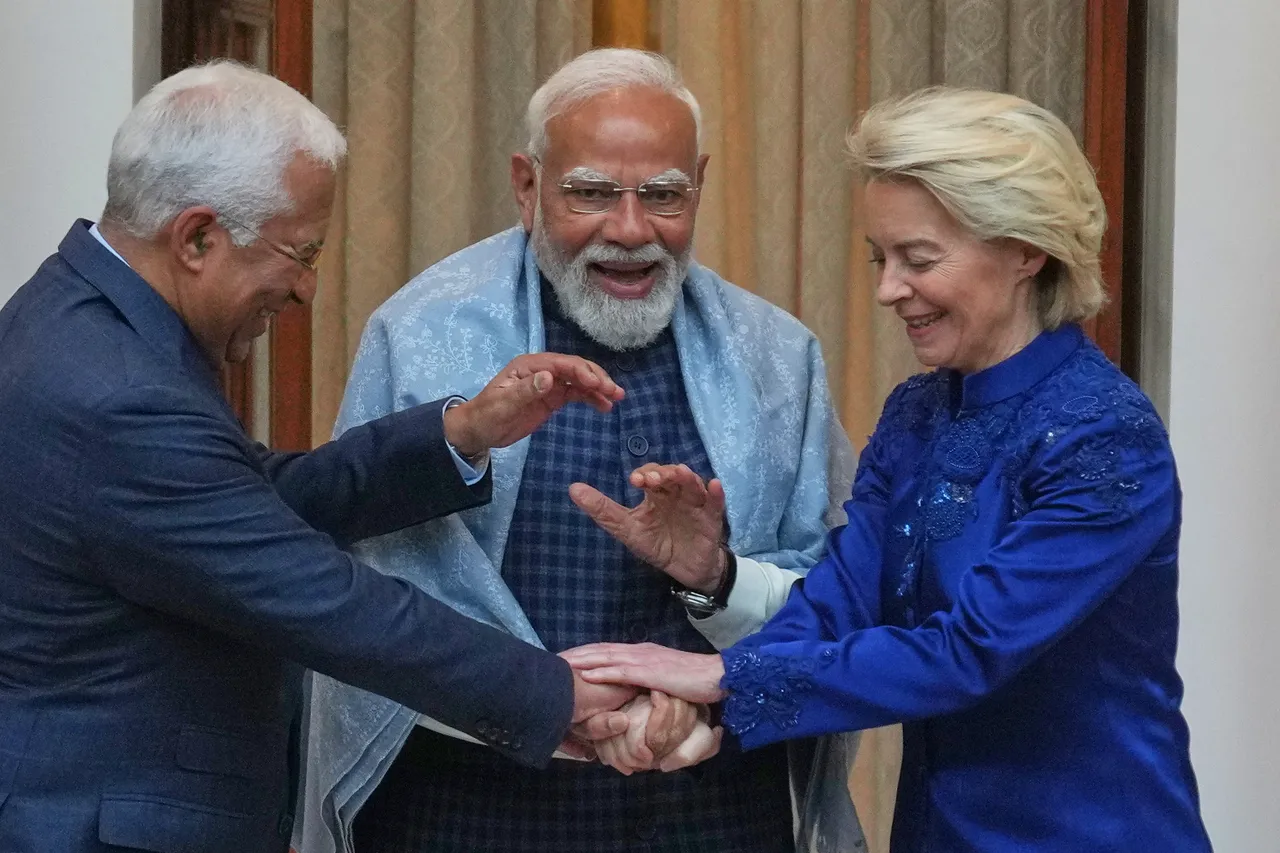
US Treasury Secretary Scott Bessent has voiced frustration at the European Union's trade deal with India, claiming the bloc backed off Russia-related sanctions to ensure finalisation of its major deal with New Delhi.
The Europeans "should do what's best for themselves," Bessent told CNBC when asked in a televised interview for a reaction to what the EU and India say is a "mother of all trade deals" they agreed on Tuesday.
"But I will tell you... I find the Europeans very disappointing, because the Europeans are on the front line of the Ukraine-Russia war," he said.
India is buying sanctioned Russian oil, Bessent said, and "guess who was buying the refined products? The Europeans."
"So the Europeans have been funding the war against themselves," he said.
After US President Donald Trump hit India with additional tariffs in August over its purchases of Russian oil, Bessent said Europe was "unwilling to join us."
"And it turns out, because they wanted to do this trade deal," he said of the agreement.
'All eyes on Trump'
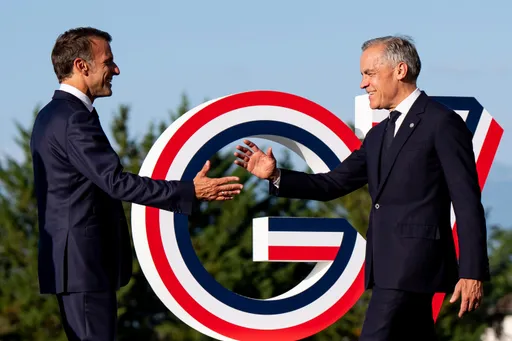
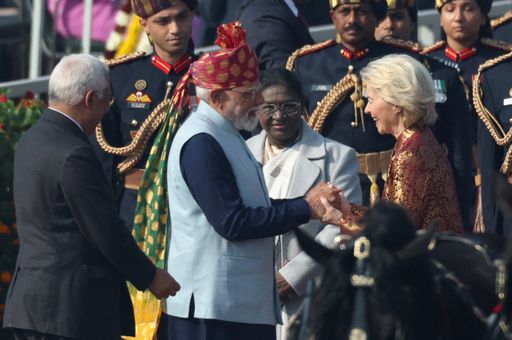
Almost 20 years in the making, the deal will see tariffs cut or eliminated on most European exports, among many other provisions on both sides.
It creates a massive trade zone covering about 2 billion people and roughly 25 percent of global GDP, with significant tariff reductions (over 90 percent on many goods), improved market access, and elements like services liberalisation and mobility for skilled workers.
Remarks from Indian and EU leaders underscored the agreement's wider geopolitical context, with finalisation expected in 2026.
"This is the tale of two giants - the world's second and fourth largest economies. Two giants which chose partnership in a true win-win fashion. A strong message that co-operation is the best answer to global challenges," said European Commission President Ursula von der Leyen.

"The global order is in great turmoil today," Indian PM Narendra Modi said, calling the deal the "biggest free trade deal in history."
"In such a context, the partnership between India and the EU will strengthen stability in the international system," Modi added.
"So every time you hear a European talk about the importance of the Ukrainian people, remember that they put trade ahead of the Ukrainian people," Bessent said.
He also touched on other important economic issues in Asia, including trade tensions with South Korea and recent volatility in Japan's currency.
Trump announced on Monday that he would be raising tariffs on South Korea over its failure to enact a trade deal struck last year.
Media coverage on the India-EU deal indicates that "all eyes are on Trump's reaction"; however, he has remained publicly silent thus far.
Reports suggest that he and the White House are unlikely to be pleased, viewing it as part of broader global shifts challenging US influence.
US says EU is trade dependent
US Trade Representative Jamieson Greer has stated that India "comes out on top" in the deal, gaining more market access into Europe, low-cost labour advantages, and potentially additional immigration/mobility rights.
Greer predicted India would "have a heyday" with the agreement. He contrasted this with US efforts to address "problems with globalisation" and noted the EU was "doubling down on globalisation."
"So the EU is turning to India to try to find a place. The EU is so trade dependent, they need other outlets if they can't keep sending all their stuff to the United States," he added.
He also linked it to Trump's tariff pressures pushing countries to seek alternative markets, while urging India to address US concerns over Russian oil purchases for potential tariff relief in ongoing US-India talks.