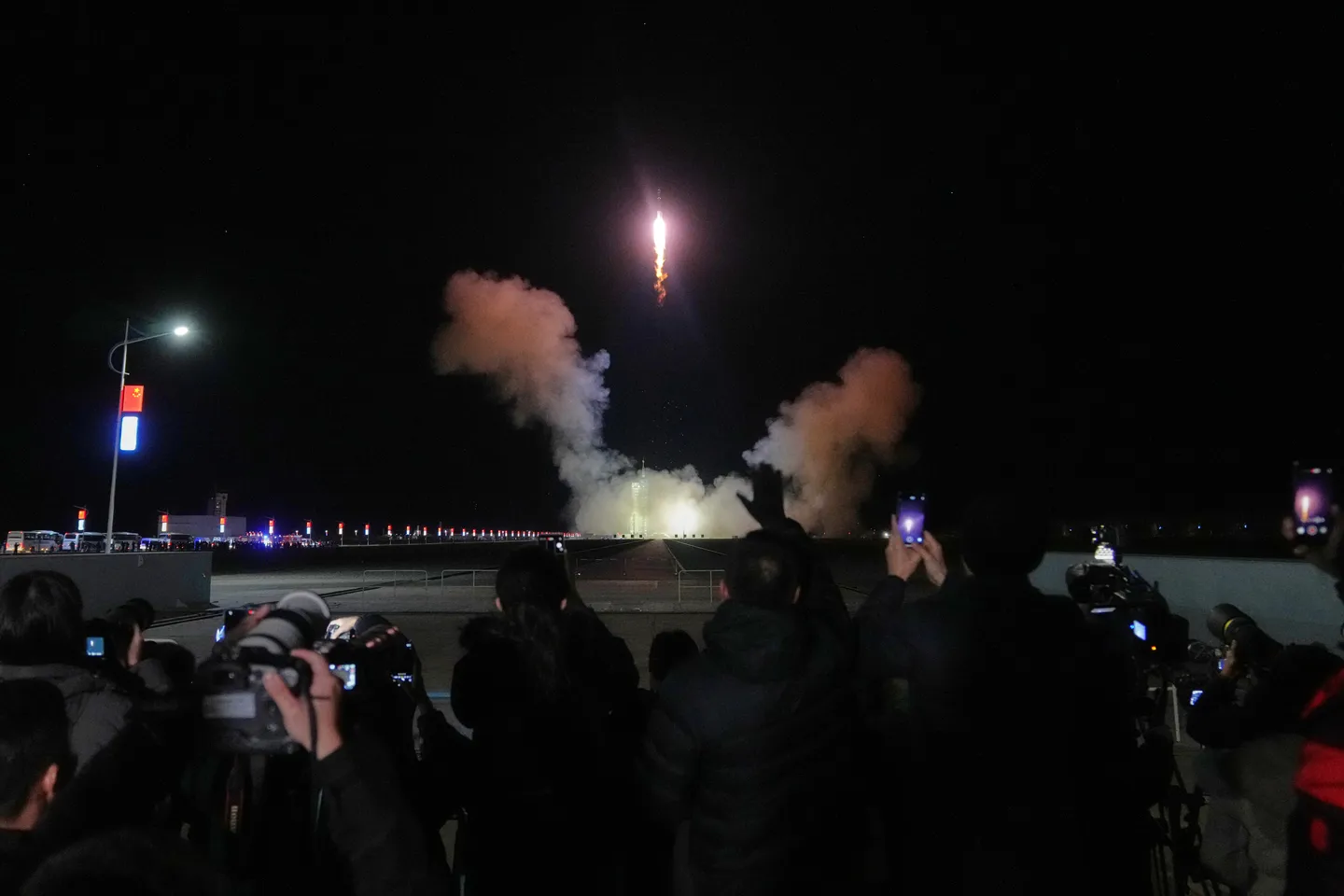
China recently built a space-based power system prototype for a potential satellite-based particle beam weaponry, the South China Morning Post reported on Saturday.
The idea of particle beams is simple: fire a focused beam of high-energy particles at an enemy satellite or missile to damage it using kinetic and thermal energy. But making it a reality has been hindered by two main challenges — power and precision.
For a particle beam weapon to work, it needs massive energy and exact timing. A satellite-based accelerator must precisely control electromagnetic fields to push charged particles at specific moments.
It presents a key challenge: high power and high precision are usually incompatible. Powerful systems are slow, while precise systems often cannot handle the energy needed. But Chinese scientists claim to have solved that problem.
A recent study led by Su Zhenhua from DFH Satellite Co. unveiled a space-based power system prototype that delivers 2.6 megawatts of pulsed power while maintaining synchronisation accuracy of 0.63 microseconds in ground tests.
Traditional systems provide less than 1 megawatt of power and lack the precision needed for advanced space applications.
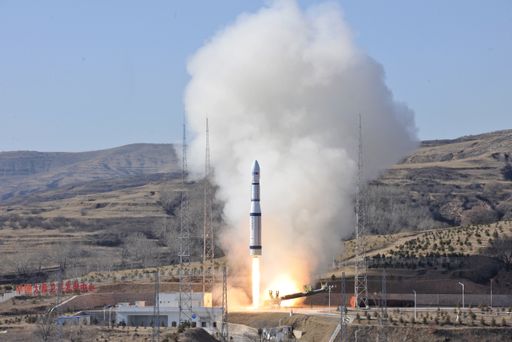








Efficient defence systems
The Chinese team's prototype combines high-efficiency voltage boosting, advanced energy storage and precise discharge control to solve the issues. Solar panels provide low-voltage power, which is boosted and stored in capacitors, ready to be released in controlled pulses.
A central FPGA (Field Programmable Gate Array)-based controller synchronises 36 power modules to fire within 630 nanoseconds of each other, delivering 2.6 MW in clean pulses, ideal for particle accelerators, lasers and other space systems.
While the main focus is on particle beam weapons, the technology has broader potential applications, including laser communication, ion thrusters and space-based radar for electronic warfare.
It also has potential for more efficient satellite defence systems, as directed energy weapons powered by solar panels could disable targets with minimal cost.