Abdullah Tanriverdi
The remaining parties to the ailing 2015 Iran nuclear deal have said that they were preparing for the possible return of the US to the pact as President-elect Joe Biden readies to take office next month.
Biden, who takes office on January 20, has signalled Washington would rejoin the so-called Joint Comprehensive Plan of Action (JCPOA) that was aimed at limiting Iran's nuclear programme.
"Ministers acknowledged the prospect of a return of the US to the JCPOA and underlined their readiness to positively address this in a joint effort," a statement on behalf of ministers from Iran, China, Russia, Germany, France and the UK said after Monday morning's online meeting.
The remaining countries that signed the agreement with Iran – Germany, France, Britain, China and Russia – have been trying to keep it from collapsing ever since outgoing President Donald Trump dramatically withdrew from it in May 2018 and imposed crippling economic sanctions on Tehran.
READ MORE:Iran's 'nuclear nationalism' can't be assassinated
READ MORE: Was Trump's maximum pressure campaign against Iran successful?
European powers have expressed hope that with the change of administrations in Washington, the US could be brought back into the deal, whose goal is to prevent Iran from developing a potential nuclear bomb – something Tehran insists it doesn’t want to do.
Tehran has retaliated to US sanctions by progressively abandoning limits on its nuclear activity laid down in the deal, including the amount of enriched uranium it is allowed to stockpile and the purity to which it is allowed to enrich uranium.
READ MORE:IAEA: Iran enriched uranium 12 times over limit set in 2015 deal
Advanced centrifuges
Most recently Iran announced it is planning to install advanced centrifuges at Iran's main nuclear enrichment plant in Natanz, a plan condemned by France, Germany and Britain –– collectively known as the "E3" –– as "deeply worrying".
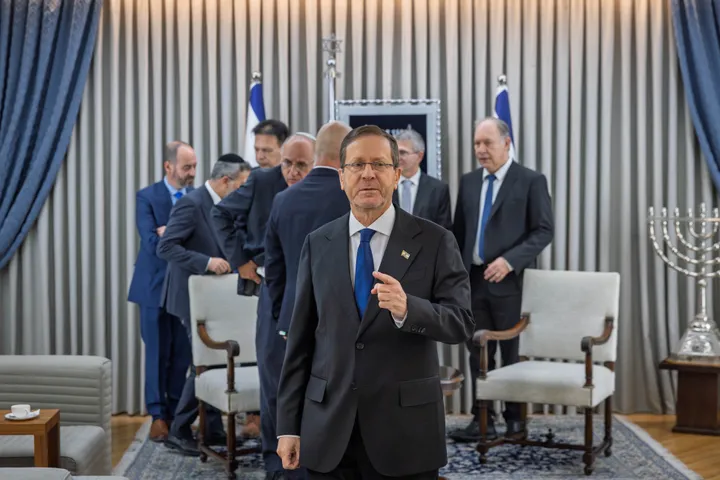


German Foreign Minister Heiko Maas said that the change of administration in the US meant that there was "a last window" for progress that "shouldn't be wasted".
"There can be no more tactical manoeuvres of the kind we have seen all too often recently," Maas warned at a press conference, adding that such actions "would only further undermine the agreement".
His British counterpart Dominic Raab said that at the meeting he had "made it absolutely clear Iran must not implement the recently announced expansions to its nuclear programme".
"To do so would undermine the opportunities for progress we hope to see in 2021," Raab added in a tweet.
The assassination last month of prominent Iranian nuclear scientist Mohsen Fakhrizadeh has heightened tensions in the region, with Iran blaming the killing on US ally Israel.
In the wake of Fakhrizadeh's death, Iranian MPs passed a bill calling for further expansion to Iran's nuclear programme and an end to inspections of nuclear facilities by the UN watchdog, the International Atomic Energy Agency (IAEA).
The Iranian foreign ministry said it did not agree with the bill and President Hassan Rouhani has suggested he will not sign it into law.
The end of IAEA inspections in Iran would probably mark a fatal blow to the accord's chances of survival.
The statement issued after Monday's meeting "stressed the importance of continued good faith cooperation with the IAEA".
READ MORE:If the Iran nuclear deal can be saved, there is no time left to waste