 Noureldein Ghanem
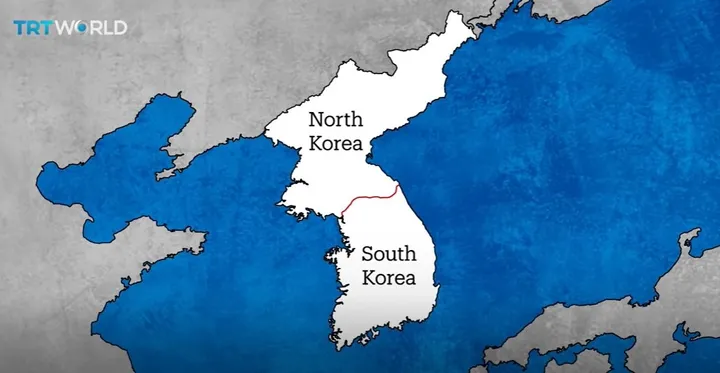
The South Korean and US militaries are set to begin massive live-fire drills near the border with North Korea, despite the North's warning that it won't tolerate what it calls a hostile invasion rehearsal on its doorstep.
Thursday's drills, the first of the allies' five rounds of firing exercises until mid-June, mark 70 years since the establishment of the military alliance between Seoul and Washington.
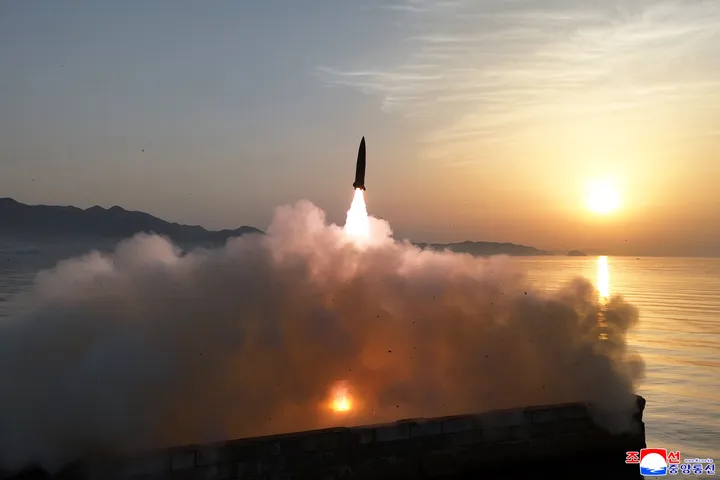
North Korea has typically reacted to such major South Korean-US exercises with missile and other weapons tests.
The US-South Korean firing exercises, called "the combined annihilation firepower drills," would be the biggest of their kind.
The drills have been held 11 times since they began in 1977, according to the South Korean Defence Ministry.
An earlier Defence Ministry statement said the drills are meant to enhance the allies' combined operational performance capabilities.
It said South Korea and the United States will seek to establish "the overwhelming deterrence and response capabilities" to cope with North Korean nuclear and missile threats.
Last Friday, North Korea's state media called the drills "a typical North Korea-targeted war rehearsal."
It said North Korea "cannot but take a more serious note of the fact that" the drills would be held in an area a few kilometres from its frontier.
KCNA said the US and South Korea will face unspecified "corresponding responses" over their series of large-scale, provocative drills.



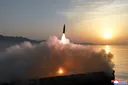
Trading threats
Earlier this year, the South Korean and US militaries conducted their biggest field exercises in five years.
The US also sent the nuclear-powered USS Nimitz aircraft carrier and nuclear-capable bombers for joint exercises with South Korea.
In their summit last month, US President Joe Biden and South Korean President Yoon Suk-yeol announced steps to reinforce their deterrence capabilities, such as the periodic docking of the US nuclear-armed submarines in South Korea, bolstering joint training exercises, and the establishment of a new nuclear consultative group.
Biden also warned that any North Korean nuclear attack on the US or its allies would "result in the end of whatever regime" took such action.
Kim Yo-jong, the powerful sister of North Korean leader Kim Jong-un, later said the Biden-Yoon summit agreement revealed the two countries' "most hostile and aggressive will of action" against the North.
She threatened to bolster her country's escalatory nuclear doctrine further, saying, "The pipe dream of the US and South Korea will henceforth be faced with the entity of more powerful strength."
North last year legislated a law that authorises the preemptive use of nuclear weapons.