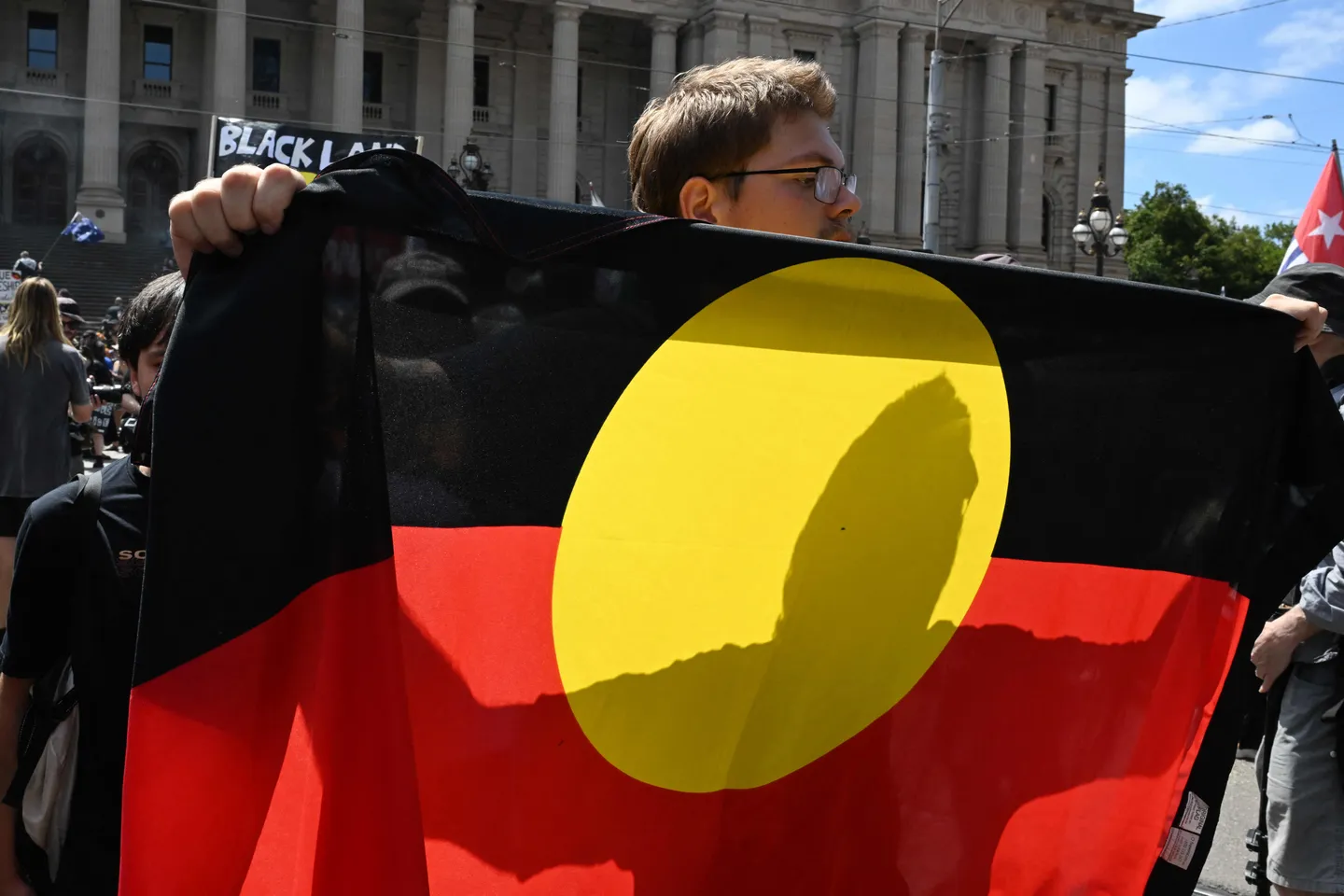
Australia’s southeastern state of Victoria has signed and formalised the country’s first modern treaty with Indigenous Australians, marking a major shift in state-level engagement with Aboriginal communities.
The legally binding treaty, which grants Aboriginal groups greater authority and control over their governance, was signed on Thursday by the co-chairs of Victoria’s elected First Peoples Assembly, Victorian Premier Jacinta Allan and Minister for Treaty Natalie Hutchins, according to the public Australian Broadcasting Corporation (ABC).
The treaty acknowledges Indigenous people's "authority to self-determine their affairs and make Treaties in accordance with Aboriginal Lore and Law and as recognised in international law."
Legislation underpinning the treaty, passed by Victoria’s parliament last month, was also signed on Thursday by the state’s governor, making it law.
‘Never empty, never unclaimed’
Governor Margaret Gardner described the signing as "historic," saying it is the "first statewide treaty for Victoria, the first in Australia, and the first for First Peoples in Victoria."

Allan said the moment brings a chapter "that brings together the oldest continuing cultures on earth with the more modern institutions of our state."
The 34-page treaty outlines agreements reached between the state government and the First Peoples’ Assembly, an elected body representing Aboriginal Victorians, after months of negotiations.
The document acknowledges that "this Country was never empty, never unclaimed. The fiction of ‘land belonging to no one’ ignored those already here."
It also states that "within two decades of colonisation, the [Victorian] population of First Peoples had reduced by nearly 90 per cent."
"It is a rare thing for a government to admit it was wrong — rarer still to commit, in plain words and enduring actions, to making it right," the treaty states.
"Yet that is what this moment asks. That is what this moment makes possible — a moment we claim together."