 Murat Sofuoglu
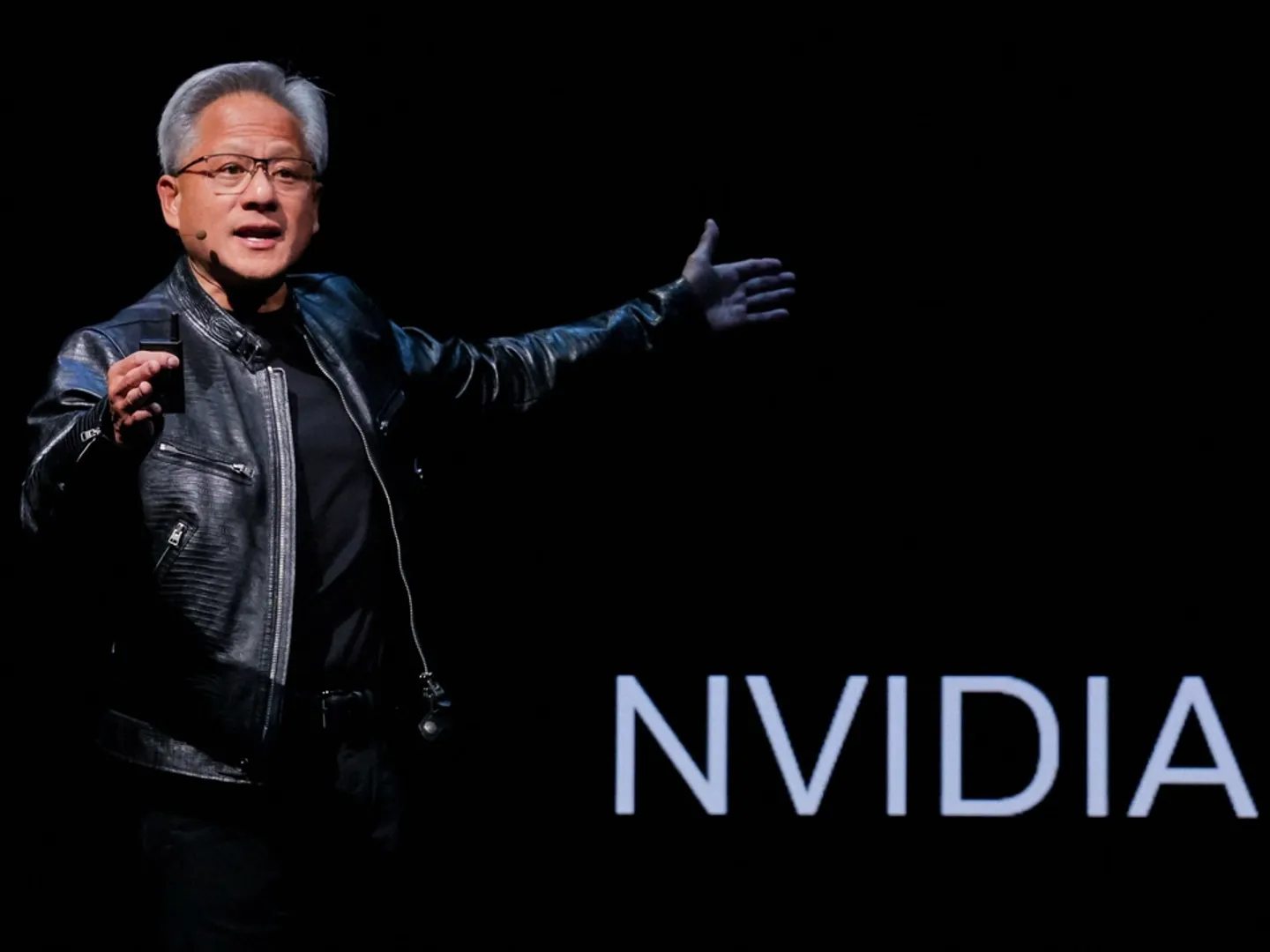
Jensen Huang’s resignation from Nvidia after a three-decade uninterrupted tenure has thrown US markets into turmoil after the revelation of his extramarital affair with Alice Huang, a Chinese technology executive, who was accused of spying for Chinese intelligence.
Seeing growing market rout, US President Donald Trump quickly intervened in the Nvidia drama to ensure the return of the Taiwan-born businessman Huang to his company, which is a crucial bridge between US chip design industry and Taiwan’s semiconductor production that holds roughly half of global chip manufacturing.
The US president argued that his intervention, which has relatively stabilised American AI stocks despite growing criticism from both Republican and Democrat ranks against Trump’s move, was necessary to keep Washington’s technological edge with China intact.
"This is different because the vast amount of knowledge in his brain," Trump said, referring to his reinstatement of Huang at the helm of Nvidia. The president also expressed fears that the top businessman could potentially be recruited by a Chinese AI company if he was not allowed to return.
Trump called Huang’s return to Nvidia “a net positive” for the future of the American AI industry, which has complicated relations with China due to the latter’s hold on rare earth minerals, an essential factor in chip production, and Beijing’s increasing capacity to manufacture semiconductors.
Trump might have wanted to keep Huang on his side because of his Taiwanese background and connections with East Asia, says Nurullah Gur, professor of economics at Marmara University, referring to Taipei’s large share in global chip production.
US-China tensions on the future of the Chinese-speaking company might also be a factor in Huang’s return to Nvidia because Trump might believe that in the case of a military conflict, a Taiwanese-American businessman's AI capabilities and Asian connections might matter for Washington’s leverage over Beijing, according to Gur.
East Asia, a hub of chip production, accounts for nearly 80 percent of global semiconductor manufacturing. Taiwan, Huang’s native country, accounts for 90 percent of advanced semiconductors.
Taipei’s adaptation of a pure-play business approach to semiconductor production has made the country a tech giant in chip production.
Industrial base matters
But others argue that Trump’s Nvidia intervention shows that the US is seeking a potential working relationship with China, to which Huang’s company has sold hundreds of thousands of American-designed chips for many years.
Nvidia’s Chinese customers made up about 9.5 percent of the company’s total revenue this year.
“Huang’s return demonstrates that an influential segment of the Trump White House and of the American tech sector understands that it is impossible for the US to compete in the actual manufacturing industry” without an East Asian component, including China, according to Victor Bruno, a senior strategic adviser at KGCP Global Strategic Corporate House.
Among other East Asian countries, China has continued to improve its industrial base in AI technology, which has depended on not only intellectual capacity and technological innovation but also the production of semiconductors that has been impacted by various factors ranging from the processing level of rare earths to different business strategies like pure-play.
According to Bruno, Huang, a Taiwanese-American who has spent a lot of time in East Asia, “knows” this reality. “This is why he pushes toward an ‘open source’-like AI framework, which would allow for some sort of cooperation” between the US and East Asia, including China, he tells TRT World.
Bruno describes Huang as an informal “spokesman for an open-ended AI consortium” which stretches from Silicon Valley to East Asia. “It matters for the (American) stockholders and for the worldwide industry as a whole,” he adds.
While Trump has recently been signalling to double down on his tariff policy, particularly directed at China and the EU, which the White House frames as part of an America First agenda against pro-globalist stances, Bruno says that Huang’s return to Nvidia sounds an American acceptance of a “globalised form of technology production.”
In the last 35 years, the US global semiconductor manufacturing capacity has significantly declined, going down from 37 percent to 12 percent while Chinese chip production has increased from 5 percent in 2010 to 16.3 percent last year.
Some estimates predict that Beijing might reach a production capacity of 25 percent of the world’s total semiconductors by the year 2030.
Not only this changing reality in chip production but also Trump’s embrace of great power politics with countries like Russia and China partly explain Huang’s Nvidia return. “Deep down, Trump is happy with a trilateral or tripolar world, which would allow the financing of many partnerships because the nature of international relationships would be far more transactional.”
Last week, Trump met Chinese and Russian presidents in Shenzhen, China, for an unprecedented trilateral summit, signalling his approach that great power politics should direct global governance, including the AI boom.
But not everybody agrees with this approach in Washington and in the larger American tech world. Among others, Anthropic CEO Dario Amodei compared selling advanced Nvidia chips to China to “selling nuclear weapons to North Korea”, as there are signs that even inside the Trump cabinet tensions exist on how to approach AI competition with China.
Treasury Secretary Scott Bessent and Commerce Secretary Howard Lutnick have reportedly had growing disagreements on American chip export controls. Even Trump confirmed that Lutnick and Bessent “have two different views” on how to approach China. “Can’t say either is wrong or right. We’ll let you know,” the president recently told a press audience.
Growing competition
The Nvidia drama has also triggered a fierce debate that Trump has been increasingly adopting a so-called state capitalism to manage China’s growing clout in the AI industry and other technologies.
“Trump's Nvidia intervention shows that the American political structure increasingly wants to have a say in the direction of technology companies, particularly in the AI industry, to compete with China better, contrasting with its past neoliberal practices,” Gur tells TRT World.
The Trump administration’s increasingly interventionist policies signal that despite Trump’s reach to Chinese leadership and Huang’s East Asia connections, technology competition between Washington and Beijing will ultimately shape their future relationship, according to experts.
While Huang's return might be good news for Nvidia, his reinstatement will not change ultimate ground realities in the AI race between the US and China, according to Altay Atli, a senior scholar at Sabanci University’s Istanbul Policy Center.
“The scandal around his exit showed how Chinese developers had been getting around US export controls by renting computing power from data centres in Southeast Asia. Washington has now closed that loophole, and that will make life harder for China's AI labs for a while,” Atli tells TRT World.
But the whole drama, coupled with Washington’s increasing export controls on Beijing, will also make Nvidia pay a price because the company has long sold a significant amount of its chips to Chinese companies.
According to Nvidia’s recent statement, the company gained $2.4 billion in the most recent quarter from H200 and related chip sales in China. But after Huang’s ouster and return drama, the company announced it would halt its chip shipments to Southeast Asian countries.
“Every door Washington closes gives Chinese buyers another reason to switch to homegrown chips,” says Atli, pointing out that US export controls and increasing hesitation of American companies exhibited by Nvidia drama will push Beijing to become more self-reliant on native chip production.
“China has adapted before, and I expect it to adapt again. Its labs have kept up with American rivals on far less computing power, partly by building leaner, cheaper models, which are open for anyone to use and popular around the world. Huawei is still behind Nvidia, but it's catching up quickly at home, and the new restrictions will only push more Chinese companies its way.”
But the analyst also underlines continuing Chinese problems. “Its AI firms earn far less than their American rivals and funding the next round of research won't be easy. So the US will probably keep its lead at the cutting edge for now,” he predicts.
While American companies have aimed to deepen their intellectual hold on the AI sector with their new designs, it also steers opposition at home as critics say that the industry has many loopholes with almost no oversight. Democrats, who won a landslide victory in the recent midterms, have voiced their concerns on the rapidly growing AI industry aiming to regulate it.
While controversies like Nvidia might increase internal tensions on the future of the AI industry and its ethical implications across the US, a multi-party democratic state, Beijing under the one-party rule of the Chinese Communist Party (CCP) might focus on practical areas to improve its AI industry, experts say.
“China may do better on a different front, though, by putting affordable, practical AI to work in its factories and offices. In the long run, that could matter just as much,” Atli observes.