A series of new Israeli policy moves in the occupied West Bank is raising alarms among analysts and rights groups, who say the measures amount to de facto annexation even as Washington maintains its stated opposition to any formal annexation.
The steps, which expand Israeli administrative and legal control over Palestinian land, are reshaping realities on the ground and testing the limits of what US President Donald Trump has described as a red line.
Israeli settlement watchdog Peace Now publicly urged Trump to intervene, warning in a social media post that the Netanyahu government’s actions risk undermining any future peace initiative.
“President Trump, you said you would not allow annexation. Even as you speak, the Netanyahu government is advancing sweeping decisions that deepen Israeli control in the West Bank and amount to de facto annexation. If you are serious about your peace initiative, this is the moment to act. Do not let Netanyahu sabotage your peace plan.”
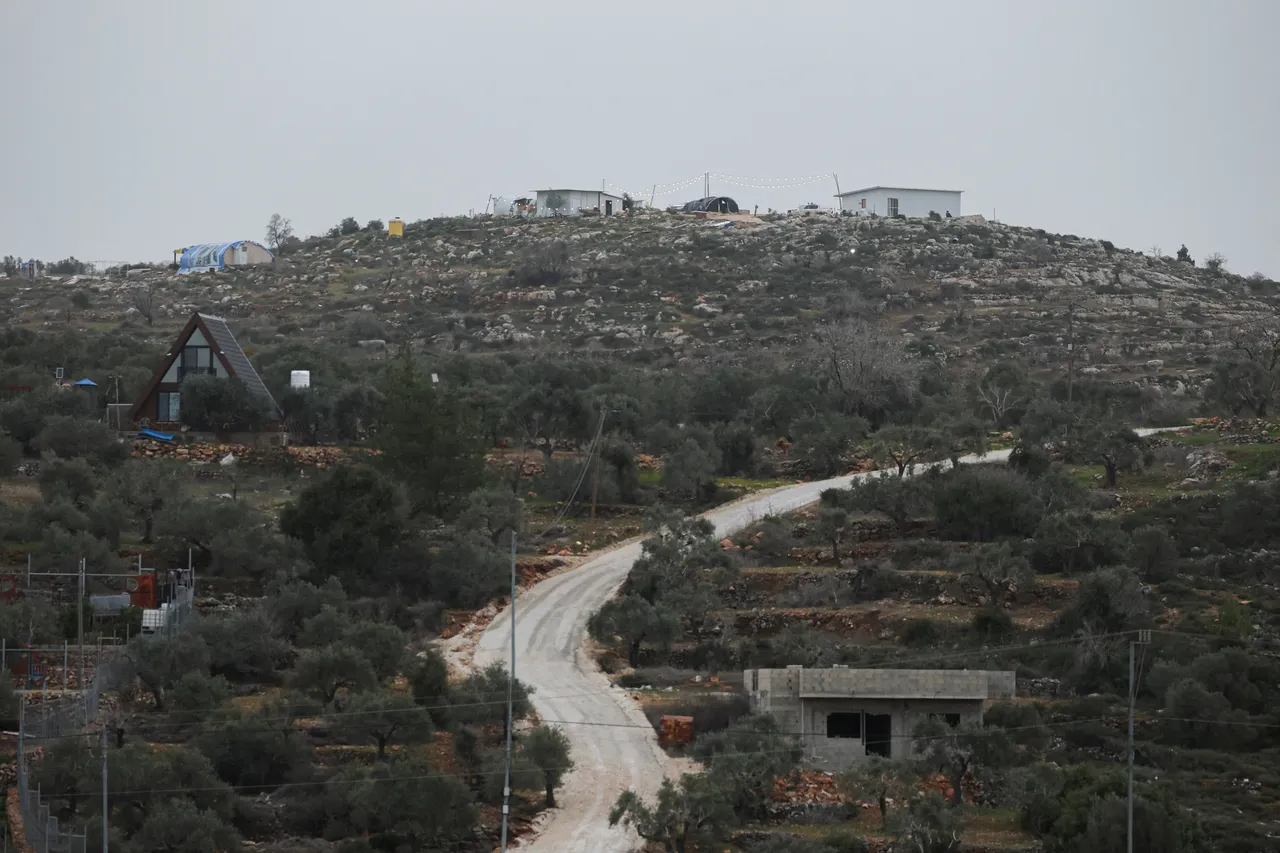
On Sunday, Israel approved a proposal to register Palestinian land in the West Bank as “state property,” marking the first time such a formal legal mechanism has been applied in territory under Israeli occupation. The measure is part of a broader package of decisions adopted by Israel’s Security Cabinet aimed at expanding settlement activity and consolidating Israeli control.
Recent steps include repealing restrictions on the sale of West Bank land to illegal Israeli settlers, unsealing land ownership records, and transferring building permit authority in a settlement bloc near Hebron from a Palestinian municipality to Israel’s civil administration.
Last week, Trump reiterated his stance in an interview with Axios, saying, “I am against annexation.”
‘Full annexation’
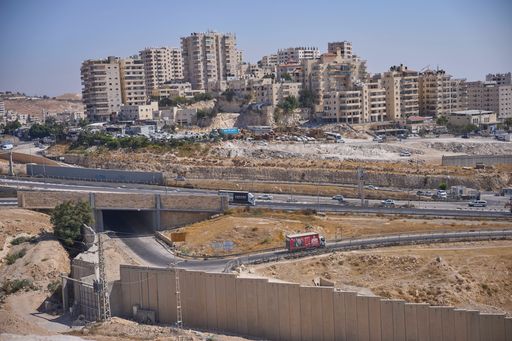
For settlement monitors, the shift in land registration policy represents a fundamental turning point.
Yonatan Mizrachi of Peace Now’s Settlement Watch Team described the move as “full annexation,” noting that Israeli authorities historically avoided formal land registration changes because of the territory’s disputed status.
He said the approach to land ownership had been cautious since 1967.
“We know that we are in occupied territory. You cannot change land registration so easily because of the political situation,” he told Anadolu.
Mizrachi explained that incomplete land registration records have long complicated ownership claims, and formal registration could now enable large-scale land loss.
“Palestinians might lose hundreds of thousands of acres ... so it’s extremely problematic,” he said.
Because much of the land is agricultural, he warned, the decision would also undermine Palestinian livelihoods.
Strategy of gradual displacement
Some analysts see the measures as part of a broader strategy to reshape demographics and territorial control incrementally rather than through a single dramatic annexation.
Ryan Bohl, a senior Middle East and North Africa analyst at the RANE Network, said the policy changes could facilitate a slow displacement of Palestinians.
“The Israeli right-wing view is that they want to slowly push the Palestinians out. That’s what these land registry changes are about. It’s about making it easier for Israeli settlers to buy land in the West Bank … It rewards the settler movement,” he said.
Bohl argued that Israel is unlikely to formally annex the entire West Bank at once to avoid direct confrontation with Washington.
“The Israelis don’t want to do it all at once. They want to do it over years and decades. That’s kind of their timeframe here to do this.”






He added that US priorities appear focused elsewhere.
“The Americans, at least under this administration, have very little interest in how the West Bank gets settled.”
According to Bohl, Washington’s main concerns are regional stability and security: “That seems to be how Trump is viewing this – that as long as the Israelis don’t annex the West Bank completely, they can do whatever they want.”
He described the approach as diplomatically easier because it avoids a single defining moment.
“Instead, it’s just years of slowly buying up land around a city like Ramallah, to the point where it’s cut off from the rest of the Palestinian territories.”
Red line in rhetoric, not reality
Mairav Zonszein, senior analyst for Israel at the International Crisis Group, said Trump’s opposition applies only to formal annexation declarations.
“Trump said that he doesn’t support formal annexation, and Israel has not declared formal annexation … in the way that it has in East Jerusalem or in the Golan Heights,” she told Anadolu.
She said this creates political space for Israeli leaders.
“Trump hasn’t done anything about it, so Trump can say all day long that he opposes annexations.”
Formal annexation would also create new responsibilities Israel appears reluctant to assume, she added.
“Declaring annexation … would also mean that Israel would ultimately be responsible for 3 million Palestinians and their services, which they’re very happy for the Palestinian Authority to do.”
At the same time, she said, pressure on the Palestinian Authority continues without collapsing it entirely.
“Trump can say that there’s no formal annexation, but on the ground, annexation has become a reality.”
Irreversible changes
Analysts warn that once implemented, the land registration changes could be extremely difficult to reverse.
“The measures that were just taken, they might take a little bit of time to implement, but if implemented, would be almost irreversible,” warned Zonszein.
She noted that with elections looming, Prime Minister Benjamin Netanyahu and far-right Finance Minister Bezalel Smotrich appear intent on cementing policies that future governments would struggle to undo.
“We can expect him (Smotrich) to continue to take those steps, and of course, Netanyahu is fully on board with that.”
Beyond legal changes, she emphasised the everyday realities Palestinians face.
“The reality on the ground, regardless of those decisions, is awful for the Palestinians in terms of settler violence, freedom of movement, and the ability to work,” Zonszein added.