 Esra Karataş Alpay
As Ramadan evenings draw near, the distinct smell of freshly baked Ramadan pide wafts through the streets, prompting people to join familiar queues outside local bakeries.
Ramadan pide is a traditional flatbread prepared especially during the holy month of Ramadan.
Made with flour, yeast, sugar, milk, oil, and water, it stands apart from everyday bread not only in taste but in craftsmanship.
Each piece is shaped by hand, pressed into its distinctive patterned form before baking. The result is a fragrant, slightly sweet, soft-centred bread with a delicately crisp exterior, instantly recognisable and deeply associated with iftar.
It traces its origins to the Ottoman era, and by the 15th century, it had developed into a form quite similar to the one we recognise today.
For Ibrahim Duman, who works with several bakeries operating under the Panayir name, this tradition is rooted in both history and responsibility.
He describes Istanbul’s neighbourhood Erenkoy, situated on the Asian side of the city, as one of old Istanbul’s summer retreats, where grand garden mansions once defined a refined seasonal lifestyle.
In the last few decades, a lively bazaar formed around the Zihni Pasa Mosque—first in the shops beneath it, later expanding into a charming marketplace for essential trades.
“A market needs its bakery, butcher, and grocer,” Duman tells TRT WORLD. “It became our destiny to be the bakers of this neighbourhood.”
He explains the importance of the Erenkoy train station, which exemplifies the bazaar culture. Panayir Bakery eventually became a daily stop for commuters heading to work.
Discipline behind the aroma
Beyond daily and weekly cleaning, Duman explains 'Ramadan cleaning”, which involves a thorough inspection of ovens and machinery, minor repairs, and preventative maintenance before the busiest month of the year.
“With long lines forming outside and people impatiently waiting for their iftar pide,” he says, “we carry the responsibility of delivering the cleanest, warmest, most satisfying bread.”
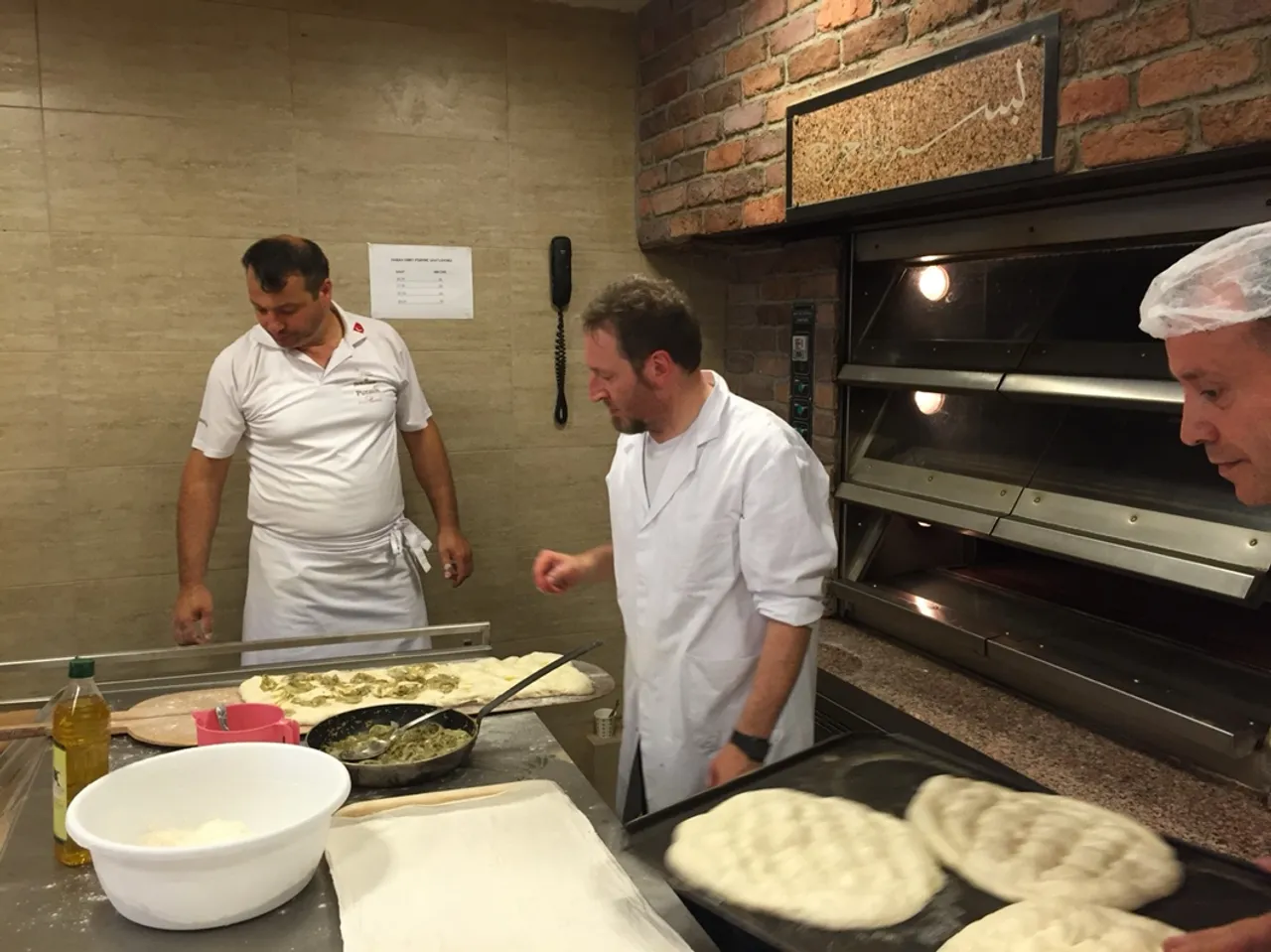
Preparation begins after the pre-dawn meal known as sahur. Dough is kneaded at midday and left to rest before being carefully divided by weight.
Each pide is shaped by hand, patterned with firm fingertips, brushed with egg, and coated with sesame and nigella seeds before entering the wood-fired stone oven shortly before sunset.
“There is no room for error,” Duman adds. “The right dough, the right resting time, the right heat. Can you imagine saying, ‘There was a breakdown today, so there’s no bread’?”
He smiles as he recounts how every year, an elderly regular, Kadir Amca, arrives with eggs in hand for his traditional egg-topped pide. “It’s a decades-old habit,” he says. “Such traditions do not forgive mistakes.”






Years after sustaining the Panayir tradition in Istanbul, Duman moved to Gocek in Mugla city’s Fethiye district and opened a new branch, ‘Panayir Bakery Artisanale’.
In Gocek, Ramadan preparations proceed largely as before. The ovens have received their Ramadan maintenance, and production concentrates on sourdough and whole-wheat breads crafted with artisanal care.
“Our journey continues,” Duman says with visible pride. “We are excited to keep producing healthy, natural breads. And we welcome all our friends whose paths bring them here.”
A living yeast named Pakize
For psychologist Tuba Sokmen, who prepares Ramadan pide at home using her own sourdough starter affectionately named ‘Pakize’, the ritual carries a more intimate dimension.
It has been four years since Pakize—once a small culture in a humble glass jar—became part of her family’s life.
“What began in a tiny jar continues today with the same quiet generosity,” Sokmen tells TRT WORLD. “Sometimes she is the star of our sandwich on a busy day. Sometimes she becomes toast on a Sunday morning. And during Ramadan, she turns into the fragrant pide on our iftar table.”
Sokmen describes breadmaking as the hobby that brings her family and friends the greatest joy.
“Its aroma, its texture, even the crackling sound when it comes out of the oven—it speaks to all our senses,” she explains. “In every air pocket, you feel traces of effort and gratitude. It’s like a wise living being.”
She calls Pakize humble because it survives on little more than water and flour. Yet she notes that it demands attention.
“If you don’t listen to what it tells you during the process, if you don’t respond to its needs on time, it does not forgive impatience.”
According to Sokmen, working with sourdough is like learning from a quiet teacher. “It teaches patience, attentiveness, and consistency,” she says. “It gently reminds you to observe, to build a relationship, to persevere.”
The bread that emerges from the oven, she believes, becomes more than food. “It transforms into a gift that multiplies as you share it. In every bite, there is abundance.”
She reflects that Pakize has fermented not only her breads and pides, but also her patience and gratitude. “I am grateful to her,” Sokmen says softly, “not only for fermenting our bread, but for fermenting my memories as well.”
As trays of steaming, golden pides emerge from stone ovens in Erenkoy and every other bakery in Türkiye, their scent spreads quickly through the neighbourhood.
“Each of us has at least one memory of waiting in that queue,” Duman reflects. “Those bakeries have touched all our lives.”
Ramadan, he says, is the story of generosity and gathering around the same table. And perhaps, as both he and Sokmen suggest in different ways, pide is what completes those emotions.