Kazim Alam
The International Court of Justice (ICJ), the UN’s principal judicial organ that settles legal disputes among states under international law, ruled on November 19 that Myanmar committed genocide against the Rohingya in 2017 in northern Rakhine State.
A Muslim ethnic minority group that has lived for centuries in predominantly Buddhist Myanmar, the Rohingya have suffered decades of violence.
But a massive wave of violence in August 2017 forced more than 750,000 people to seek refuge in Bangladesh as entire villages were burned to the ground, killing thousands of families.
After years of deliberations, the ruling concluded that Myanmar intentionally committed specifically prohibited acts that are covered by Article II of the 1948 Genocide Convention.
Judges found that Myanmar’s forces killed around 10,000 Rohingya, carried out widespread sexual violence, inflicted extreme violence on children, and attacked civilians as they fled.
Importantly, it is the first time that the ICJ has held a state responsible for committing genocide. In past cases, individuals – not states – were held legally responsible for committing genocide.
Experts say the decision has immediate implications for South Africa’s pending case against Israel over Gaza, in which Tel Aviv is accused of violating the 1948 Genocide Convention in the besieged Palestinian enclave after October 7, 2023.
Proceedings in the case against Israel are expected to continue for at least four more years.
Yet, the Myanmar judgment seems to have clarified how the ICJ will assess the hardest element of any genocide claim: the specific intent to destroy a protected group, they say.
Nasir Qadri, an international law scholar at Koc University in Istanbul, tells TRT World that the judgment’s legal importance lies not in how the court defined the standard of proof, but in the evidence it accepted as enough to meet that standard.
Working from UN fact-finding and investigative reports – rather than criminal-tribunal convictions – the court rejected counter-insurgency, forcible displacement, and collective punishment as alternative explanations, he says.
Those alternatives were inconsistent with the “manner, scale, and targeting profile” of violence.
That approach bears directly on Gaza, Qadri notes.
South Africa’s application against Israel uses the same jurisdictional basis as Gambia’s case against Myanmar.
After all, the evidentiary record already before the ICJ – the January 2024 provisional measures finding of a plausible risk, subsequent UN findings, and other independent reports – rests on the same category of material that the Myanmar majority (nine votes to six) treated as sufficient, he says.
The main alternative inference available to Israel – that its operations were a legitimate response to the October 2023 blitz – is the kind of explanation the court has now examined and set aside when the conduct itself points elsewhere, he says.
Primacy of genocidal intent
Maung Zarni, co-author of The Slow-Burning Genocide of Myanmar’s Rohingyas, tells TRT World that the court had required for decades that genocidal intent be the sole or single intent.
Other motives, such as clearing an area or conducting a military operation, blocked a finding, he says.
“The court has definitely junked or trashed that unrealistic reasoning,” Zarni says.
“It embraces the totality of intent, where genocidal intent seems primary,” he adds.
He says that human actions almost always contain multiple motives, and that the court’s new approach better matches how people actually behave.
As for the expectation that the ICJ will follow the same reasoning in the Gaza case, he says the case against Israel is “far more water-tight” as Tel Aviv has not only commissioned genocide, but is also perpetrating it.
He also notes that the ICJ reached its decision despite reported pressure on judges, which he views as evidence of institutional independence.
Qadri says earlier cases against Serbia relied on prior convictions from the Yugoslav tribunal. But here, the court inferred intent from UN reports alone.
It also broadened what counts as destroying a “substantial part” of a group, treating not only killings but the full range of listed acts that severely impair a group’s existence and capacity to function, he says.
Those two moves remove the practical barriers that previously made state responsibility findings nearly impossible, he says.
As for enforcement, experts remain cautious.
There is little doubt about the ICJ’s judgment being “final and binding”, Qadri says. Yet, the world court has no army or police force, which deprives it of any independent enforcement capacity.
Any referral to the UN Security Council is bound to be countered by a veto.
Qadri says that the remedies – restitution, compensation, prosecution obligations, and guarantees of non-repetition – create legal duties, with a two-year reporting deadline as the main procedural lever.
What does change, he notes, is the position of third states: once a binding genocide finding exists, obligations not to recognise the resulting situation as lawful become clearer for countries that armed or shielded the perpetrator.
Zarni says the UN Security Council is structurally unable to enforce such rulings. He also notes that Myanmar has already begun mobilising domestic sentiment against the decision, a pattern familiar from earlier Balkan cases.
He says the judgment strengthens the link between state responsibility and individual criminal liability.
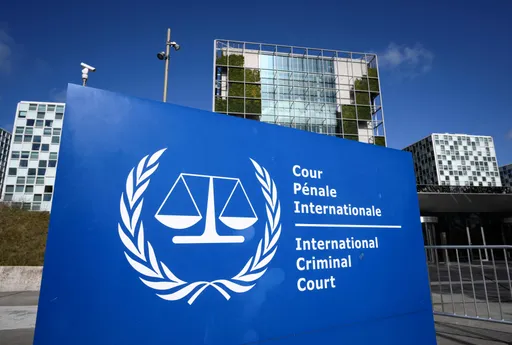
While the ICJ deals with states, its reasoning about superior responsibility has left the door open for the ICC – a permanent international court that investigates and prosecutes individuals charged with genocide – to step in and pick up where the “ICJ left off”, he says.