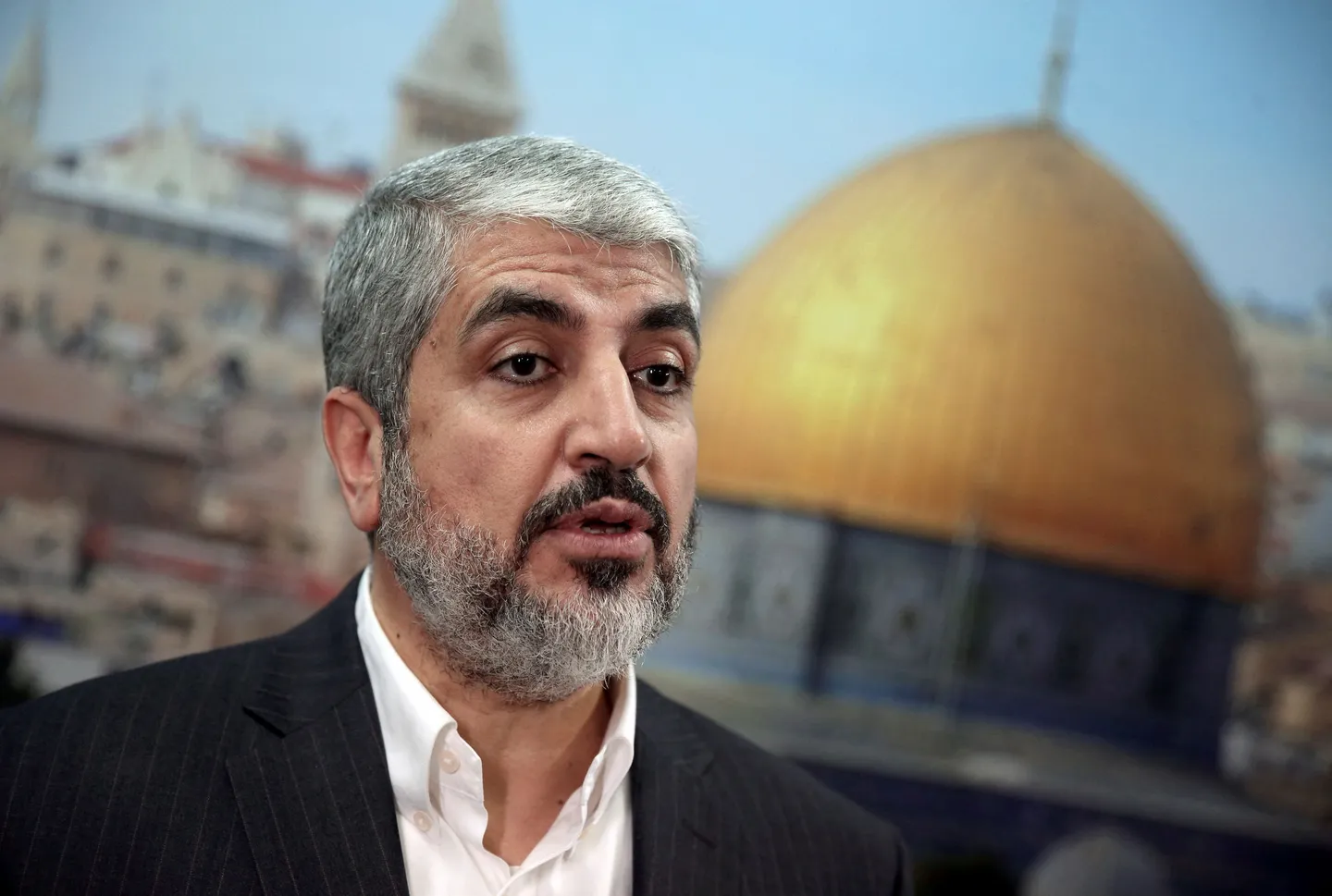
Hamas will keep its weapons under a framework that includes a long-term truce and the deployment of an international stability force along Gaza’s border to prevent a new Israeli war, senior leader Khaled Meshaal said, insisting that disarmament remains “unacceptable” to Palestinians.
“We want guarantees that the Israeli occupation’s war on Gaza will not return,” Meshaal said in an interview with Al Jazeera on Tuesday.
Meshaal said the approach of the second phase of the Gaza ceasefire deal had intensified pressure on Hamas to give up its weapons — a demand he attributed to Israeli Prime Minister Benjamin Netanyahu and foreign actors. But he said Palestinians would not surrender the means to defend themselves, pointing to decades of violence when Palestinian factions were unarmed.
“Disarming the Palestinians means removing their soul,” he said. “Our experience with the occupation is that when the Palestinian weapon is removed, the massacres begin — from Sabra and Shatila to the massacres committed throughout Palestinian history.”
Long-term truce and deployment of an international stabilisation force
Instead, Meshaal said Hamas is prepared to accept arrangements that ensure calm and prevent a return to war, including a long-term truce and the deployment of an international stabilisation force along Gaza’s borders, similar to the UN peacekeeping mission in southern Lebanon (UNIFIL). “We have no problem with an international stability force on the borders,” he said.
The UN Security Council approved a US-drafted resolution on November 18 authorising the creation of a temporary international mission in Gaza through the end of 2027 to help uphold the ceasefire and support postwar stabilisation.
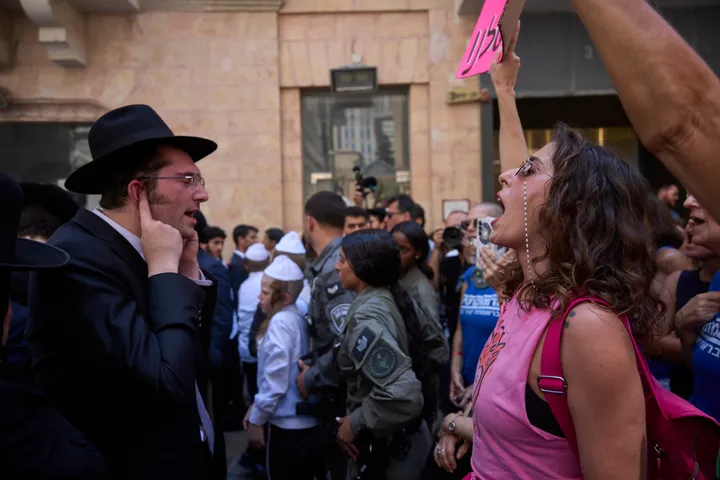

Meshaal said regional states — including Qatar, Egypt, and Türkiye — could act as guarantors to ensure calm, stressing that the obstacle to stability lies with Israel, not the Palestinian side. “The problem lies in Israeli escalation, killing and violence against the people of Gaza,” he said.
Reconstruction of Gaza
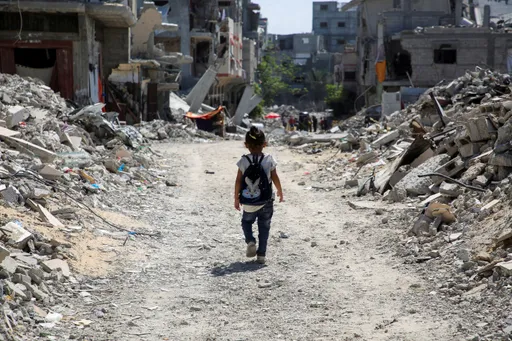
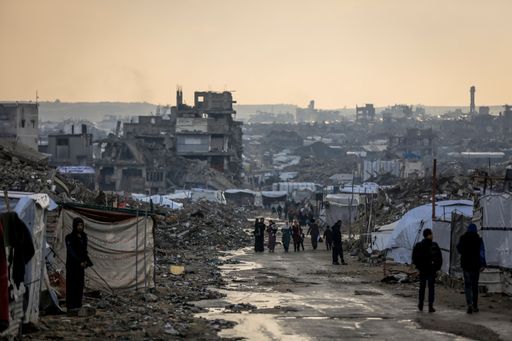
He added that Gaza, emerging from “rubble and harsh suffering” after two years of bombardment, must be allowed to move into a phase focused on reconstruction and recovery.
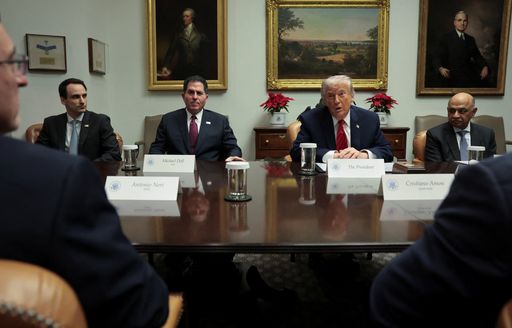
The comments came as Netanyahu prepares to visit the White House later this month to discuss the second phase of the October 10 ceasefire agreement. The first phase of the deal included the exchange of Israeli hostages for Palestinian prisoners.
Under the second phase, Israel should withdraw its troops further from Gaza as a transitional authority is set up and the international stabilisation force is deployed.
Israel has tied the start of the second-phase negotiations to receiving the remains of all its captives. It claims at least one body remains in Gaza; Hamas says it has handed over all 20 hostages who were alive and all 28 who were killed.
Israel’s brutal war has killed more than 70,000 people in Gaza — mostly women and children — and injured over 171,000 since October 2023. Attacks have continued despite the ceasefire. The two-year war has flattened much of the enclave and left severe shortages of food and shelter.